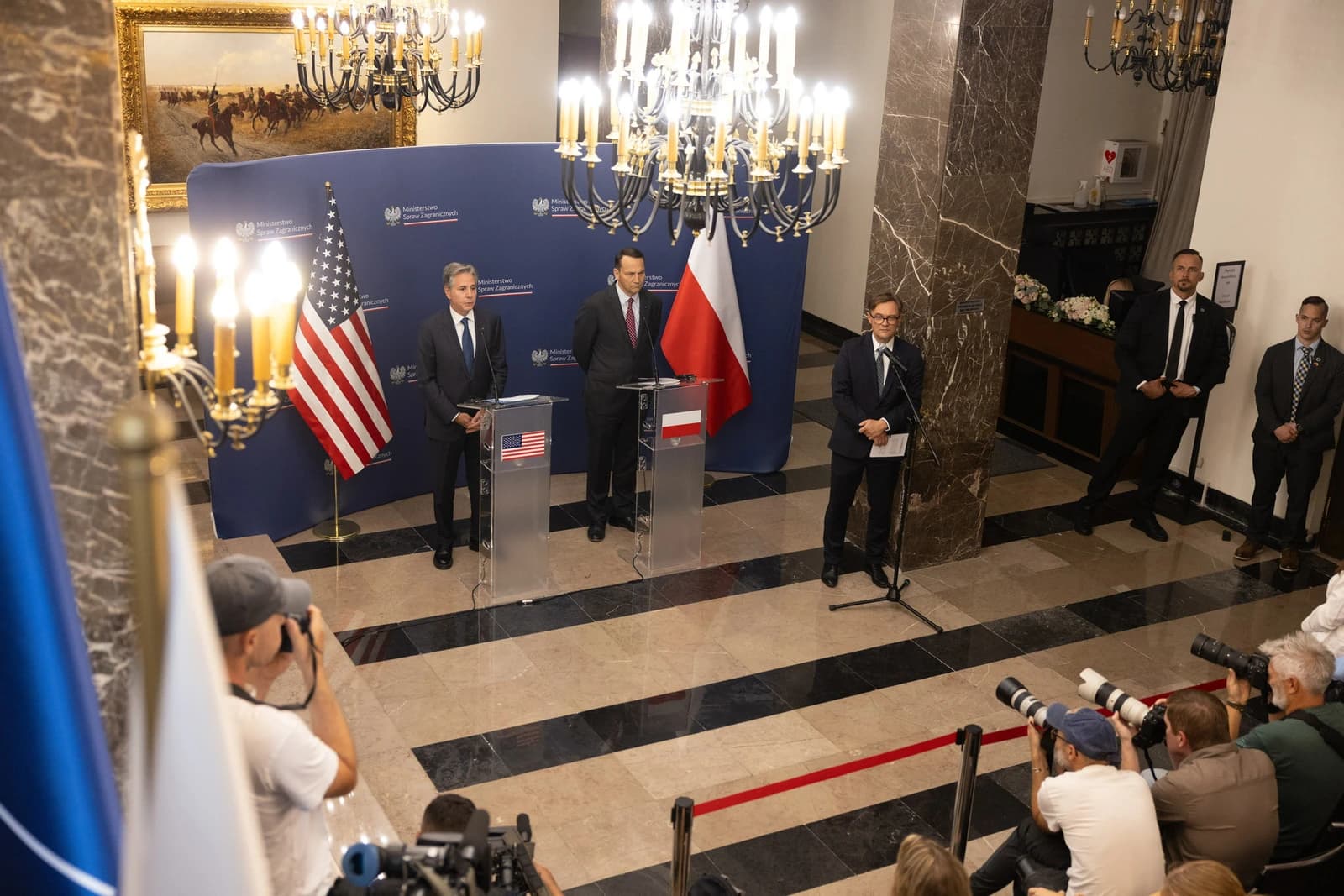
Europe’s security posture is shifting from deterrence on paper to wartime readiness as Russia and Belarus intensify activity near the Suwalki Gap, the narrow land corridor that links the Baltic states to the rest of NATO and has become the alliance’s most exposed strategic fault line.
Suwalki Gap Tensions Raise Europe Security Risks
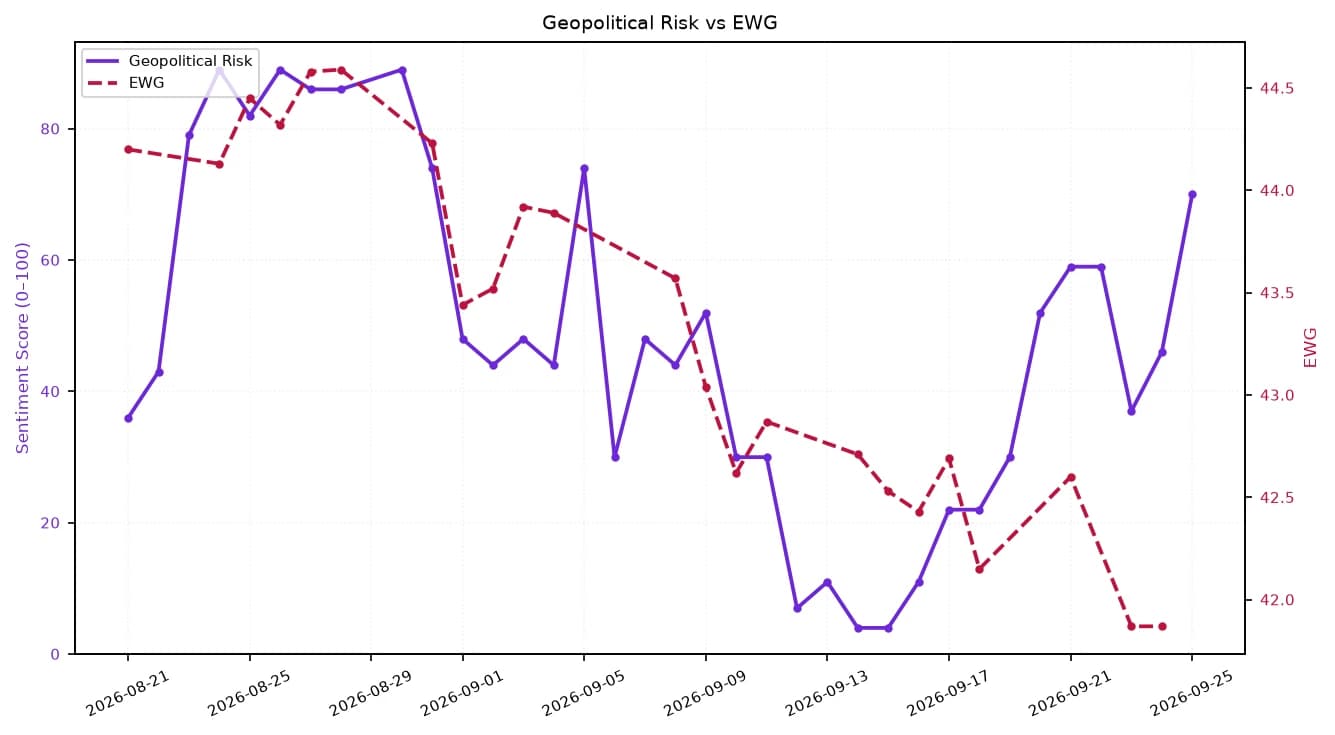
The immediate significance is not that a conventional Russian invasion is imminent, but that Moscow can keep probing NATO’s resolve below the threshold of open war. That gray-zone pressure — drones, sabotage, cyberattacks, airport disruptions and deniable incursions — is economically costly because it forces governments to divert capital toward resilience rather than growth, while raising the risk premium across European assets, energy supply routes and defense budgets.
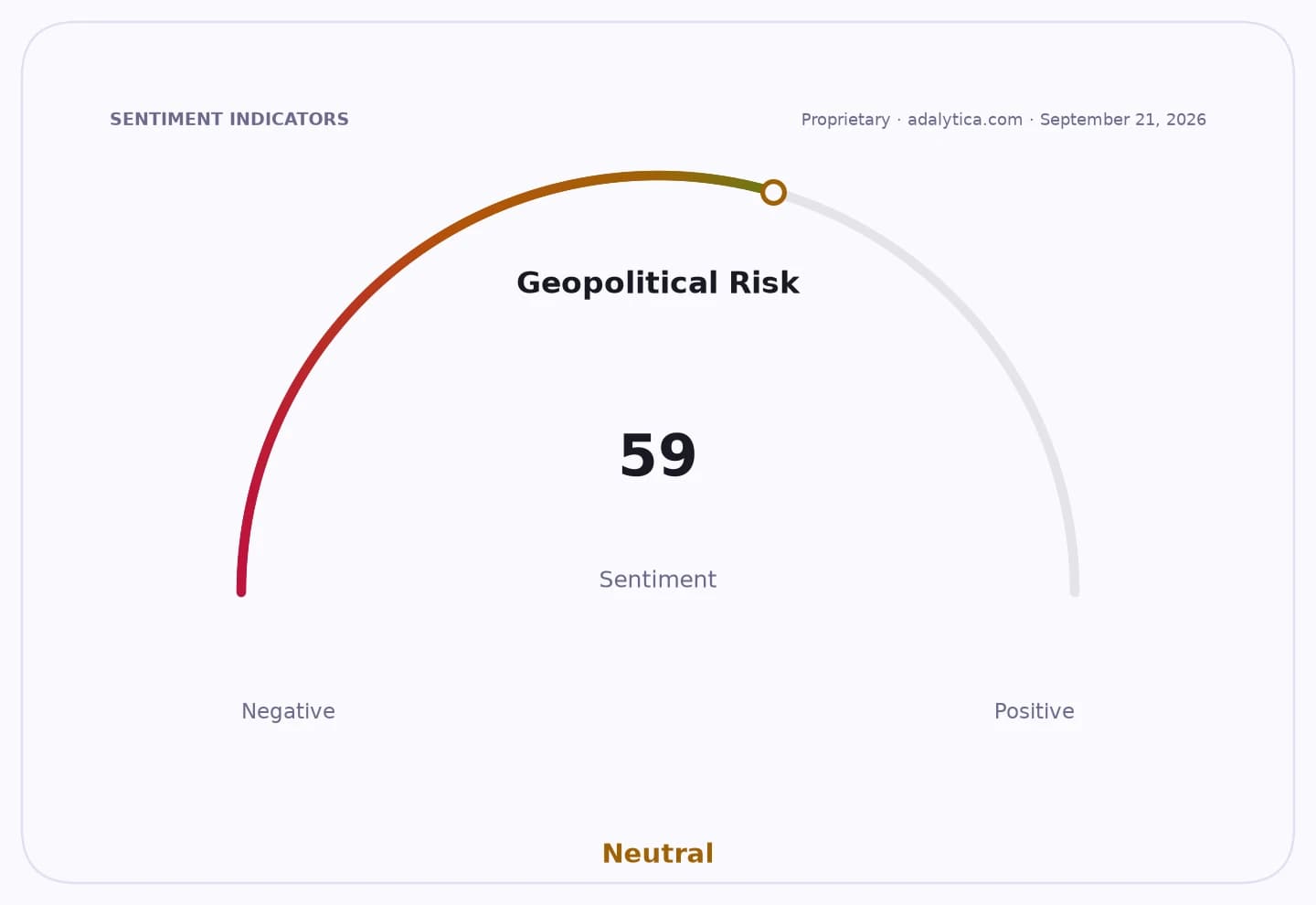
Sentiment IndicatorsⓘProprietary · adalytica.com · September 25, 2026
This is a snapshot — live sentiment, awareness and momentum for 130+ markets update continuously in the dashboard.Open AlphaPulse
The Suwalki Gap matters because it is only about 65 miles of land between Poland and Lithuania, with Belarus on one side and Russia’s Kaliningrad enclave on the other. In any crisis, even a limited move to disrupt passage could threaten the Baltic states’ overland connection to the alliance and test whether NATO would treat a small territorial incursion or hybrid attack as a casus belli. That uncertainty is precisely what gives the Kremlin leverage.
European capitals are reacting accordingly. France has moved to harden critical infrastructure against Russian hybrid operations. Germany is preparing hospitals for a possible attack. Britain has urged citizens to stock canned food and water. Switzerland, long a symbol of neutrality, has rewritten its security strategy around resilience and self-defense. The message is that Europe no longer assumes the United States will automatically carry the burden of escalation.
That uncertainty over Washington is central to the market and policy impact. Donald Trump has signaled progress toward a permanent US Army base in Poland, but allies still question how far the White House would go in a direct confrontation with Russia. If Moscow believes NATO’s Article 5 commitment could fracture under pressure, then even limited provocations become a strategic tool rather than a risk.
The data context underscores how investors are pricing the geopolitical shift. The iShares MSCI Germany ETF has slipped below its 50-day moving average, while the France ETF is trading under both its 50-day and 200-day averages, showing sustained weakness in European equities even as defense names and security-related spending themes attract interest. Canada’s equity proxy remains stronger, highlighting the relative insulation of North American markets from the immediate European security shock.
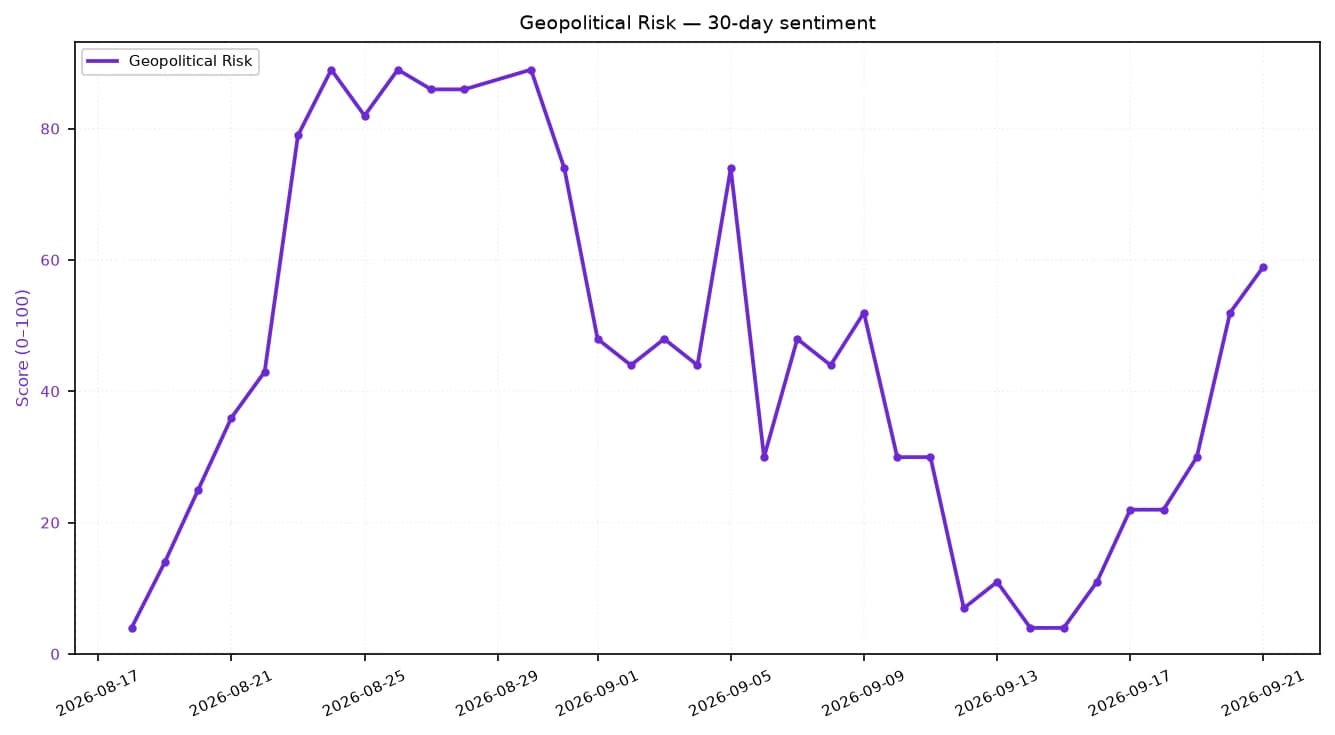
Bond and macro signals are also moving toward caution. The US 10-year Treasury yield remains elevated near 5%, while high-yield credit spreads have widened from earlier levels, suggesting markets are still paying up for duration and demanding more compensation for risk. Adalytica’s Global Stability Sentiment remains in neutral territory, but awareness is flagged at an extreme-fear level, consistent with rising concern around geopolitical tail risks. Adalytica’s Euro Trade Signals are in fear mode, a reminder that the currency bloc remains vulnerable when security risk rises faster than growth expectations.
For investors, the story is less about a single battlefield than about a structural repricing. Europe is being forced to spend more on defense, logistics, power grids, telecoms, hospitals and border security, which supports contractors and infrastructure resilience plays but adds pressure to already stretched public finances. That favors names tied to defense procurement, cybersecurity and critical infrastructure protection, while weighing on airlines, industrials, transport links and cyclical European equities if tensions escalate further.
The broader narrative is that the post-Cold War assumption of a low-cost security umbrella is over. Ukraine showed European governments that modern war is fought as much against power systems, supply chains and civil resilience as against armies. The Kremlin does not need to cross a clear conventional line to create economic damage; it only needs to convince NATO that the cost of responding may be higher than the cost of absorbing another provocation. That is why the Suwalki Gap now matters far beyond the map.
| Entity | Gains | Losses |
|---|---|---|
| Defense contractors | ▲Higher procurement demand | ▼Margin pressure from delays |
| European governments | ▲Stronger resilience posture | ▼Bigger fiscal burden |
| NATO deterrence hawks | ▲More support for rearmament | ▼Greater escalation risk |
| European equities | ▲Few beneficiaries outside defense | ▼Higher risk premium |