European banks are less exposed to the old sovereign-debt trap than they were in past crises, but the bond math is still getting tougher as higher rates erode the value of the very government debt sitting on their balance sheets.
European banks face higher sovereign bond risk

That is the key message from Morningstar DBRS, and it matters because the market’s focus has shifted from outright credit losses on sovereign holdings to a more insidious risk: mark-to-market pressure, duration risk and capital sensitivity when yields stay elevated. In other words, the “doom loop” has not vanished — it has simply become less visible and more dependent on rates than on default fears.
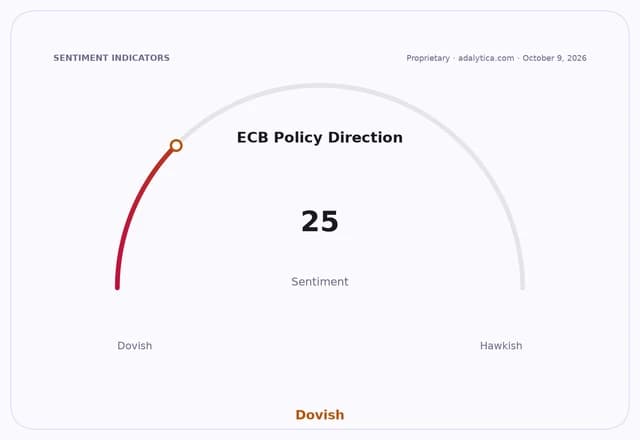
Sentiment IndicatorsⓘProprietary · adalytica.com · October 9, 2026
This is a snapshot — live sentiment, awareness and momentum for 130+ markets update continuously in the dashboard.Open AlphaPulse
Morningstar DBRS said European banks held 4.54 trillion euros of government bonds in June 2026, up 44% from 3.14 trillion euros at the end of 2022. Relative to core capital, those holdings now equal 264% of CET1, up from 214%, and account for 14.7% of total assets, the highest levels since 2019. For investors, that is the number that matters: banks can look more diversified on paper while still carrying a larger rate-sensitive sovereign book underneath.
The timing is uncomfortable. The European Central Bank has pushed its deposit rate to 2.50%, while European government yields are at their highest in more than a decade. That combination strengthens bank net interest income in the near term, but it also increases the risk that bond portfolios lose value, especially where securities are marked to fair value rather than held at amortized cost. Morningstar DBRS said 40% of the sovereign book is carried at fair value, meaning changes in yields can hit equity or earnings directly.
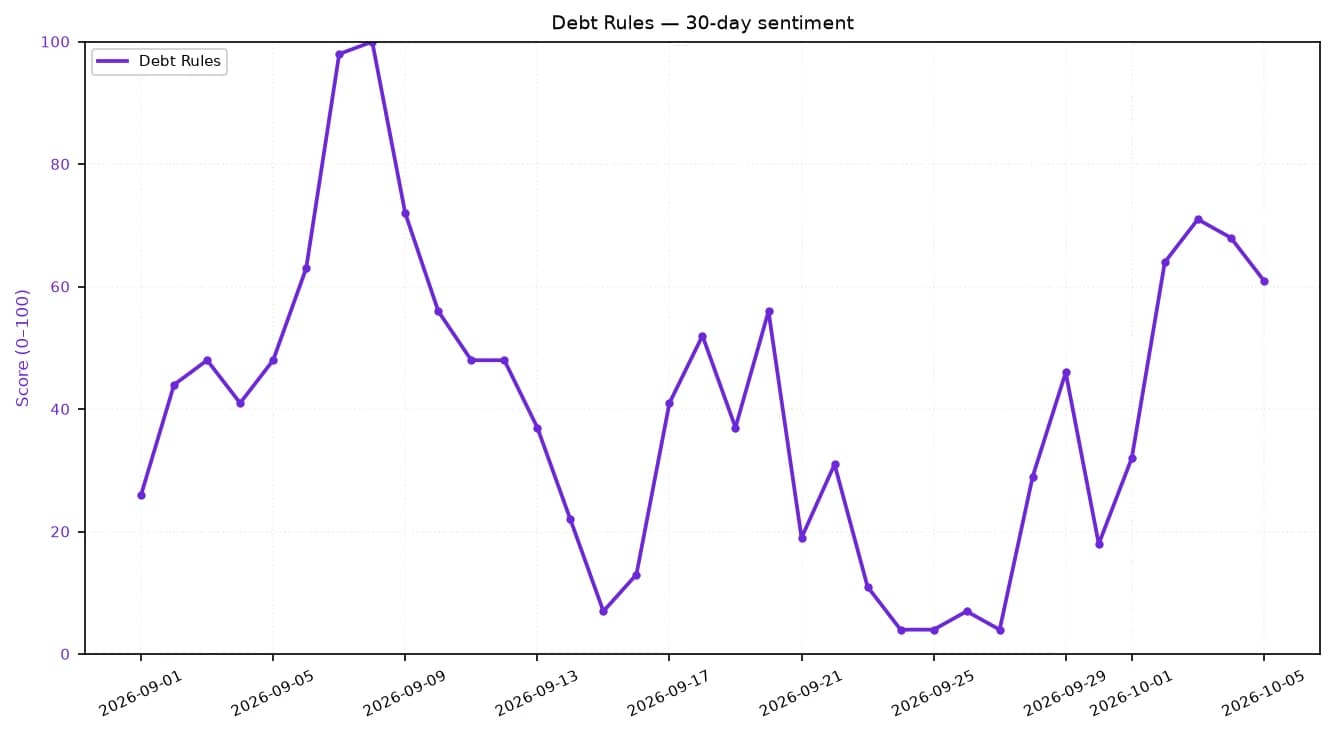
Debt Rules vs EUFNadalytica.com
Explore this data interactively — full history, time series and cross-market comparisons.Open AlphaPulse
The worst of the old home-country concentration has eased. The share of domestic sovereign debt in bank portfolios has fallen to 43% from a 2021 peak of 53%, suggesting regulators and lenders have made some progress in breaking the loop between banks and their own governments. Even so, the home bias remains substantial in key markets: Italian banks still hold domestic sovereign debt equal to 50% of their portfolios, and their exposure equals 361% of CET1, among the highest in Europe.
Duration is now part of the problem. Morningstar DBRS said 46% of sovereign exposures mature in more than five years, and for Italian banks that share rises to 58%. Longer duration means more sensitivity to rising yields, and that matters because the current stress point is less about a sovereign default cycle and more about whether banks can absorb valuation swings without denting capital or confidence.
The reassuring part for shareholders is that accounting still softens the blow. Nearly 59% of these holdings are booked at amortized cost, insulating banks from day-to-day market moves. That helps explain why the rating agency does not expect sovereign exposure and higher yields alone to trigger widespread rating action on European lenders. Stronger supervision and healthier balance sheets also give the sector a buffer that did not exist in earlier crises.
That said, investors should not confuse resilience with immunity. The European banks trade, in effect, as a levered bet on yield stability: if rates stay high, margins may help, but the sovereign book can still pressure capital optics and volatility. That is why bank ETFs such as the European Financials ETF have been under pressure even as the broader banking story remains structurally constructive.
The investable takeaway is clear: this is no longer a crisis trade against European banks, but it is still a balance-sheet story that rewards quality and punishes weak capital buffers, heavy home bias and long-duration sovereign exposure. The market should keep favoring banks with diversified funding, lower domestic concentration and stronger capital generation, while treating the more exposed lenders in Italy, Portugal and Spain as tactical rather than core holdings.
| Entity | Gains | Losses |
|---|---|---|
| Large diversified euro-area banks | ▲Lower doom-loop risk | ▼Still face valuation pressure |
| Italian and Portuguese lenders | ▲Higher-rate income support | ▼High sovereign/CET1 exposure |
| ECB and regulators | ▲Stronger oversight narrative | ▼Less room for policy easing |
| European bank ETFs | ▲Sector resilience story | ▼Volatility from bond repricing |