Spain’s business community is confronting a more expensive financing backdrop just as geopolitical uncertainty keeps global risk appetite pinned near extremes, with U.S. Treasury yields rising sharply and Spanish assets losing momentum.
Spain stocks fall as U.S. yields rise
That matters because borrowing costs are the transmission belt between geopolitics and corporate earnings. When benchmark rates move up, it becomes pricier for companies to refinance debt, fund expansion and support valuations. For Spain, where banks and exporters are especially sensitive to funding conditions and growth expectations, even a modest jump in global yields can ripple through credit markets, real estate and equity multiples.
Sentiment IndicatorsⓘProprietary · adalytica.com · October 8, 2026
This is a snapshot — live sentiment, awareness and momentum for 130+ markets update continuously in the dashboard.Open AlphaPulse
The U.S. 10-year Treasury yield was forecast at 5.287% on Oct. 7, up from 5.27% the previous session, while the 2-year yield was seen at 4.788%. That still leaves the curve inverted, but the higher long-end rate is the more important signal for investors because it feeds directly into discount rates used to value stocks and into the cost of capital for companies with international exposure.
Spanish equities reflected that pressure. The iShares MSCI Spain ETF, EWP, slipped to $57.82 on Oct. 7 from $58.84 a day earlier, while Banco Santander fell to 13.66 euros and BBVA to 26.25 euros. Both banks remain well above their 200-day moving averages, which shows the longer-term trend is still intact, but recent weakness and softer relative-strength readings suggest investors are becoming more selective. Higher rates can help bank net interest income at first, yet prolonged volatility can also hurt loan demand and raise funding uncertainty.
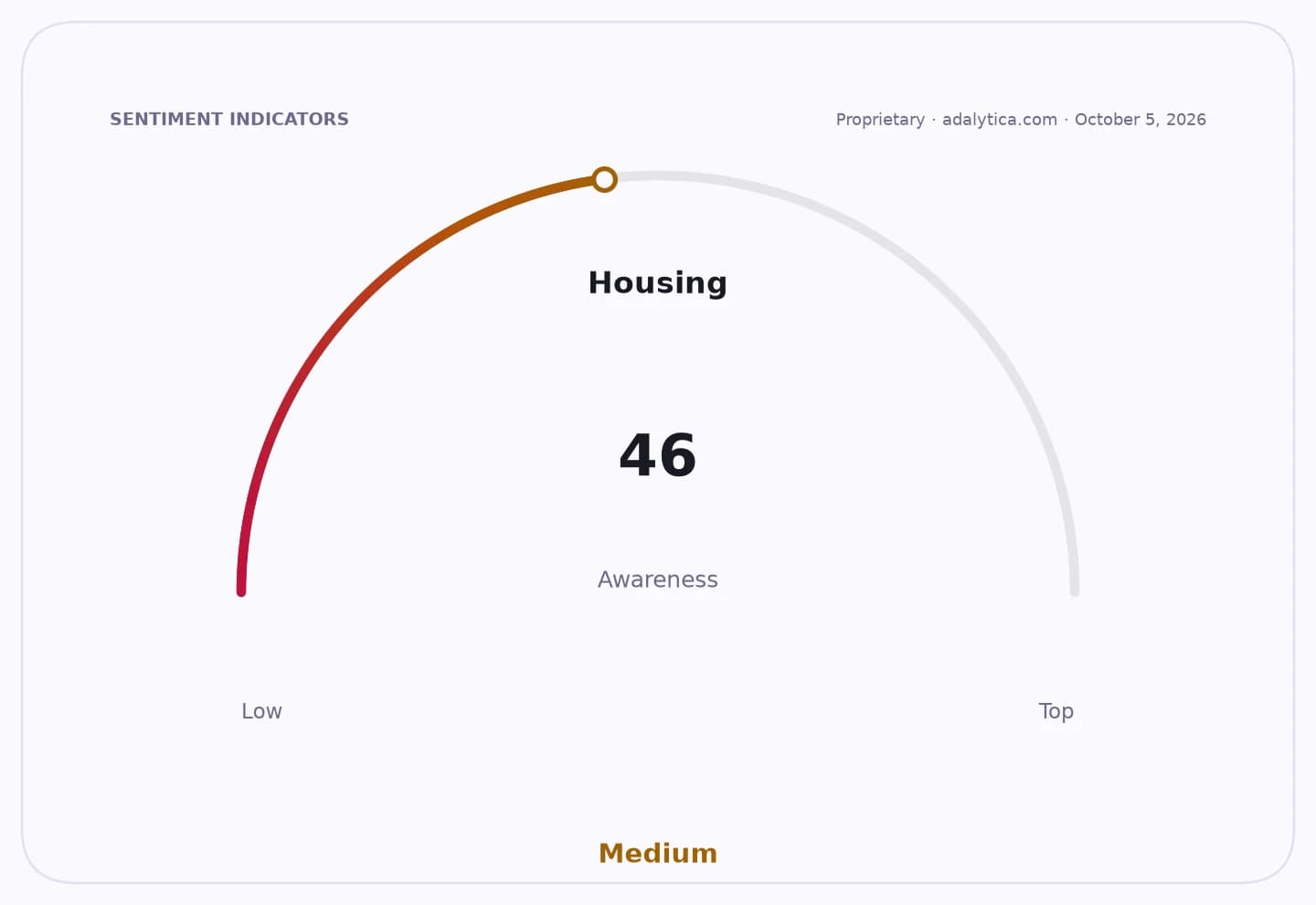
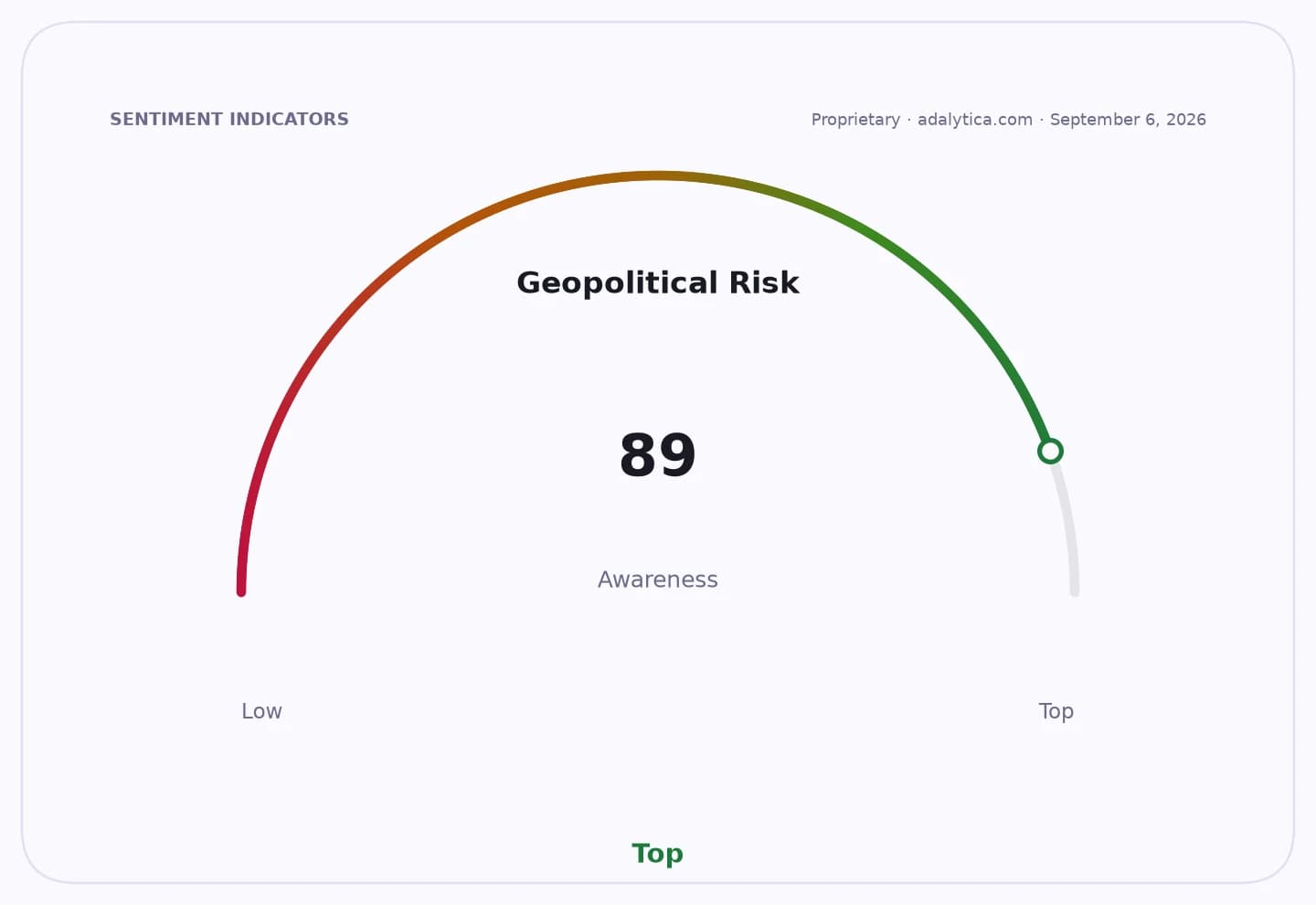
The bigger narrative is that Spain is not trading in a vacuum. A sharp swing in global stability sentiment — with Adalytica’s Global Stability Sentiment pegged at 100, or “Extreme Greed,” even as awareness sat at 7, “Extreme Fear” — points to a market that is comfortable with risk on the surface but deeply conscious of geopolitical shocks underneath. That combination can keep capital flowing into quality names while punishing cyclical and rate-sensitive sectors whenever headlines turn.
For long-term investors, the lesson is not to chase every move in yields or react to every spike in geopolitical tension. It is to focus on businesses and funds with durable cash flow, strong balance sheets and pricing power, because those are the companies most likely to survive a period of higher capital costs and still compound over years. Spain’s banks may remain interesting, but the better buy-and-hold opportunities will likely be the ones that can handle a world where money is no longer free.
| Entity | Gains | Losses |
|---|---|---|
| Lenders / Banks | ▲Wider lending spreads | ▼Softer loan growth |
| Borrowers / Corporates | ▲— | ▼Higher refinancing costs |
| Spanish exporters | ▲Weaker euro support | ▼Volatile funding conditions |
| Equity investors | ▲Higher rates reward selectivity | ▼Rich valuations face pressure |