Spain’s services economy kept expanding in September, but the bigger message for investors is that the growth is getting more expensive to sustain. The S&P Global services PMI for Spain rose to 58.3 from 57.8 in August, its strongest reading in 3 1/2 years, even as input costs accelerated to a six-month high and export orders fell for the first time since May.
Spain Services PMI Rises to 58.3 in September

That combination matters because Spain is still one of the eurozone’s brighter growth stories, yet the report suggests margins are under pressure just as demand remains solid. For companies, that means a healthier top line does not automatically translate into better profits. For the broader economy, it points to a service sector that is still adding jobs and supporting activity, but may be absorbing a fresh round of inflation from energy, fuel, wages and supplier pricing.
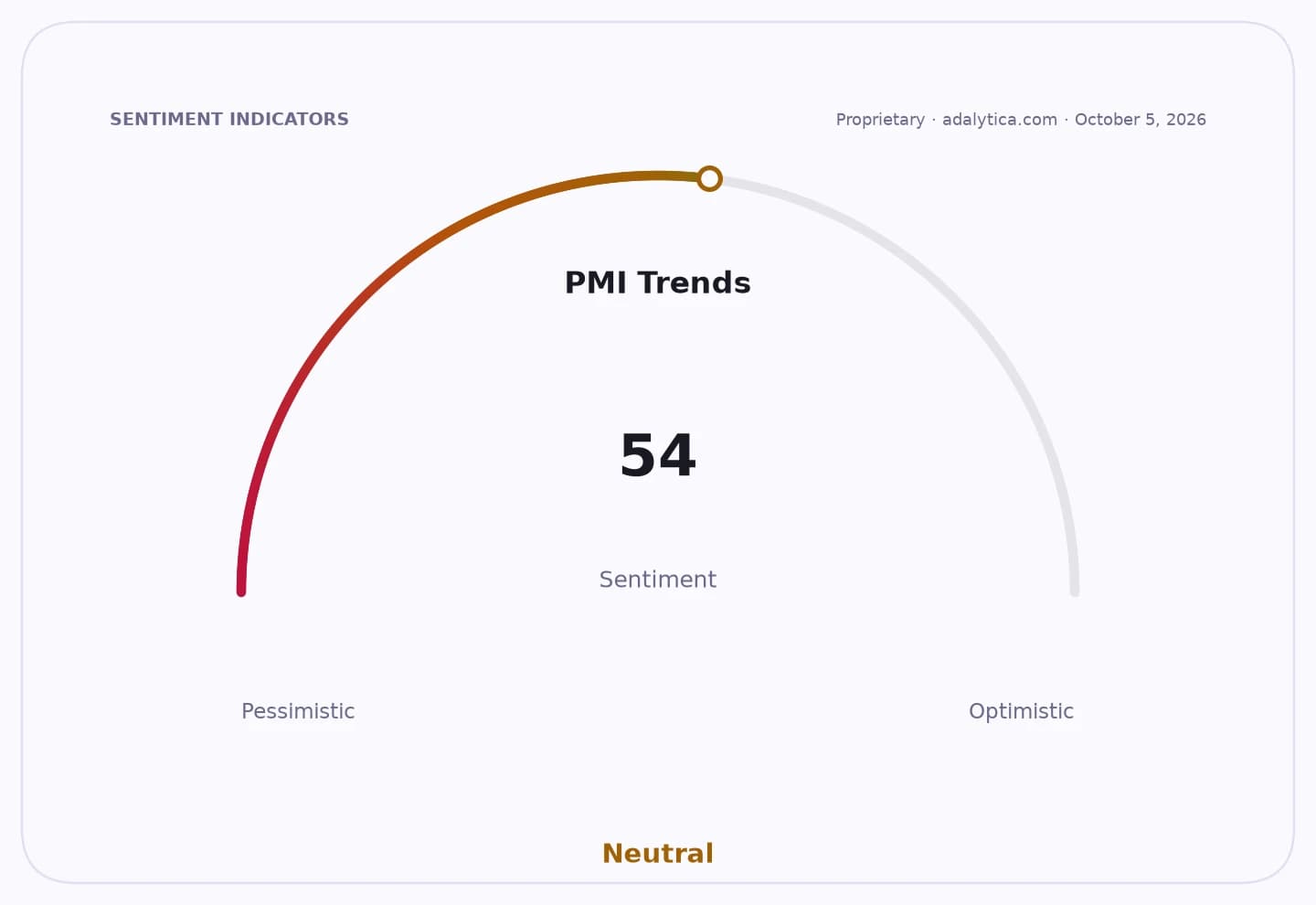
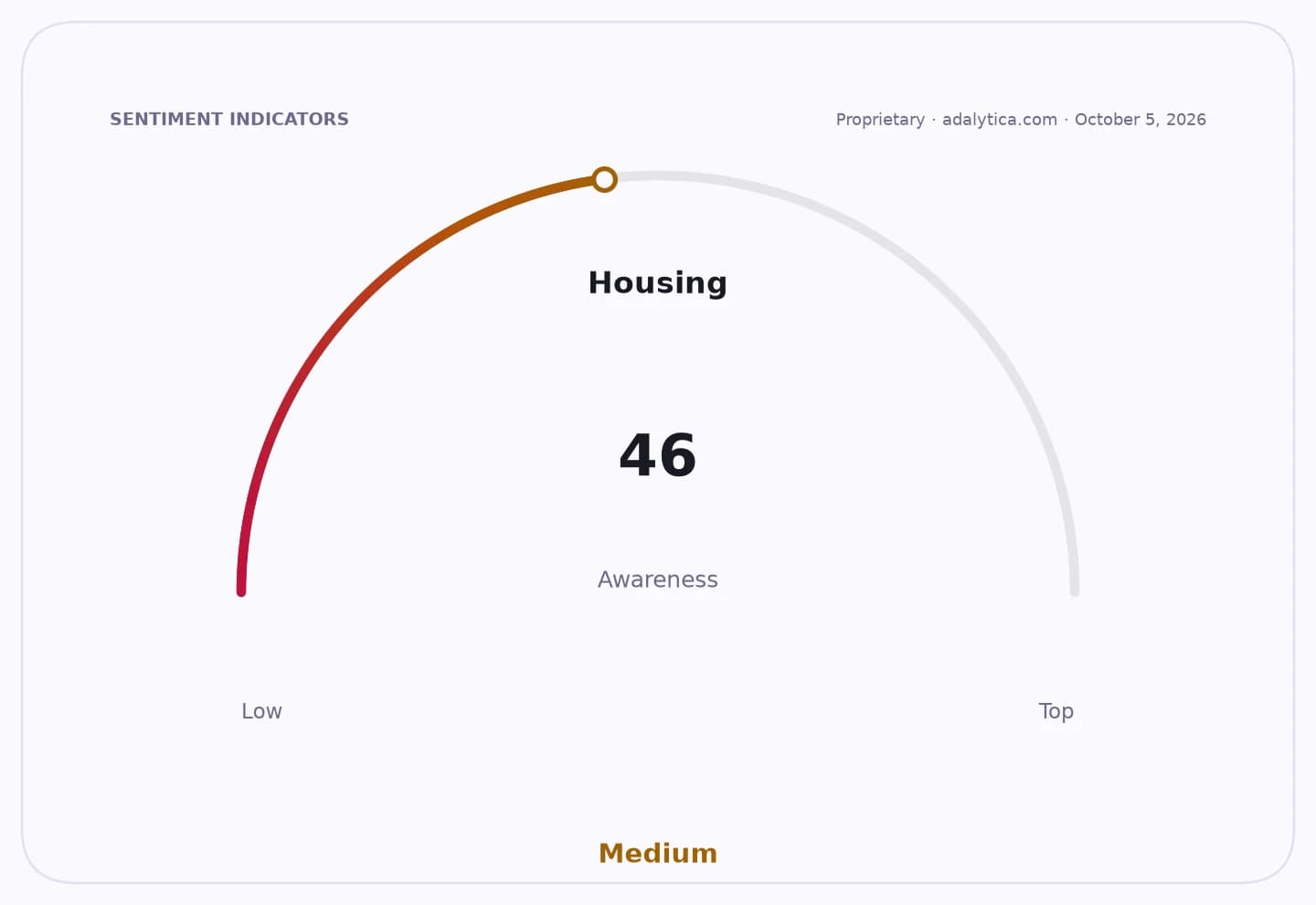
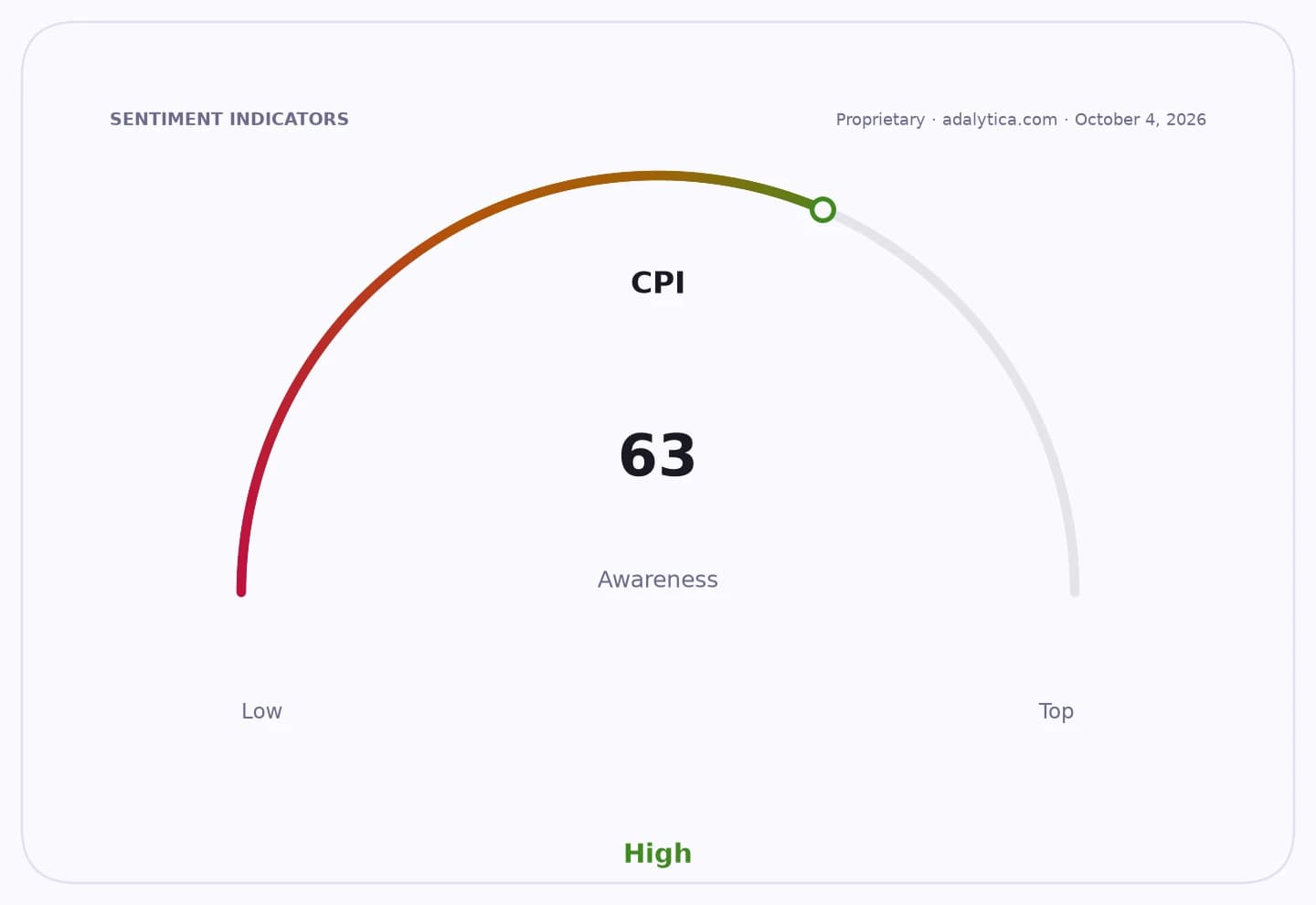
Sentiment IndicatorsⓘProprietary · adalytica.com · October 5, 2026
This is a snapshot — live sentiment, awareness and momentum for 130+ markets update continuously in the dashboard.Open AlphaPulse
New business rose for a fifth straight month, although at the slowest pace since June, showing that customers are still spending even if the momentum is cooling. Employment continued to increase too, extending a four-year run of job creation, and the pace of hiring was described as marked and above the survey average. That is constructive for household income and domestic demand, and it helps explain why Spain has continued to outperform more sluggish parts of Europe.
The catch is pricing power. Companies lifted their own charges at the fastest pace since April as input inflation intensified. That is good news for sales in the near term, but it is also a warning sign for consumers and policymakers. If costs keep rising, services inflation can stay sticky, which complicates the European Central Bank’s path and keeps pressure on businesses that depend on steady discretionary spending.
The export side also weakened, with foreign activity falling for the first time in five months as firms cited uncertainty tied to the Middle East conflict and artificial-intelligence-related spending. That is a useful reminder that even a domestically driven economy is not insulated from global shocks. Weakening confidence in the survey, down to a four-month low, shows that geopolitical tension and competition are beginning to weigh on sentiment even if firms remain upbeat about the year ahead.
For long-term investors, the takeaway is straightforward: Spain’s services sector is still growing at an enviable clip, but this is not a clean expansion story. It is a story of resilient demand, strong hiring and rising pricing power colliding with higher costs and softer exports. That tends to favor businesses with disciplined pricing, efficient operations and exposure to Spain’s domestic consumer, while punishing firms that cannot pass through inflation or rely heavily on overseas demand. Worth watching, especially if you invest for the next three to five years rather than the next three months.
| Entity | Gains | Losses |
|---|---|---|
| Spanish service firms with pricing power | ▲Higher revenues | ▼Margin squeeze from costs |
| Workers and job seekers | ▲Ongoing hiring | ▼Wage gains may lag inflation |
| Domestic consumers | ▲Stronger employment | ▼Faster service-price inflation |
| Export-oriented businesses | ▲— | ▼Weaker foreign orders, geopolitics |