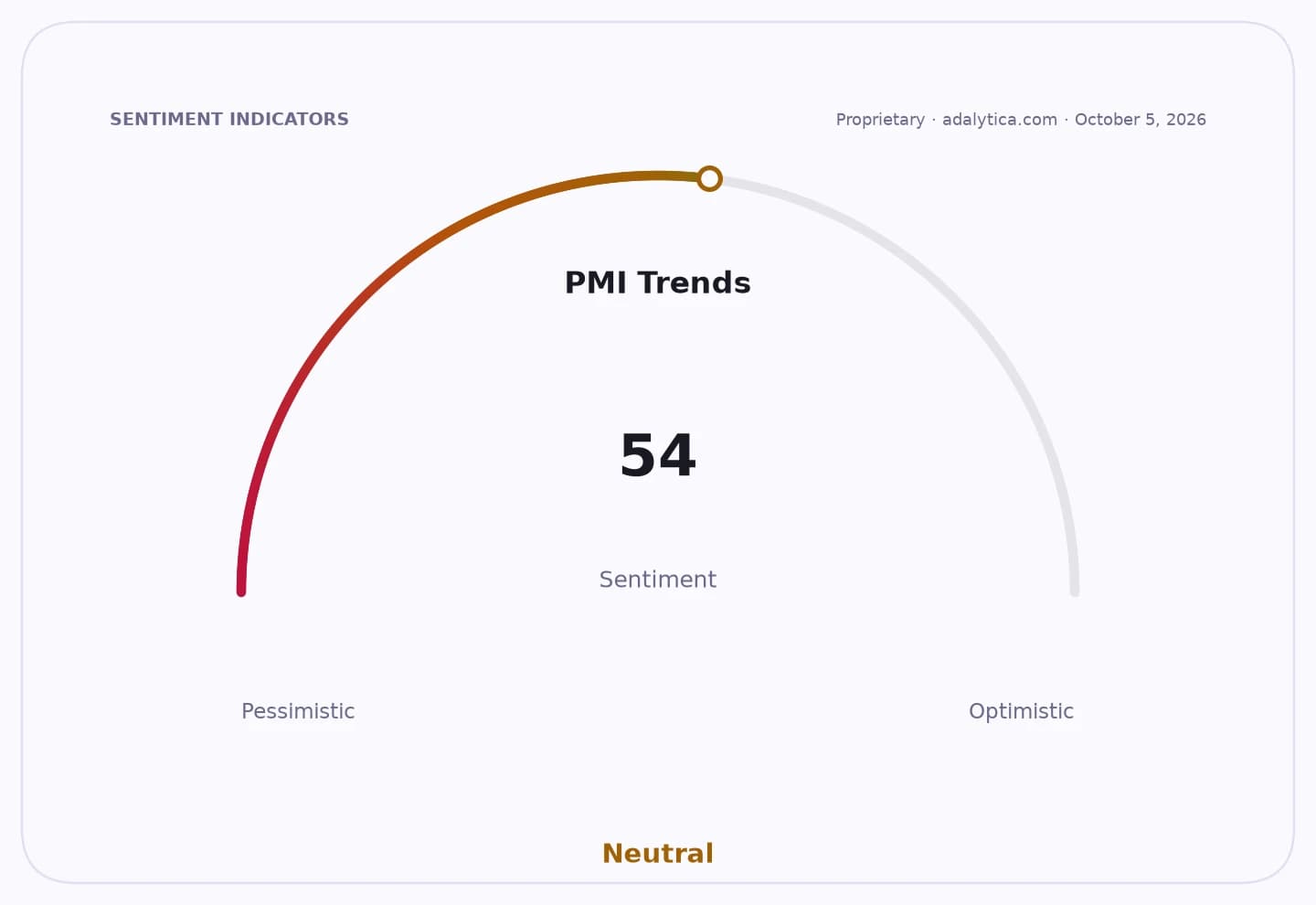
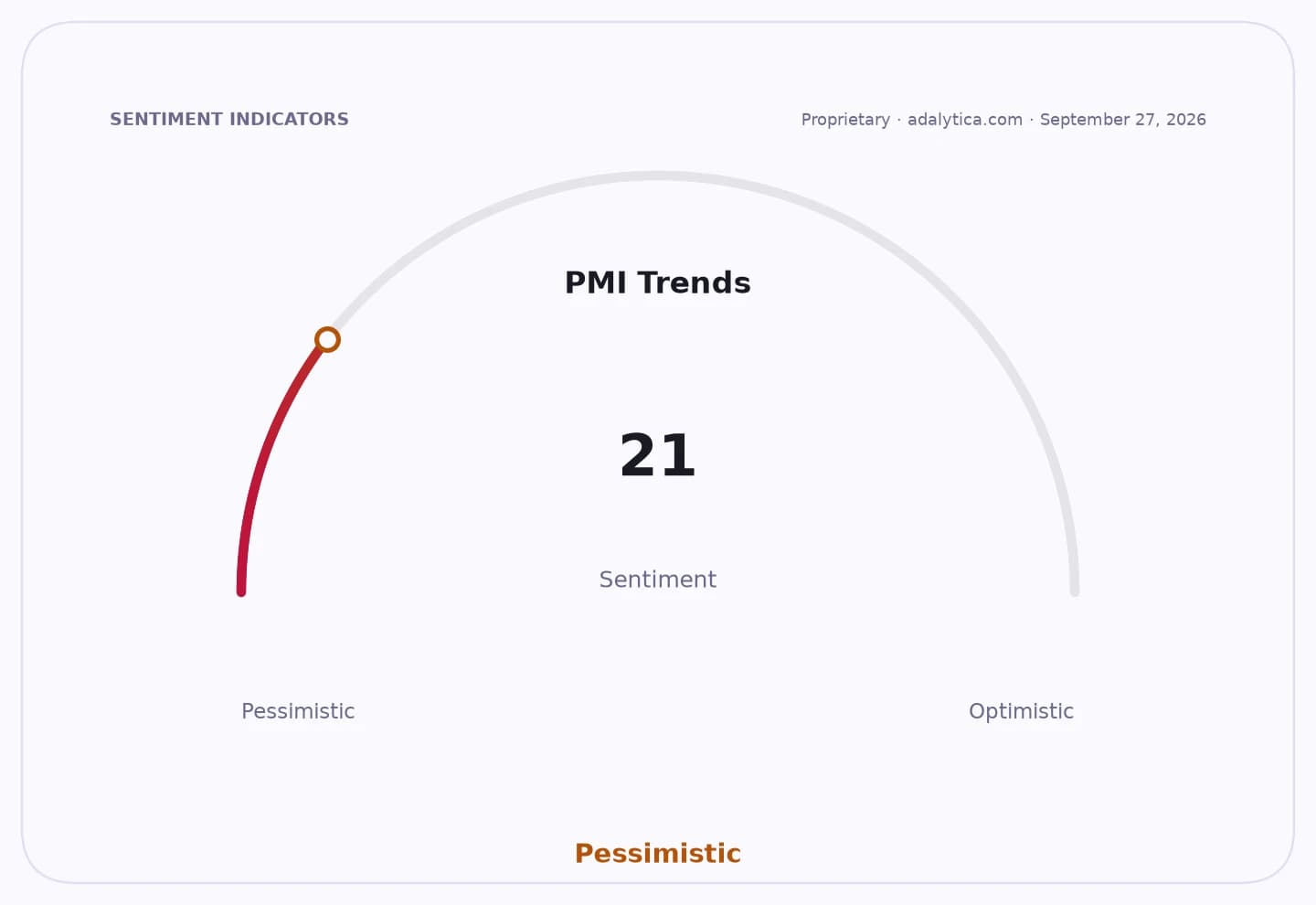
France’s private sector returned to growth in September, but the recovery looked tentative rather than durable, with the strongest reading in more than two years offset by soft demand, rising inflation pressures and weaker confidence about the months ahead.
France Private Sector PMI Rises to 51.1 in September

The S&P Global composite purchasing managers’ index rose to 51.1 from 48.5 in August, moving back above the 50 threshold that separates expansion from contraction and marking the highest level in 25 months. The improvement was led by services, where activity climbed to 51.2 from 48.0, its first monthly increase since December, while manufacturing stayed in expansionary territory at 50.6, down only slightly from 51.1.

For policymakers and investors, the reading matters because it points to an economy that is stabilising after a weak summer, but not one that has yet escaped the drag from uncertain politics, high borrowing costs and fragile consumer and business confidence. The gain may also partly reflect a rebound from August’s heatwave-related disruption, according to S&P Global economist Joe Hayes, which would make the September bounce less conclusive as a signal of underlying momentum.
The details were mixed beneath the headline improvement. Companies said customer numbers improved, but new orders still slipped slightly as uncertainty in France weighed on demand. Export orders fell for a 14th straight month, albeit at a slower pace, underscoring the continued weakness in external demand facing French firms even as the euro zone economy elsewhere has shown signs of resilience.

Cost pressures were also building. Service-sector input prices accelerated on the back of more expensive fuel, IT equipment and raw materials, and firms raised their selling prices at the fastest pace in more than three years to protect margins. That combination matters for the European Central Bank, because a firmer services price backdrop could complicate the case for rapid easing even if growth remains uneven.
Employment stayed under pressure too, with service-sector jobs still declining, albeit only marginally. That suggests firms remain cautious about the durability of the recovery and are not yet ready to commit to stronger hiring, which limits the likelihood of a broad-based consumption rebound in the near term.
The outlook is equally cautious. One-year business expectations deteriorated, with service-sector optimism at its weakest since May as companies pointed to the upcoming election period, high interest rates and weak client confidence. That leaves September’s rebound looking more like a base for recovery than evidence of a new expansion phase.
For investors, the message is that France is no longer contracting, but the pace of improvement is too fragile to justify much enthusiasm. A better services reading supports near-term growth assumptions for the euro zone’s second-largest economy, yet persistent order weakness, falling exports and rising costs argue for restraint on earnings upgrades and a continued focus on domestically exposed sectors, rate-sensitive equities and the risk that inflation proves stickier than expected.
| Entity | Gains | Losses |
|---|---|---|
| French service firms | ▲Higher activity, faster pricing power | ▼Margin risk from input costs |
| French manufacturers | ▲Slightly positive PMI, slower export decline | ▼Weak foreign demand |
| Consumers and clients | ▲Some pickup in activity | ▼Higher service prices |
| ECB and rate-sensitive assets | ▲Softer recession risk | ▼Stickier services inflation |