European stocks slid at the open as the sharpest rout in US semiconductor shares since 2020 rippled through global markets, underscoring how tightly equity benchmarks have become tied to a narrow group of AI-linked chip names.
European Stocks Fall as Chip Selloff Spreads
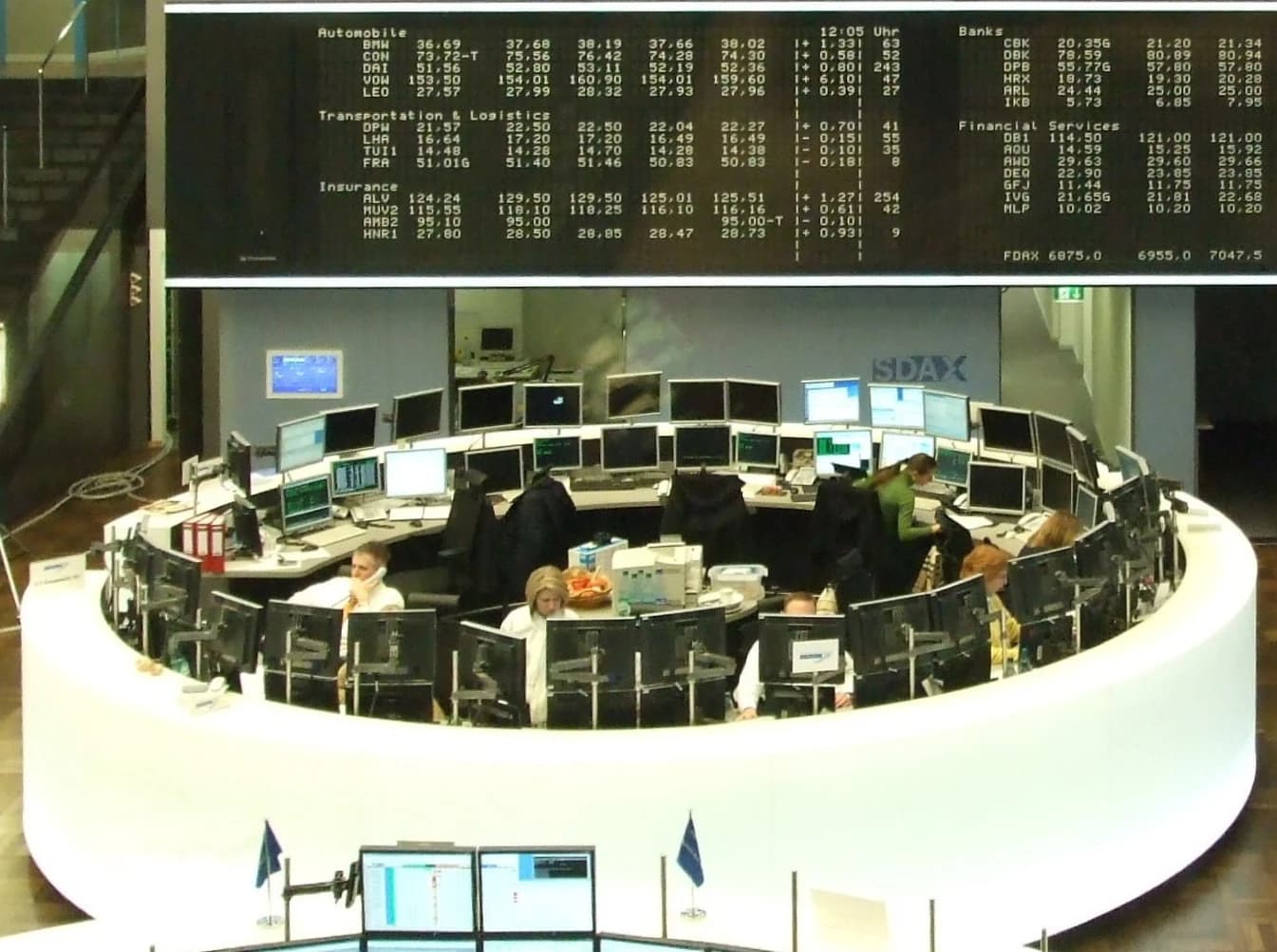
The Stoxx Europe 600 fell 1.2% in early trading, while Germany’s DAX dropped 1.6% and France’s CAC 40 and Britain’s FTSE 100 each lost 1.4%, after the Philadelphia Semiconductor Index sank 12.2% on Thursday in its biggest one-day drop in five years. The sell-off left the US chip gauge about 16% lower for the week and dragged the Nasdaq Composite down 5.5%, the S&P 500 4.4% and the Dow Jones 3.4% — the worst daily losses for all three since President Donald Trump’s tariff announcement in April.
Sentiment Indicators
The market reaction matters well beyond a single trading session. Semiconductor groups have been the backbone of the AI trade, helping push US indices to record highs and concentrate gains in a handful of megacap technology stocks. When that leadership unwinds, the damage is not limited to chipmakers: it hits index levels, investor sentiment and financing conditions across the broader economy. That is why Thursday’s move quickly spread to Asia, where the MSCI AC Asia index fell more than 4%, and then into Europe, where semiconductor-linked shares and broader risk assets opened weaker.
Investors are reassessing whether the hundreds of billions of dollars committed to AI infrastructure can generate returns quickly enough to justify the spending. The immediate trigger is not just valuation fatigue, but a growing debate over demand for data centers, the cost of financing them and the political constraints that could slow their build-out. Market participants are also weighing whether recent US election results increase the odds of tougher regulation on new data centers, at a time when roughly 40% of planned US capacity is in states whose governors have either imposed freezes or pledged to do so, according to Cleanview.
That backdrop has direct implications for semiconductors, power demand and growth-sensitive sectors tied to the AI investment cycle. A slowdown in data-center construction would weaken demand for chips, servers and electricity, while also raising questions about the pace at which the AI boom can feed through to earnings. It would also matter for credit markets and project finance, where higher borrowing costs are already making large-scale infrastructure harder to fund.
The move in equities triggered a classic safety trade. US Treasury yields fell, with the 10-year yield down 6 basis points to 4.84%, while German and French yields also eased. The dollar strengthened against the yen and the euro slipped 0.4% to $1.1174, reflecting a broader bid for defensive positioning even as Brent crude held above $97 a barrel on Middle East developments. Gold, meanwhile, eased 0.6% to $4,089.90 an ounce, suggesting some investors were still trimming risk rather than making a full flight to havens.
The tech concentration behind the sell-off is part of the problem. Nvidia fell 7.8% on Thursday and was down again in early Friday trading in Asia-linked sentiment, while the broader semiconductor ETF gauges were hit hard. The drop also erased tens of billions of dollars in market value from some of the sector’s biggest winners and fed through to billionaire wealth rankings, a reminder of how much the AI trade had been carried by a small number of stocks.
There are still bullish arguments. Some traders say the scale of the decline looks excessive and that a rebound could follow once investors see stabilizing demand data or clearer guidance from chipmakers and AI hyperscalers. Futures on the Nasdaq-100 were up 1.5% in early European trading, hinting that some US buyers are willing to fade the sell-off. But the bear case is that the market is confronting a more durable repricing of AI expectations, with growth, regulation and funding all moving in the wrong direction at once.
For investors, the key test is whether this is a short-lived de-risking episode or the start of a broader unwind in the AI capital-expenditure trade. If data-center spending slows, the pressure will extend from chipmakers to utilities, cloud firms, equipment suppliers and the broader US growth story — and that would make Thursday’s move look less like a panic and more like a warning.
| Entity | Gains | Losses |
|---|---|---|
| Treasury bonds | ▲Safe-haven demand | ▼Equity risk appetite |
| Short-duration defensives | ▲Relative outperformance | ▼AI momentum names |
| Chipmakers / AI stocks | ▲Potential rebound buyers | ▼Valuation reset |
| Data-center builders / financiers | ▲Better discipline on projects | ▼Slower capex rollout |