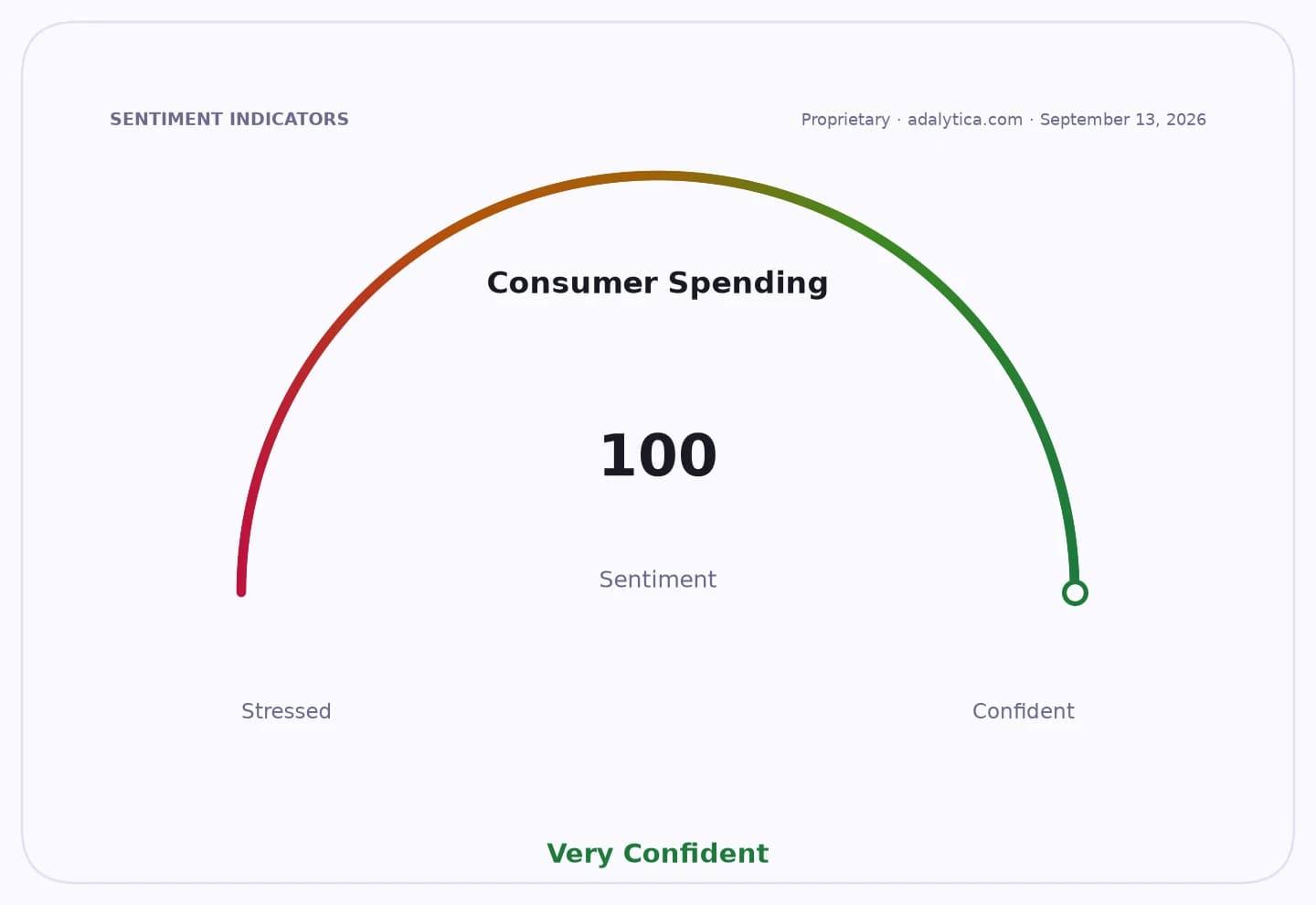
Eurozone households are flashing a warning sign that matters more for growth than the region’s still-resilient factories: consumer confidence has started to crack just as the broader economy remains stuck below trend.
Eurozone Consumer Confidence Falls in September
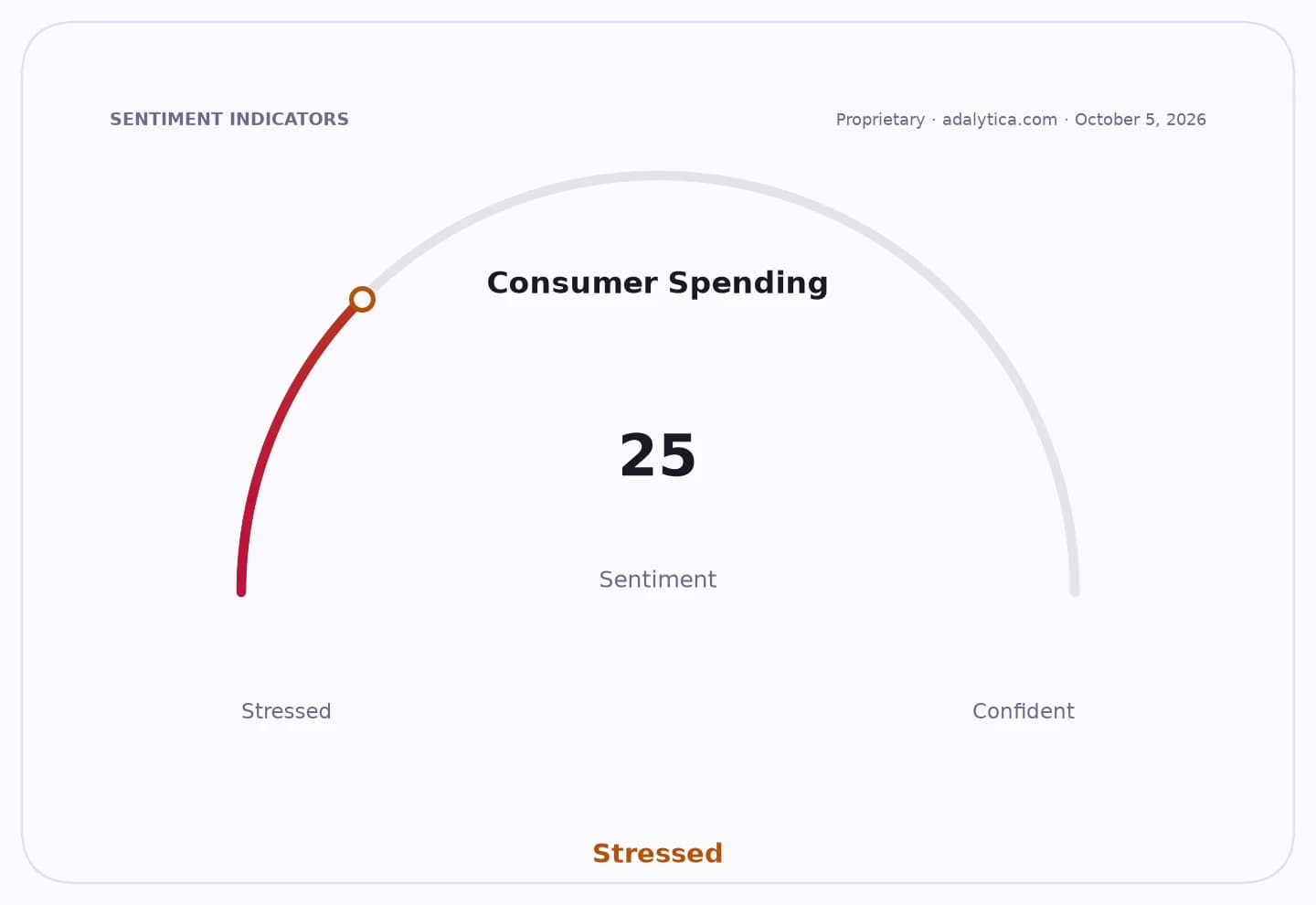
The European Commission said economic sentiment in the 20-nation currency bloc slipped in September to 97.9 from 98.4, reversing four straight monthly gains and falling further below the 100-point long-run average. That drop was driven mainly by a deterioration in consumer mood, even as sentiment improved in both industry and services and held steady in construction despite higher borrowing costs.

For investors, that mix is the important part. Europe’s industrial upswing can support earnings in exporters and capital goods groups, but a nervous consumer usually shows up later in weaker retail sales, softer pricing power and more pressure on discretionary spending. If households are pulling back, the region’s growth profile becomes more dependent on external demand at exactly the moment global trade is more fragile and financing conditions remain tight.
The reading also surprised economists, who had expected the index to rise to 99.0. That miss matters because it suggests the recovery narrative in Europe is more brittle than markets had assumed. A sentiment indicator below the long-term average does not by itself signal recession, but it does point to an economy that is still struggling to generate enough domestic momentum to offset past rate increases and persistent uncertainty.
The message for markets is straightforward: the eurozone may still have pockets of strength, but consumers are not one of them. That keeps pressure on the European Central Bank to avoid sounding overly hawkish too soon, while reinforcing a preference for companies with pricing power, export exposure and balance-sheet strength over domestically focused retailers and other cyclical consumer plays.
My view is that the market underestimates how quickly this kind of consumer wobble can feed through to earnings revisions. If household confidence keeps sliding, Europe’s next leg will not be led by broad-based demand — it will be led by select winners tied to infrastructure, defense, industrial automation and overseas sales. Positioning early for that divergence remains the higher-conviction move.
| Entity | Gains | Losses |
|---|---|---|
| Exporters | ▲weaker euro tailwind | ▼domestic demand softness |
| ECB | ▲room to stay cautious | ▼pressure from slowing consumers |
| Consumer staples | ▲defensive flows | ▼limited growth upside |
| Retail and discretionary stocks | ▲— | ▼slower spending, margin pressure |