Extremadura’s employment service has moved to cushion joblessness with a new training allowance of up to 50 euros a day, a small but economically meaningful subsidy aimed at keeping unemployed workers in the labor pipeline rather than on the sidelines.
Extremadura adds 50-euro daily training allowance
The measure matters because the region is trying to tackle a persistent labor-market weakness with a direct cash incentive: reduce the immediate income cost of retraining and, in theory, lift participation in courses that improve job prospects. In a country where unemployment remains a structural policy challenge, even modest subsidies can shape behavior if they are easy to access and tied to real skills acquisition.
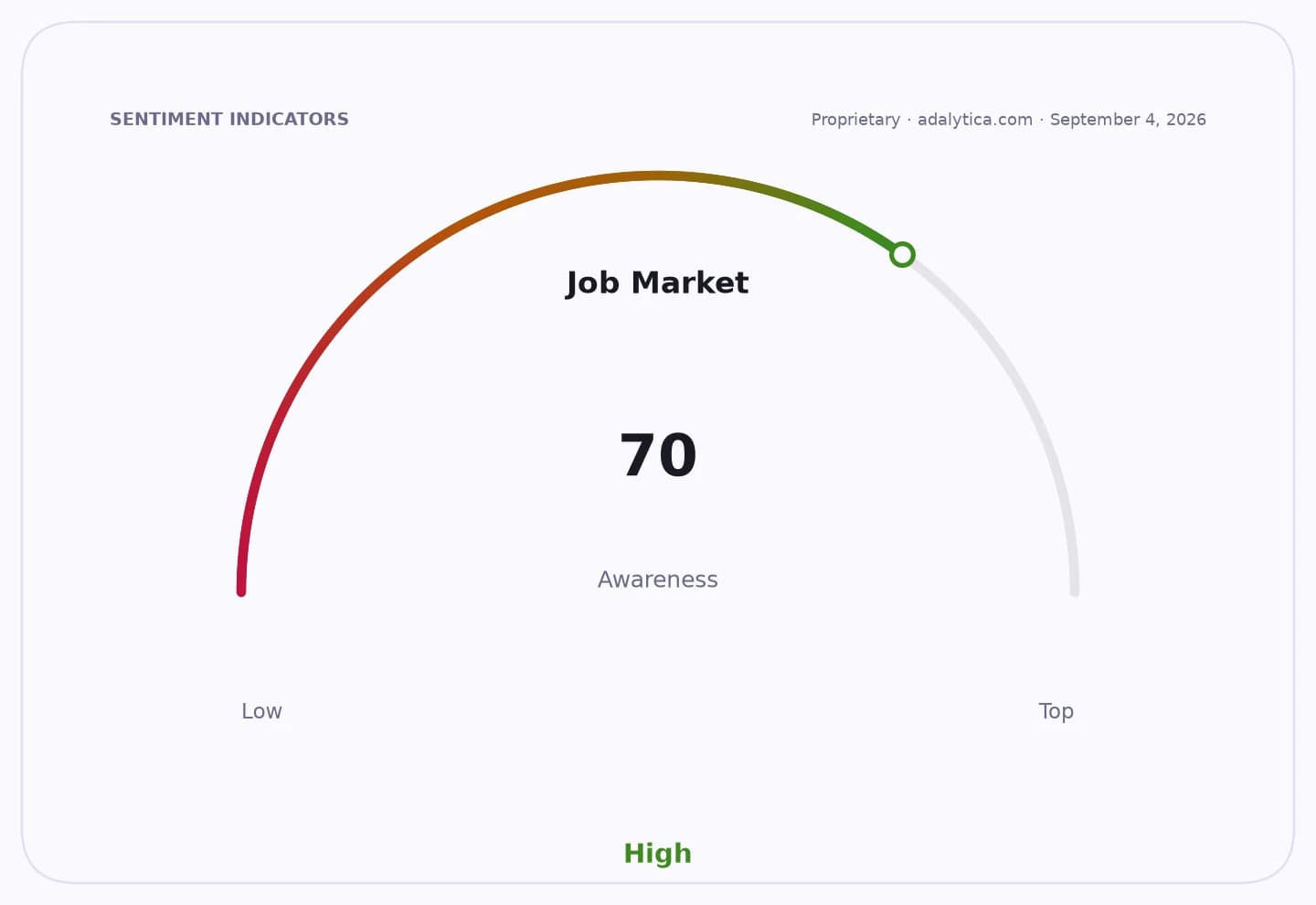
Sentiment IndicatorsⓘProprietary · adalytica.com · September 4, 2026
This is a snapshot — live sentiment, awareness and momentum for 130+ markets update continuously in the dashboard.Open AlphaPulse
For investors, the story is less about the size of the payment than the policy signal. Spain’s regions continue to lean on active labor-market measures to support household incomes and stabilize demand, a pattern that can help underpin consumption in lower-income areas while also exposing the fiscal costs of propping up employment. If the program draws more unemployed workers into training, it could improve labor supply over time; if take-up is weak, it would reinforce the view that cash support alone does little to solve entrenched unemployment.
The backdrop is a labor market that is still healing unevenly. Spanish unemployment has been grinding lower, and broader employment data point to resilience, but the jobless rate remains sensitive to regional disparities and sector-specific weakness. Targeted aid like Extremadura’s is designed for exactly that gap: to support people who need time and money to retrain before re-entering the market.
The bull case is that a daily allowance increases training completion and helps match workers to sectors with vacancies. The bear case is that it becomes another short-term subsidy with limited long-run impact if course quality, employer demand and placement services do not improve alongside it. For policymakers, the real test will be whether the program reduces duration of unemployment, not just whether it increases enrollment.
Investors watching Spain’s consumer and labor backdrop will be looking for signs that these measures translate into steadier household spending and a better-trained workforce. The immediate effect is local; the wider message is that regional governments are still relying on subsidies to bridge the gap between unemployment support and durable job creation.
| Entity | Gains | Losses |
|---|---|---|
| Unemployed trainees | ▲Daily income support | ▼Less urgency to accept low-paid work |
| Extremadura government | ▲Higher training participation | ▼Higher fiscal cost |
| Local employers | ▲Better-trained labor pool | ▼More competition for workers later |
| Taxpayers / budget hawks | ▲— | ▼Larger subsidy bill |