Digital money laundering networks in Pakistan and India are moving into the mainstream of illicit finance, and that matters because regulators now see hawala not as a backwater cash trade but as a scalable, tech-enabled system that can bypass banks, payment rails and sanctions controls at growing speed.
FATF Report Flags Digital Hawala in Pakistan, India
A joint report from the Financial Action Task Force and the OECD said underground banking has evolved into organized, commercially run businesses that increasingly use virtual assets, fintech apps, encrypted messaging and instant payment systems to move and hide funds. More than 80% of reporting jurisdictions said hawala and similar providers are a major channel for professional money laundering, while nearly 70% said underground networks are already adopting new technologies.
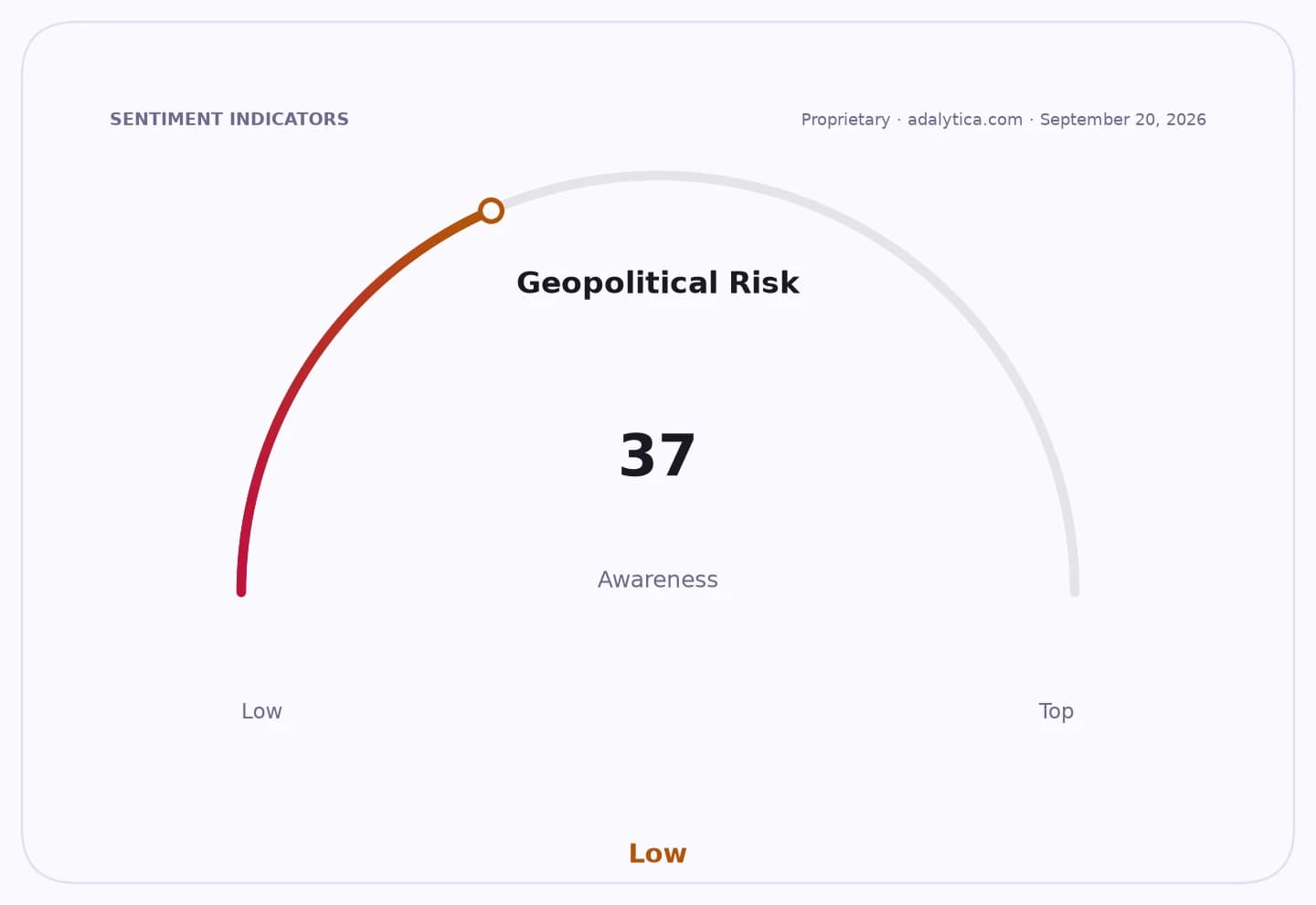
Sentiment IndicatorsⓘProprietary · adalytica.com · September 4, 2026
This is a snapshot — live sentiment, awareness and momentum for 130+ markets update continuously in the dashboard.Open AlphaPulse
That shift raises the economic stakes well beyond traditional crime. The report says these networks are now used to move proceeds from fraud, cybercrime, terrorist financing and illegal gambling, not just drug trafficking and smuggling. In practice, that means more dirty money is leaking through the same digital pipes that support remittances, small-business payments and cross-border transfers in fast-growing South Asian economies.
The most important implication for investors is that compliance, payments and banking oversight are about to get more expensive. As illicit actors move from cash couriers to WhatsApp groups, digital wallets, virtual IBANs and stablecoins, the burden falls on banks, fintechs and regulators to detect activity without choking legitimate flows. That is a favorable setup for cybersecurity, regtech and transaction-monitoring vendors, while it keeps pressure on payment firms and banks that operate in high-risk corridors.
The report’s case study in Oman and Pakistan shows how quickly these networks adapt. Authorities found hawaladars advertising remittance services in a WhatsApp group, taking cash or mobile-linked transfers and settling via digital wallets, including Pakistan’s Raast system. The network moved about $72,293 over a year, a small sum that still illustrates the model: low fees, speed, and enough opacity to make enforcement hard until the trail is already cold.
For investors, the bigger takeaway is not the size of that one network but the direction of travel. Professional money laundering is becoming more digital, more automated and more borderless, with AI-based tools and purpose-built hawala apps now part of the mix. That creates a second-order tailwind for firms selling identity verification, anti-money-laundering software, device intelligence and AI-driven fraud detection, especially across emerging markets where instant payments are expanding faster than oversight.
The winners are the compliance tools, the security stack and formal payment rails that can prove they are clean. The losers are underground operators, lax intermediaries and any institution that assumes this is still a cash-only problem. The market underestimates how fast financial crime is becoming a software business — and that means the next multiyear investment opportunity may be in the systems built to catch it.
| Entity | Gains | Losses |
|---|---|---|
| Compliance software providers | ▲More AML demand | ▼ |
| Banks and fintechs with strong controls | ▲Trust and market share | ▼ |
| Hawala operators | ▲ | ▼Higher scrutiny |
| Poorly monitored payment rails | ▲ | ▼Enforcement pressure |