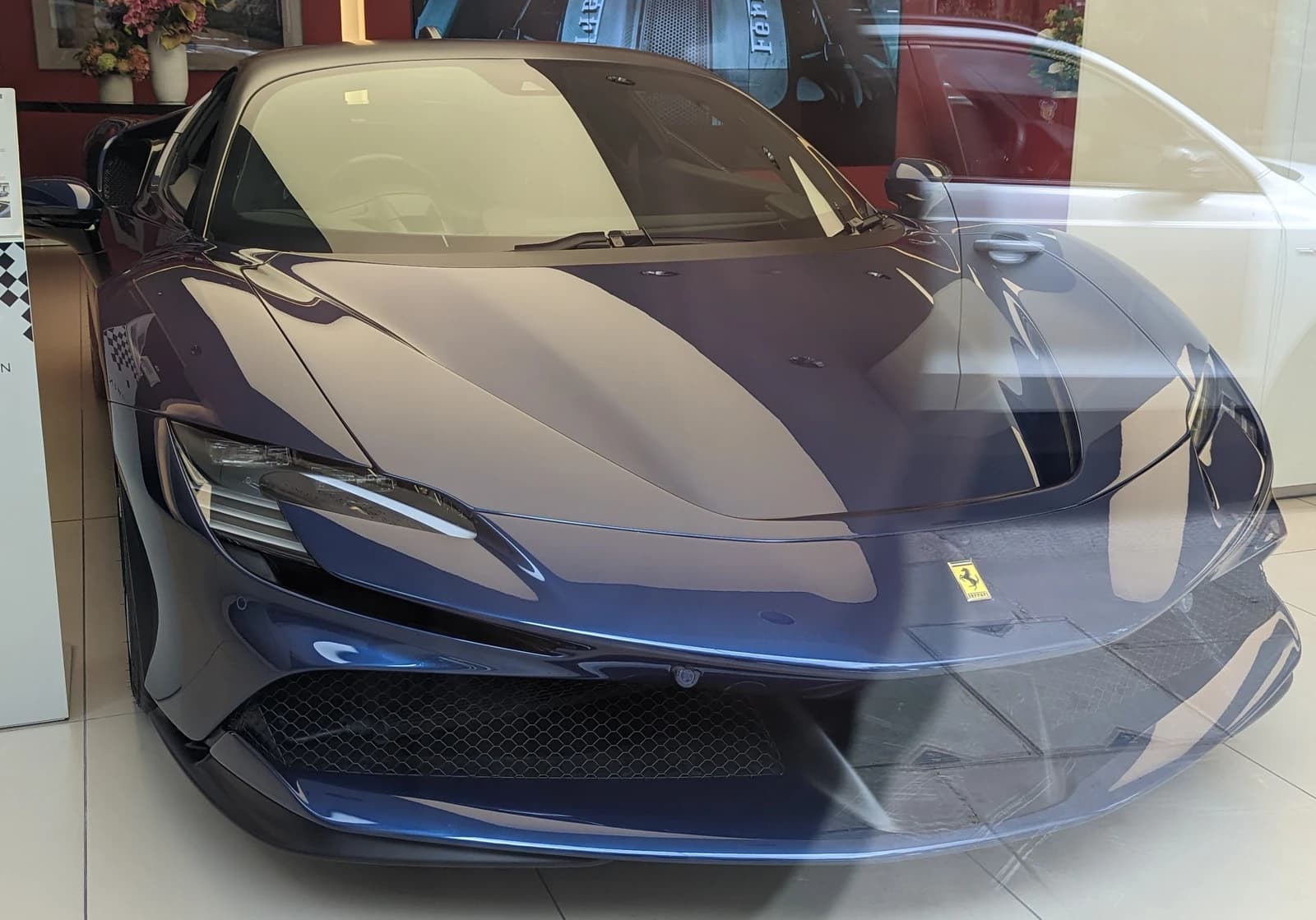
Ferrari lifted its profit outlook after demand for its highest-margin models held up, a reminder that the ultra-luxury carmaker can keep pricing power even when the broader auto market is choppy.
Ferrari raises outlook as demand holds for top models
That matters because Ferrari’s business model is built less on volume than on exclusivity. When wealthy buyers continue to order more expensive models, the company gets a double benefit: revenue rises and margins stay unusually wide. For investors, that is the key reason Ferrari often trades more like a luxury brand than a traditional carmaker.
The stock has already been telling that story. Ferrari shares have climbed to about $432.45 from roughly $403.09 on Nov. 2 and $414.77 on Nov. 3, with the latest move coming on stronger-than-average volume. The shares now sit well above both the 50-day and 200-day moving averages, while the RSI has pushed into overbought territory, a sign that enthusiasm has become intense even if the long-term thesis remains intact.
The broader industry backdrop helps explain why Ferrari is standing out. Auto demand is improving in parts of the market, with October wholesales rising 12.4% to 528,384 units in a sign of seasonal strength and continued appetite for premium vehicles. But the real investment story is not the industry as a whole — it is that Ferrari can charge more, sell scarce cars, and keep customers waiting.
That scarcity is the moat. Unlike mass-market automakers fighting on discounts, financing and electric-vehicle share, Ferrari can preserve its brand by controlling supply and focusing on bespoke, high-end models. That gives the company a level of earnings resilience that investors rarely get in autos, a sector usually defined by cyclical demand and thin margins.
The near-term risk is valuation. When a stock has already run hard, even a very good business can stumble if expectations get ahead of fundamentals. But long-term investors should focus on the wider lesson: companies with rare brands, pricing power and loyal customers can compound earnings for years, not quarters.
For buy-and-hold investors, Ferrari remains a reminder that the best auto businesses are not always the ones selling the most cars — they are the ones selling the most profitable ones. Worth watching, and still one of the more durable luxury names in the market.
| Entity | Gains | Losses |
|---|---|---|
| Ferrari | ▲Higher margins and profit outlook | ▼Value-focused buyers |
| Wealthy buyers | ▲Access to exclusive models | ▼Discount hunters |
| Shareholders | ▲Stronger earnings visibility | ▼Late entrants at rich valuations |
| Mass-market automakers | ▲None | ▼Share of luxury demand |