Flipkart Minutes is leaning on a tightly managed farm sourcing network to win share in India’s fast-growing quick-commerce grocery market, using direct ties to more than 7,000 farmers and 25 farmer producer organisations to improve produce quality, cut waste and speed deliveries.
Flipkart Minutes builds farm network for fresh grocery
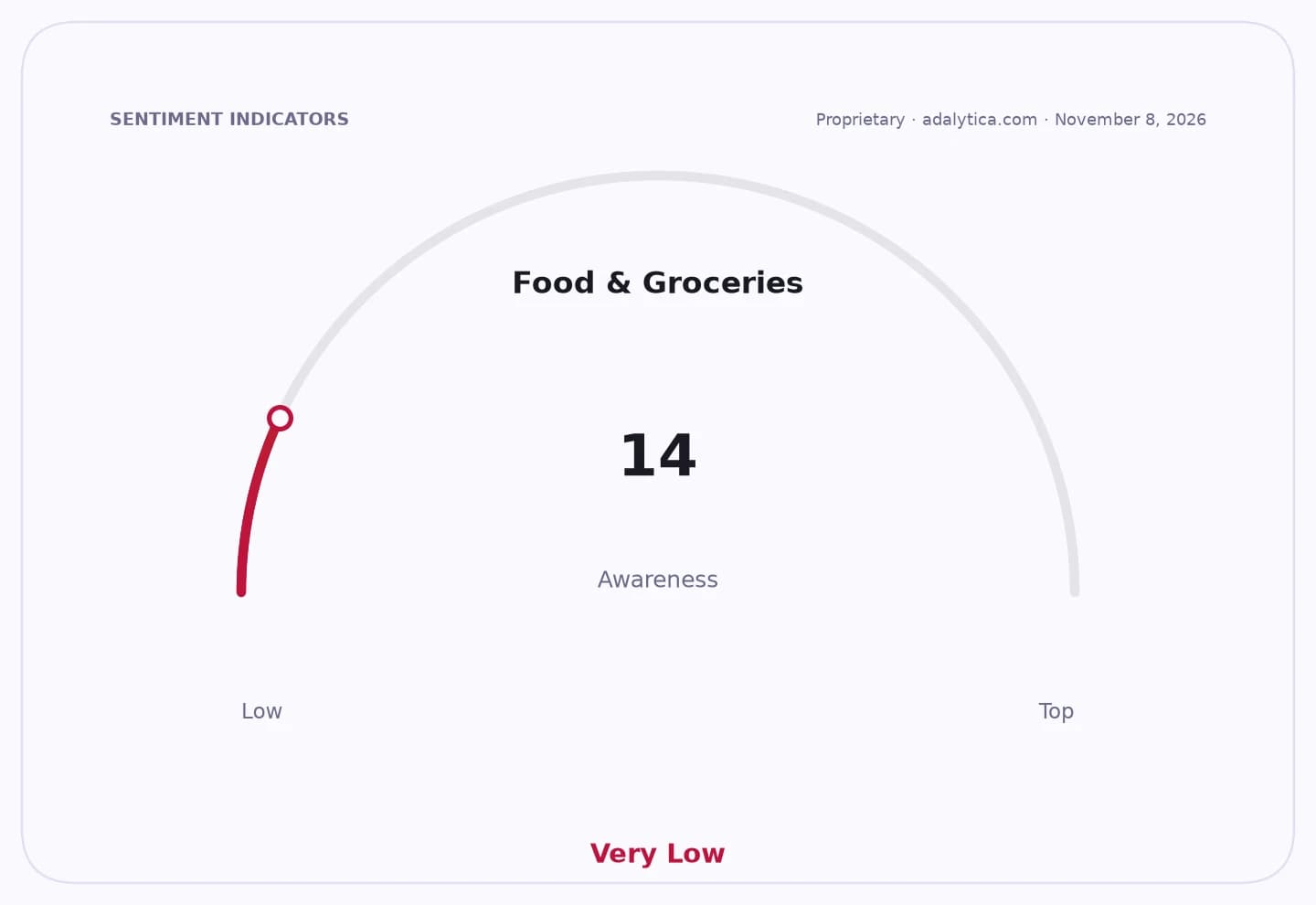
Food & Groceries
The strategy matters because fresh grocery is one of the toughest and most margin-sensitive categories in quick commerce. Whoever controls sourcing, grading and cold-chain handling can protect quality, reduce spoilage and improve unit economics, while also giving customers a more reliable assortment in a segment where speed alone is no longer enough.
Sentiment Indicators
At a collection centre in Kunjirwadi near Pune, Agromol Ventures handles about 20 to 22 tonnes of fruits and vegetables a day before dispatching them to Flipkart Minutes micro-fulfilment centres. Flipkart says produce is expected to reach the centre within 60 to 90 minutes of harvest and is then kept in temperature-controlled rooms at 2 to 10 degrees Celsius before being sorted, graded and packed.
For farmers, the model can lower costs and improve yields. Pune-based farmer Rahul Popat Pawar said input costs have fallen by as much as 30% since he began supplying through Flipkart Minutes and Agromol about two years ago, while his income and crop success rate improved.
Flipkart says it shares monthly and seasonal demand forecasts with partners so farmers can plan cultivation around expected orders, rather than relying on open-market price discovery after harvest. In Pune, about 90% of Flipkart Minutes’ fresh produce procurement through Agromol comes directly from farmers and farmer partners, according to Kunal Gupta, senior vice president at Flipkart and head of Flipkart Minutes.
The supply chain is part of a broader push by quick-commerce players to control more of the grocery value chain. Zepto has Bloom, Swiggy Instamart has Nectr and Blinkit has Whole Farm, as each platform tries to secure better quality and fresher inventory while limiting wastage from unsold stock.
For investors, the economics are the point. Fresh produce can drive repeat purchases, but it is also prone to spoilage, uneven quality and seasonal swings, making procurement discipline a competitive moat. A stronger farm-to-fulfilment network could help Flipkart Minutes narrow the gap with rivals in everyday grocery and turn more of the category into a profitable habit rather than a cash-burning race for speed.
The bigger test is whether Flipkart can convert sourcing muscle into customer loyalty at scale, as quick-commerce players keep investing in private labels, cold chains and local procurement. The next catalyst is likely to come from whether Minutes can sustain availability and quality across more cities without raising wastage or delivery costs.
| Entity | Gains | Losses |
|---|---|---|
| Flipkart Minutes | ▲Better quality control | ▼Higher sourcing complexity |
| Farmers and FPOs | ▲Lower input costs | ▼Less price flexibility |
| Quick-commerce rivals | ▲Need to match supply chains | ▼Lose differentiation if quality lags |
| Customers | ▲Fresher produce, better availability | ▼Fewer bargain-only choices |