FPT’s stock has been punished far harder than its operating results would suggest, wiping out about $4.5 billion in market value as investors reassess how long the Vietnamese technology group can keep delivering premium growth in an AI-driven world.
FPT falls on foreign selling and AI margin fears
That gap between the share price and the business is the real story. FPT is still posting solid earnings growth, but the market is clearly looking past the current profit line and pricing in a tougher future for software outsourcing margins, customer budgets and valuation multiples.
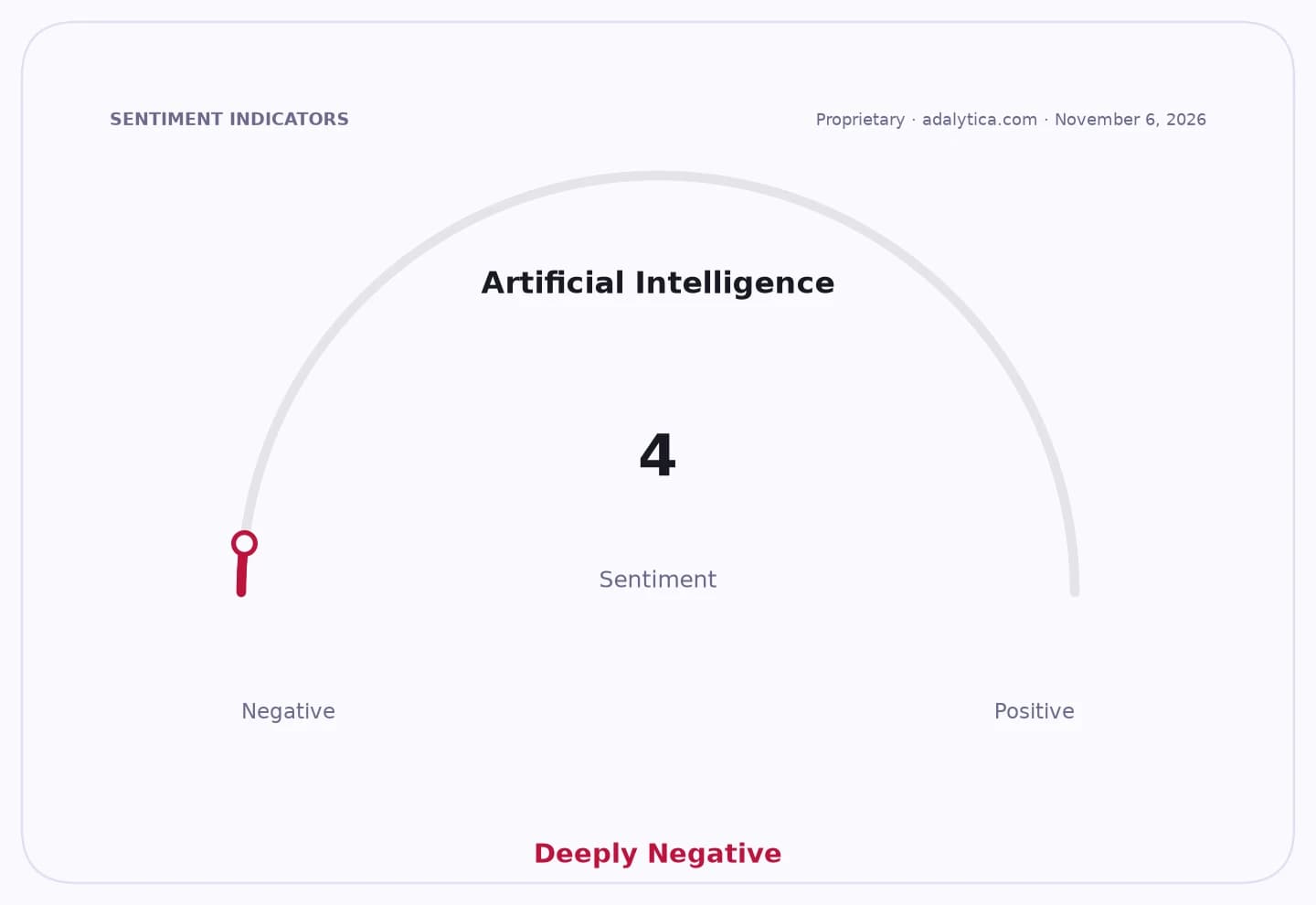
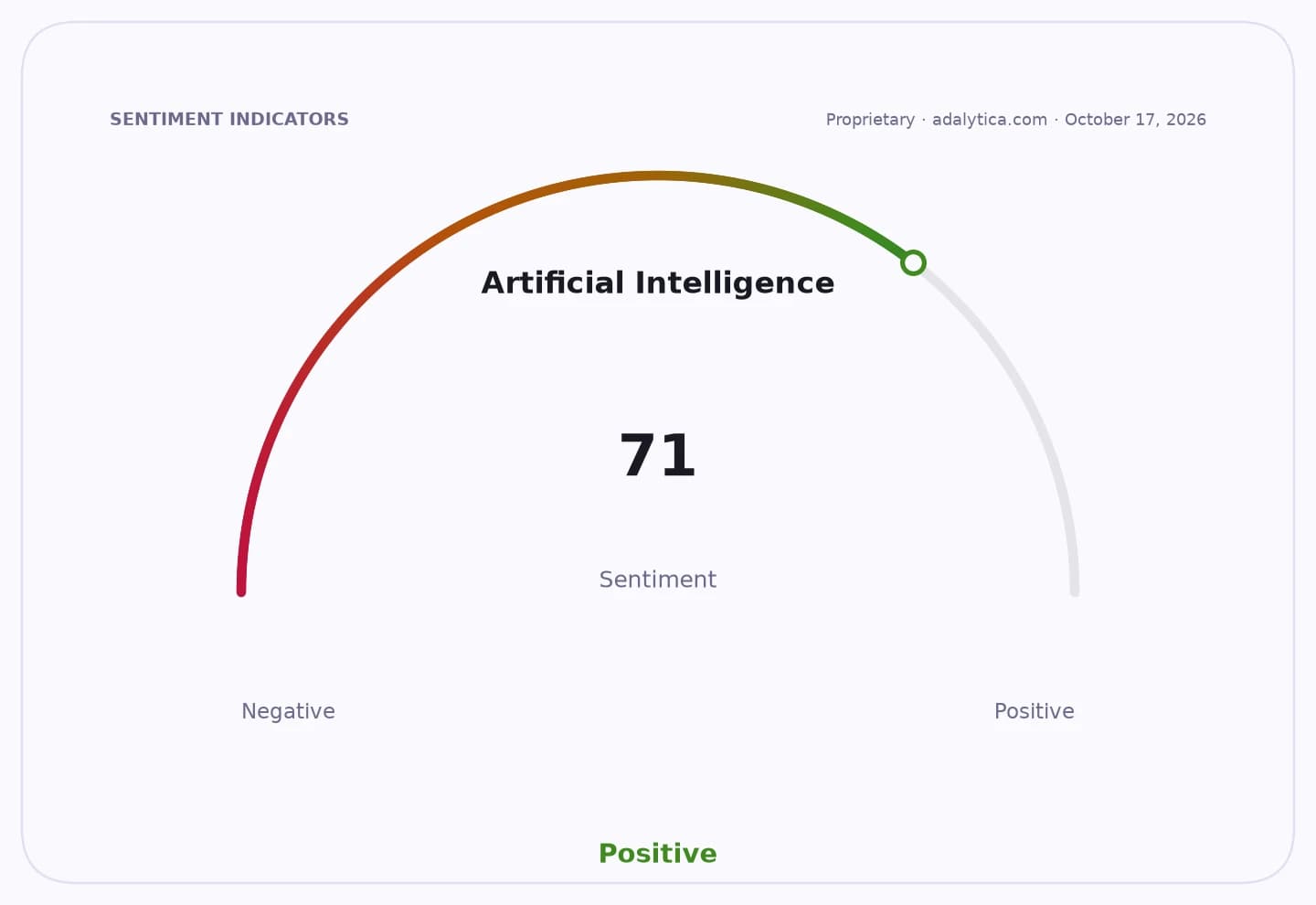
Sentiment Indicators
The shares fell to 57,900 dong on Oct. 9 after 11 straight losing sessions, down about 13% from Sept. 23 and more than 38% for 2026. From the late-January 2025 peak near 120,000 dong, the stock has lost more than half its value, erasing roughly 117,000 billion dong in capitalization, or close to $4.5 billion.
One immediate pressure point has been foreign selling. Overseas investors have net sold about 14,800 billion dong of FPT shares since the start of the year, equal to roughly 180 million shares, even though the company has long been one of the most popular growth names in Vietnam for global funds.
That selling matters because it can feed on itself. If FPT no longer meets the foreign-ownership threshold for the VN-Diamond index, it could drop out of the basket and trigger additional ETF-related outflows. For a stock already under pressure, that kind of mechanical selling can overwhelm fundamentals in the short term.
And the fundamentals are still decent. In the first eight months of 2026, FPT reported revenue of 35.4 trillion dong, up 13.5%, while pretax profit rose 17.5% to 7.65 trillion dong. Its technology arm generated more than 31 trillion dong of revenue, and overseas IT services remained a bright spot, with Japan up 20.8% and new foreign contracts climbing 28.2%.
Yet investors are not buying yesterday’s growth rate. They are asking whether AI makes FPT’s traditional outsourcing model less valuable over time. If coding, testing and documentation become faster and cheaper, customers may not pay the same rates for routine services, even if demand for more advanced work stays strong.
That is why the stock’s decline matters beyond one company. FPT sits at the center of a larger question for emerging-market tech firms: can a labor-heavy services model keep compounding if AI boosts productivity and compresses pricing? The answer will determine not just margins, but how much of the company’s growth turns into durable free cash flow.
FPT is trying to adapt with an AI-first strategy, including its FleziPT platform, and it has strengths that should not be dismissed lightly. It has scale, international clients, project-management know-how and a long history of execution. Those are real moats in a business where trust and delivery matter.
But the next phase will require more than bigger headcount and more contracts. It will require moving up the value chain into AI, cloud, data, cybersecurity and even semiconductors, while still protecting the core business that funds the transition. That is a hard balancing act, especially when customers are becoming more cost-conscious.
For long-term investors, the message is simple: this is less about a bad quarter than a changing industry. FPT may still be a quality company, but the market is demanding proof that its growth can survive the AI cycle without a permanent hit to pricing power. That makes it a stock worth watching closely, and for patient investors, a name to keep on the watchlist rather than chase blindly.
| Entity | Gains | Losses |
|---|---|---|
| FPT customers | ▲Lower service pricing | ▼Less certainty on delivery |
| FPT management | ▲AI transition opportunity | ▼Margin and valuation pressure |
| Foreign investors | ▲Potential re-rating entry point | ▼Heavy mark-to-market losses |
| ETF holders tracking VN-Diamond | ▲Possible bargain exposure | ▼Forced selling risk |