Tata Consultancy Services is redrawing its hiring model around artificial intelligence, with 80% of new vacancies now expected to require AI and other digital skills, a shift that shows how quickly the economics of India’s largest IT services company are moving away from legacy labor intensity and toward higher-value technology work.
TCS to Require AI Skills in 80% of New Jobs
The change matters because TCS sits at the center of India’s $250 billion outsourcing industry, where revenue growth has been pressured by cautious enterprise spending, delayed discretionary projects and a client base that is trying to do more with fewer people. By pushing AI literacy into recruitment at scale, TCS is signaling that future growth will increasingly depend on delivering automation, data and generative-AI services rather than simply supplying large pools of engineers.
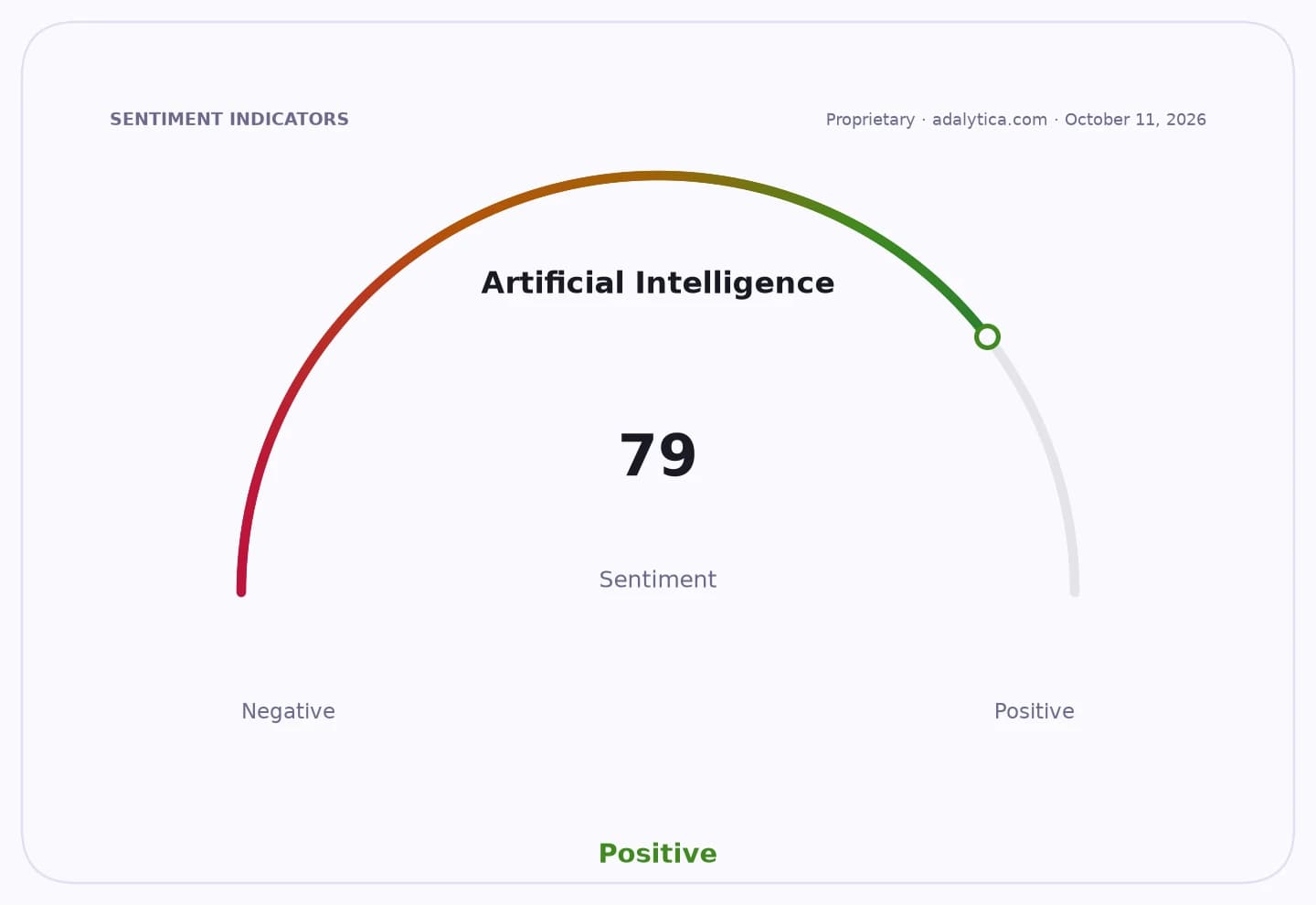
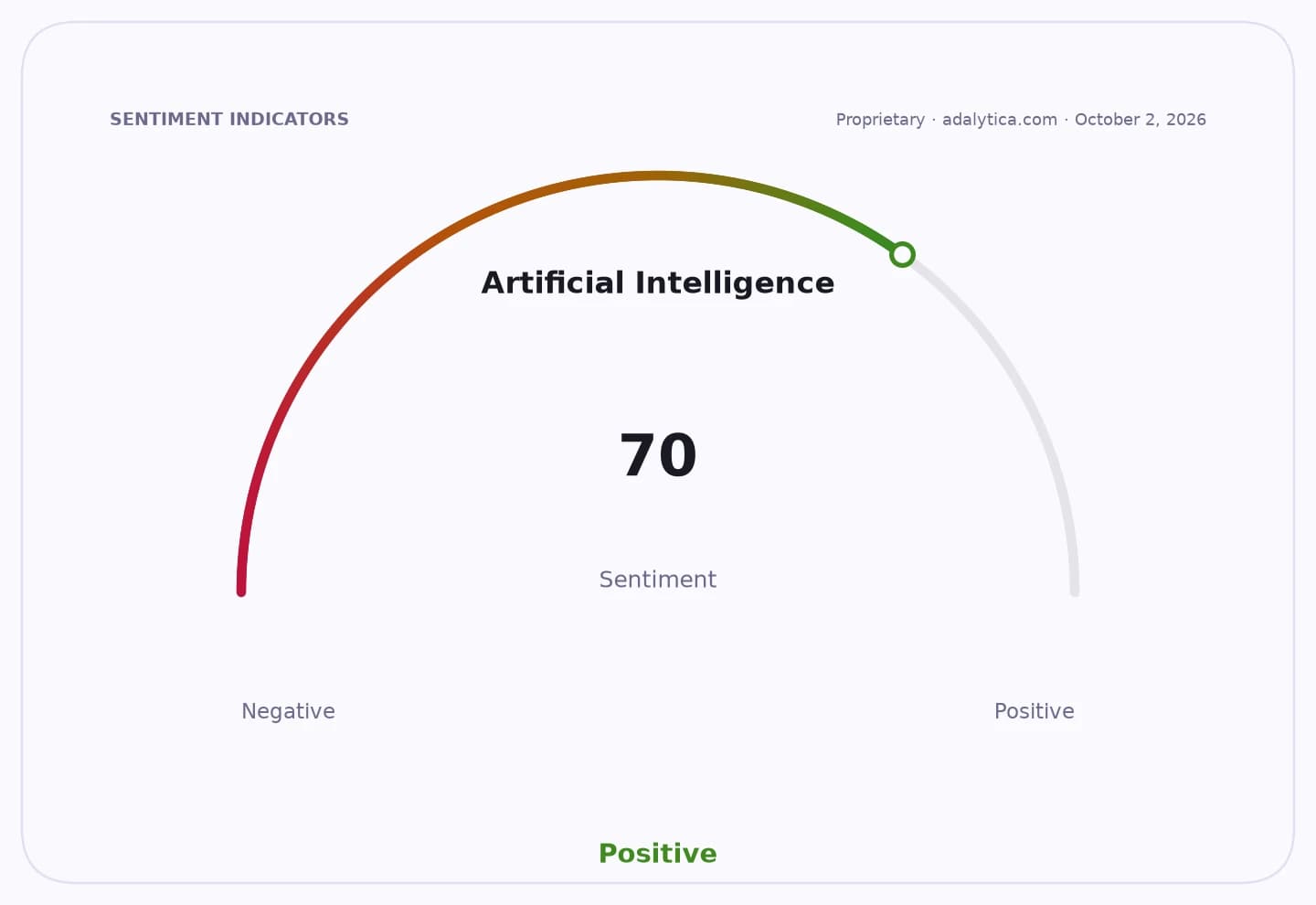
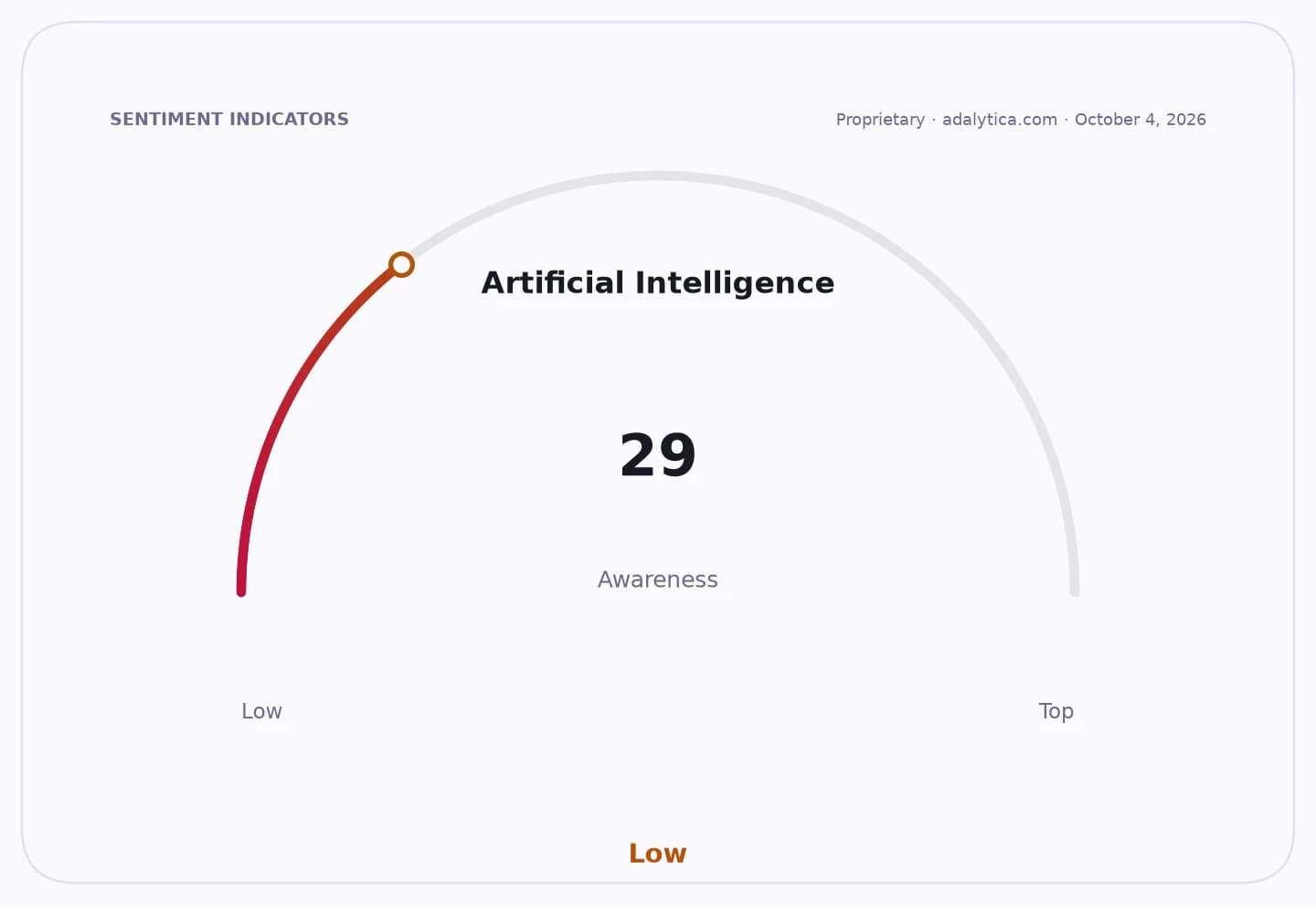
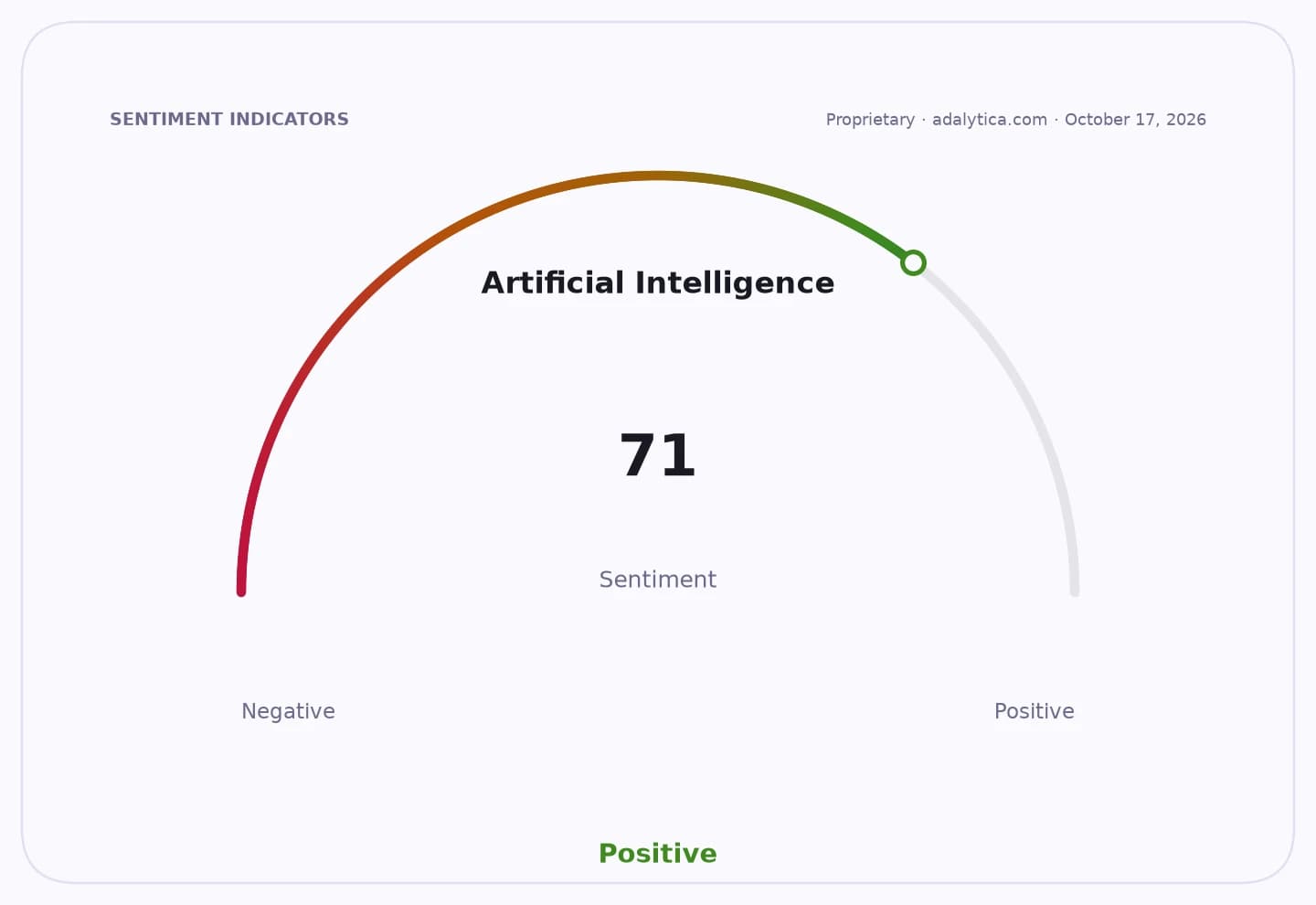
Sentiment IndicatorsⓘProprietary · adalytica.com · October 17, 2026
This is a snapshot — live sentiment, awareness and momentum for 130+ markets update continuously in the dashboard.Open AlphaPulse
Chief executive K. Krithivasan and chief operating officer Aarthi Subramanian said the company now generates about 10% of revenue from AI-related work, a material share for a business long associated with application maintenance, infrastructure support and systems integration. That figure suggests AI is moving from pilot projects and consulting conversations into paid contracts, and it gives investors a clearer line of sight to how quickly the company can monetize enterprise demand for transformation projects.
For TCS, the strategy has two sides. The bullish case is that AI-led hiring can protect pricing power, support margins and deepen client relationships as customers look for vendors that can embed machine learning into core workflows. The bearish case is that retraining and hiring for AI may raise costs before revenue scales enough to offset them, while competition from global consultancies, hyperscalers and specialized AI boutiques could compress returns.
The move also has wider implications for India’s technology-services sector, which has been under pressure to prove that it can adapt to a new generation of enterprise spending. A hiring policy that prioritizes AI skills effectively tells the market that the competitive moat is no longer headcount, but the ability to combine domain knowledge, cloud engineering and model deployment at scale. That could force peers to accelerate reskilling, rethink utilization metrics and shift compensation toward scarce AI talent.
Investors will be watching whether the 10% revenue contribution from AI can rise fast enough to offset slower traditional IT spending and whether TCS can preserve operating discipline while rebuilding its workforce. If the company executes, the pivot could support a re-rating for the sector as earnings become more exposed to faster-growing digital services. If it cannot, the shift may instead highlight the cost of trying to reposition a large legacy services franchise in an AI-first market.
| Entity | Gains | Losses |
|---|---|---|
| TCS | ▲Higher-value revenue mix | ▼Legacy labor model |
| AI-skilled jobseekers | ▲Better hiring demand | ▼Generalist applicants |
| TCS investors | ▲Margin expansion potential | ▼Near-term cost pressure |
| Legacy IT peers | ▲— | ▼Competitive pressure |