Fuel oil prices in France’s Channel region have surged to record levels, squeezing households and small distributors just as autumn approaches and raising the risk of a broader hit to rural spending and winter heating demand.
France Channel heating oil prices hit record levels
In the Manche, the price of heating oil has climbed to as much as 1.90 euros a litre, up about 60% from a year earlier, according to local suppliers. One distributor said he had “never seen this” in 70 years of business, with prices rising by two euro cents a day and sometimes as much as 10 cents. Another said last year the market was closer to 1.08 euros a litre.
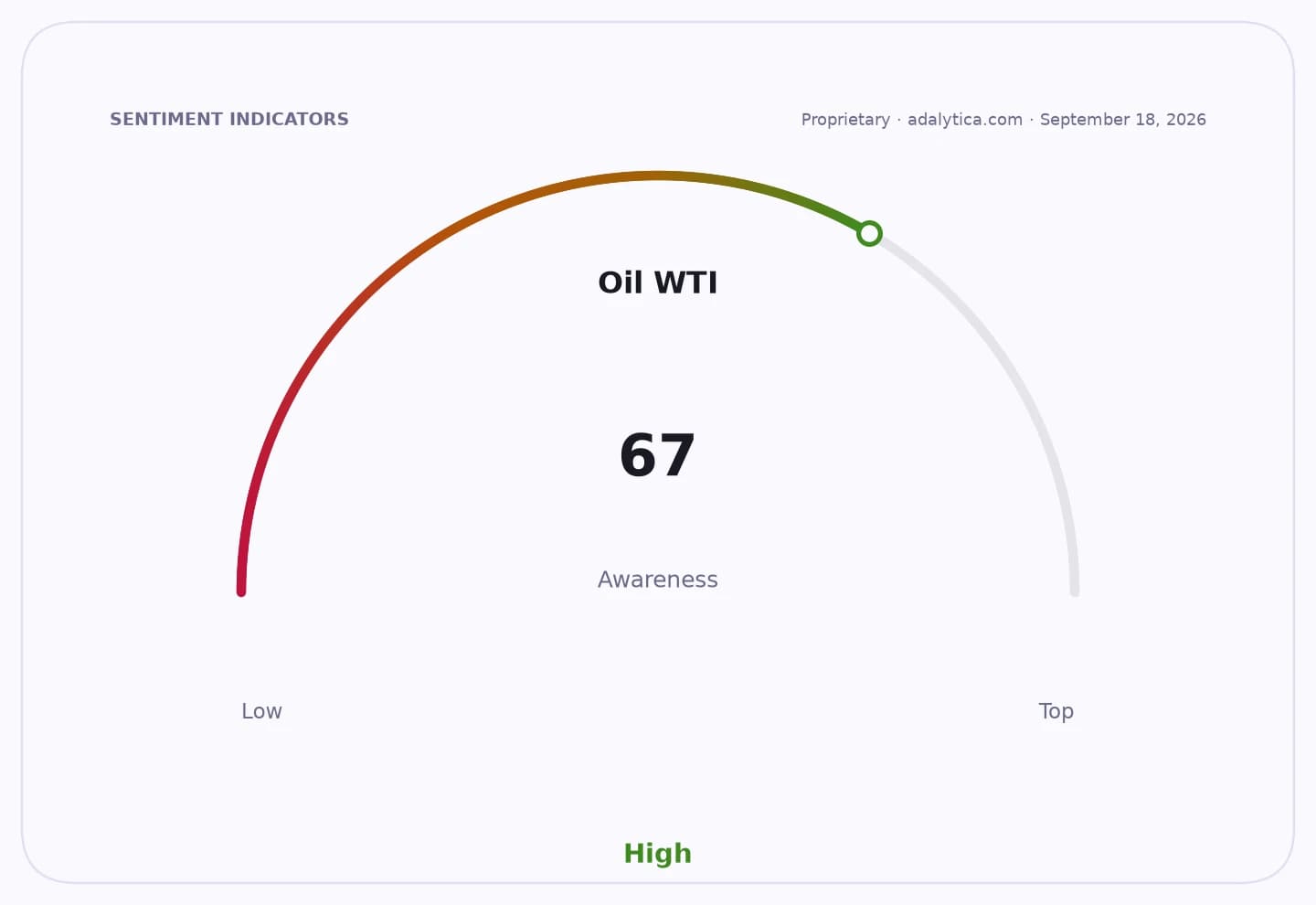
Sentiment IndicatorsⓘProprietary · adalytica.com · September 18, 2026
This is a snapshot — live sentiment, awareness and momentum for 130+ markets update continuously in the dashboard.Open AlphaPulse
That matters because heating oil is not a niche expense in this part of Normandy. Some 163,000 main homes in the region still rely on fuel oil, or 10.6% of households, above the national average of 8.5%, according to Insee data cited in the report. In the Manche, the share is higher still, reaching 12.3% of main residences and 17% in the Mont-Saint-Michel-Normandie area. For a lot of older and rural households, there is no easy substitute.
The economic impact shows up immediately in behavior. Customers are delaying deliveries, asking for smaller fills and hoping prices fall before winter. One local supplier said some households are ordering just 500 litres at a time, far below the roughly 2,500-litre capacity of a typical tank. That hurts distributors too: more trips, smaller tickets and lower profitability.
The surge fits a wider oil-price shock. Brent and WTI have moved back above the $100-a-barrel area in the broader global crisis, with supply disruptions and Middle East tensions feeding higher fuel costs. WTI futures were still trading above $95 a barrel on Sept. 18, and U.S. oil ETF flows show investors remain exposed even after the recent pullback. The 50-day moving average for WTI and USO has risen sharply, while the RSI readings have stayed elevated, a sign of a market that remains stretched even after some cooling.
For investors, the near-term winners are the oil producers and refiners that can pass through higher crude prices and preserve margins. The losers are households, small transport operators and rural distributors caught between higher input costs and reluctant customers. Big refiners such as Marathon Petroleum, Valero and Phillips 66 have already reported stronger refining margins this year, helped by tighter supply and geopolitical disruptions.
For long-term investors, the bigger lesson is not to chase the move, but to understand the pressure it puts on consumers and the policy response it may trigger. Persistent fuel inflation can slow discretionary spending, complicate Europe’s energy transition and keep support for alternatives such as heat pumps growing. But in the meantime, rural France is feeling the old energy squeeze again — and that is exactly the kind of stress that can reshape demand patterns over years, not weeks. Worth watching.
| Entity | Gains | Losses |
|---|---|---|
| Oil producers | ▲Higher crude prices | ▼Demand destruction risk |
| Refiners | ▲Wider margins | ▼Fuel-cost volatility |
| Rural households | ▲None | ▼Higher heating bills |
| Local distributors | ▲Higher revenue per litre | ▼Smaller orders, lower efficiency |