France has withdrawn its team from a December para ice hockey world championship in Mexico City rather than face Russia, underscoring how the planned reinstatement of Russian national teams is threatening the viability of international hockey events.
France Withdraws From Para Hockey Event Over Russia
The decision matters because it turns a disciplinary and sporting ruling into an operational problem for the sport’s governing bodies. Once one federation starts refusing to play, the issue stops being symbolic and becomes a question of whether tournaments can be staged at all, whether host cities will accept the risk, and whether national associations can field teams without being pulled into a geopolitical dispute.
Sentiment Indicators
France said its executive committee unanimously opted out of the World Para Ice Hockey C group event, which would have included a match against Russia on Dec. 10. The federation cited a recent Court of Arbitration for Sport ruling allowing Russian national teams back into International Ice Hockey Federation competitions, as well as the organizational complications created by the backlash.
That backlash is already broadening. Eight national hockey teams are now said to be willing to boycott games against Russia, including Sweden, Finland, the Czech Republic, Norway, Denmark, Austria, Canada and Latvia. France joins that bloc despite not having a direct match against Russia in its current IIHF calendar, signaling that concern has shifted from one fixture to the broader structure of international competition.
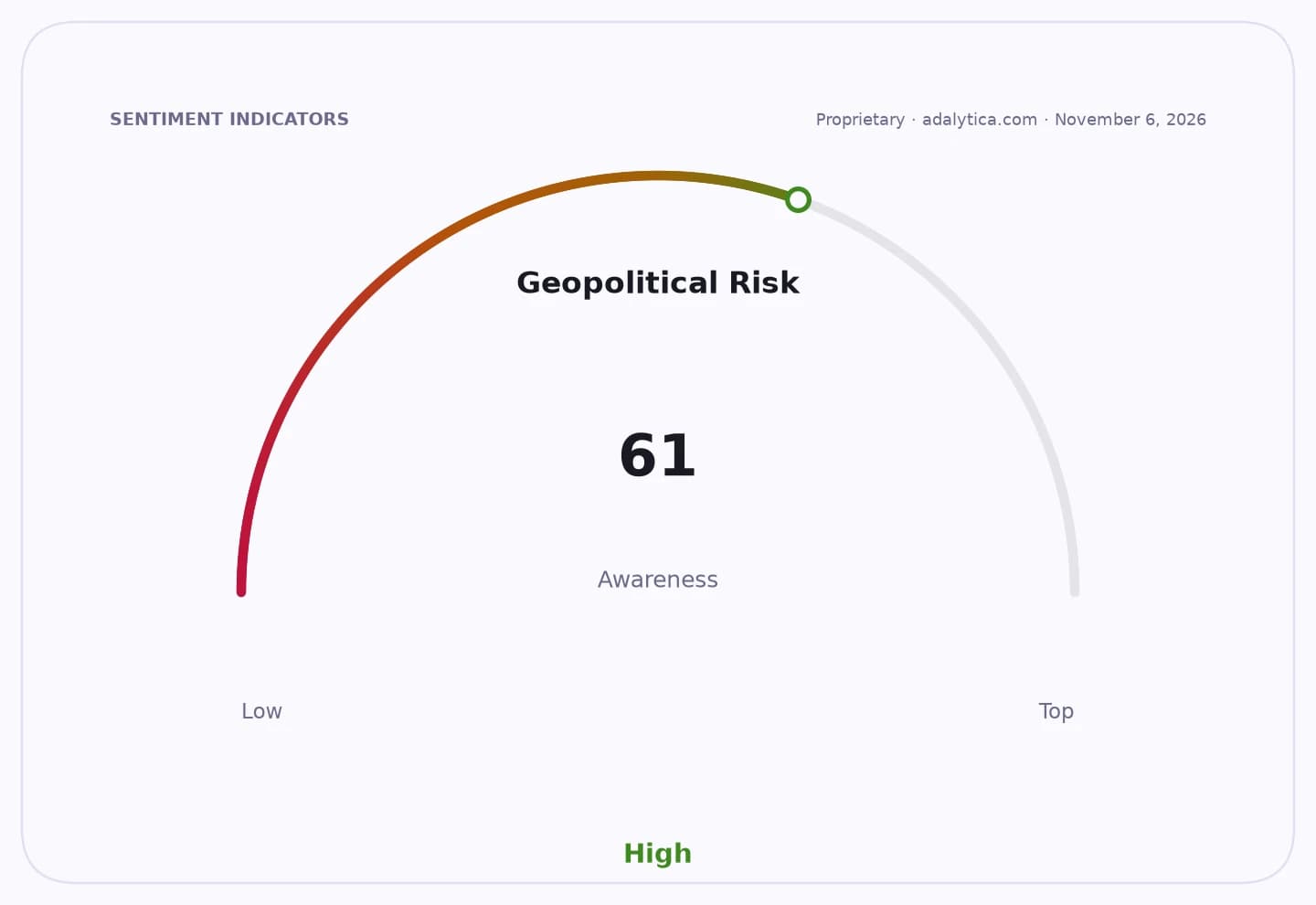
Geopolitical Risk — 30-day sentimentadalytica.com
Explore this data interactively — full history, time series and cross-market comparisons.
The sporting economics are straightforward: if enough federations refuse to play, scheduling becomes unworkable, commercial commitments weaken and host venues face the prospect of being tied to events they cannot fully control. The French federation also warned that Russia’s return could complicate promotion and relegation pathways and even France’s women’s elite-world-championship participation in 2027, showing the ripple effects extend beyond a single tournament.
The ruling has also revived a political fault line that has shaped international sport since Russia’s invasion of Ukraine. France reiterated support for Ukraine and said it has helped accommodate young Ukrainian hockey players in the country. That message matters because federations are increasingly treating participation decisions as statements about values, not just fixtures on a calendar.
For investors and sponsors, the immediate relevance is less about hockey scores than event risk. Boycotts can force last-minute restructuring, reduce the attractiveness of sponsorship packages and undermine the credibility of international sports properties. If host cities or governments begin imposing entry restrictions, the cost and complexity rise further, making the commercial case for tournaments harder to defend.
The next pressure point is whether the boycott wave spreads to host nations and commercial backers, and whether international bodies can find a compromise that keeps Russia in the system without losing enough participants to hollow out the competition. For now, France’s exit suggests the dispute is moving from protest to practical disruption.
| Entity | Gains | Losses |
|---|---|---|
| Russia / IIHF reinstatement plan | ▲sporting readmission | ▼tournament stability |
| Boycotting federations | ▲moral stance | ▼competitive exposure |
| Host cities / organizers | ▲none | ▼event certainty |
| Sponsors / broadcasters | ▲no clear gain | ▼commercial value |