France’s far-right National Rally is turning this weekend’s riots into a campaign launchpad, arguing that the chaos bolsters its law-and-order message just six months before a presidential election where Marine Le Pen is seen as the frontrunner.
France Riots Boost National Rally Campaign Message

The political significance is immediate: with France already grappling with a large budget deficit and a fragmented parliament, street violence gives Le Pen and party president Jordan Bardella a vivid backdrop to argue that the centrist government has lost control. Bardella, after visiting a Paris police station on Sunday, said the country was paying for “decades of leniency” on crime and promised that his party was ready to restore order.
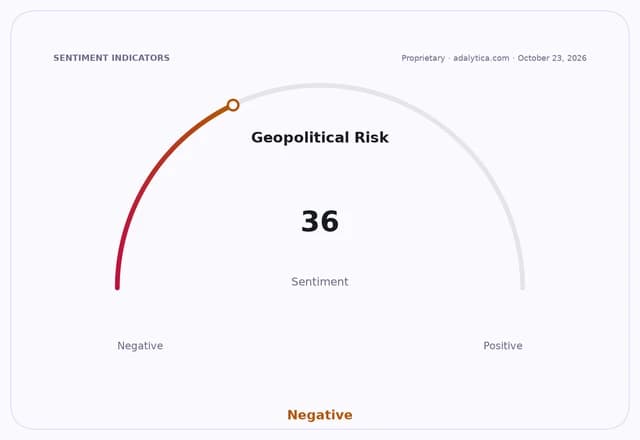
Sentiment IndicatorsⓘProprietary · adalytica.com · October 23, 2026
This is a snapshot — live sentiment, awareness and momentum for 130+ markets update continuously in the dashboard.Open AlphaPulse
That message lands in a country where the latest unrest has sharpened anxiety over security, immigration and governance. Even as the protests began over school conditions and living costs, the scenes of smashed storefronts and burned shops allowed the National Rally to cast itself as the only force able to end what it describes as national decline.
For investors, the politics matter because French policy risk is rising at the same time fiscal strain is already high. A stronger showing for Le Pen in 2027 would keep pressure on France’s budget path, labor market and relations with the European Union, while also threatening to prolong the paralysis that has left the current parliament without a majority.
The market backdrop reflects that unease. EWQ, the iShares MSCI France ETF, closed at $41.33 on Oct. 23, below its 50-day moving average of $44.07 and its 200-day moving average of $44.55, with RSI at 44.7 and MACD still negative. That suggests investors remain cautious on French equities despite occasional rebounds.
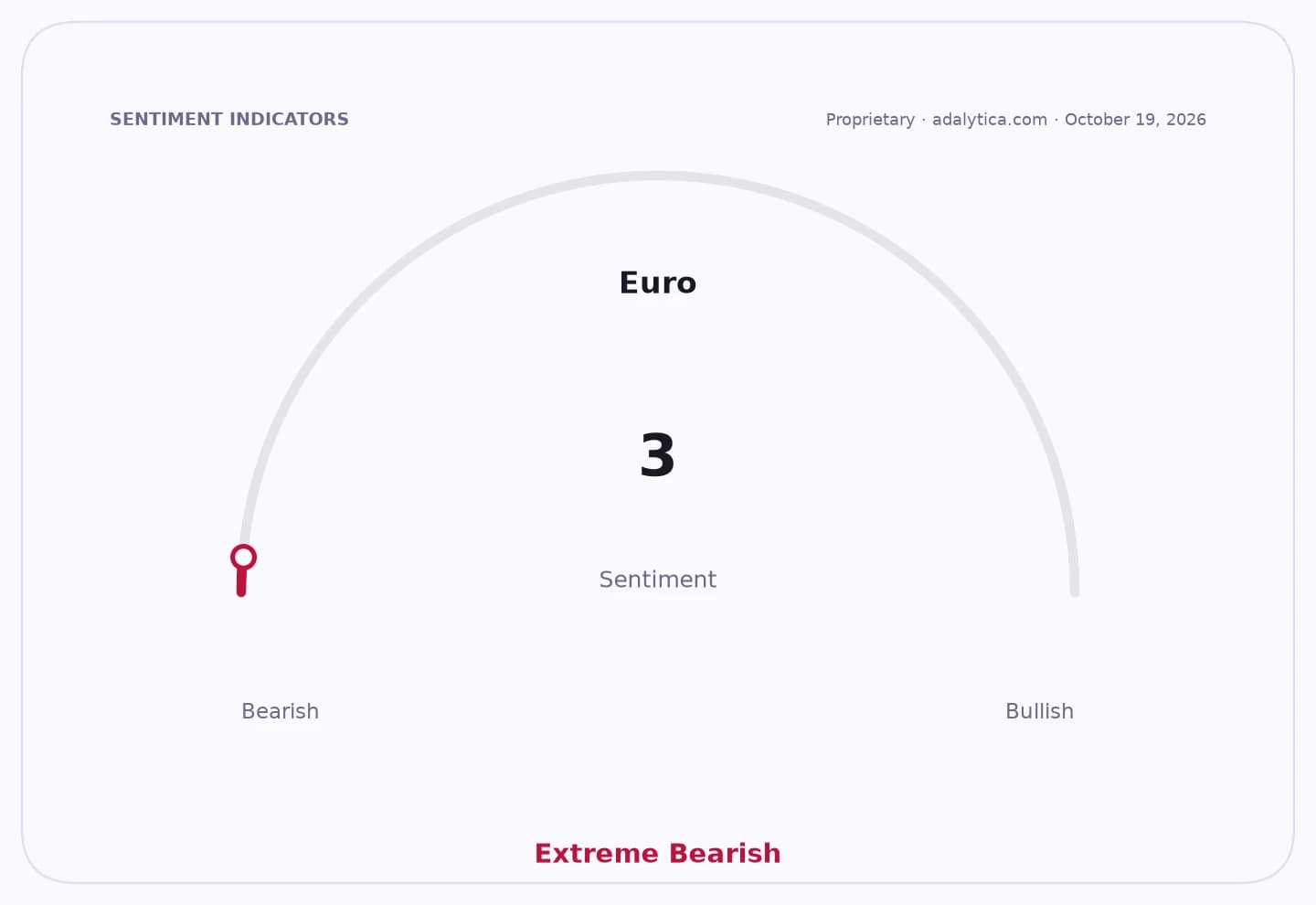
The euro has also been steady rather than strong. FXE, the Invesco CurrencyShares Euro Trust, ended at 103.34 on Oct. 23, under both its 50-day and 200-day moving averages, while Adalytica’s Euro Trade Signals showed sentiment at 69 and awareness at 65, both neutral.
Bardella and Le Pen are trying to lock in an image of a “divided France,” contrasting cities shaken by unrest with what they call the quiet province that forms the core of their electorate. Le Pen used a video message on Sunday to present herself as a president-in-waiting, saying voters will soon have a chance to choose “the path of restored state authority and security.”
The strategy fits a broader European pattern in which hard-right parties turn disorder into proof that mainstream governments are failing. It also raises the stakes for the next round of French politics: if the unrest persists, the National Rally could deepen its lead; if it fades quickly, the party will need another issue to keep its momentum alive.
| Entity | Gains | Losses |
|---|---|---|
| National Rally | ▲Law-and-order narrative | ▼Governing credibility gap |
| Marine Le Pen / Jordan Bardella | ▲Campaign momentum | ▼Need for fresh issue if unrest fades |
| Centrist French government | ▲— | ▼Blame for disorder and paralysis |
| French equities / EWQ longs | ▲— | ▼Policy uncertainty and fiscal risk |