Violence at France’s anti-inflation protests has shifted the story from a broad cost-of-living backlash to a law-and-order test for Prime Minister Sebastien Lecornu’s government, after police said 855 people were arrested in Paris and government buildings were targeted across the country.
France protests turn into law-and-order test
What began as a nationwide demonstration over rising living costs and poor school conditions drew roughly 550,000 people across France, according to officials, with organizers claiming as many as 800,000. But the economic grievance was quickly overshadowed by looting, arson and damage to public property in Paris, Marseille, Lyon and Limoges, where a 19th-century city hall was badly burned and its roof collapsed.
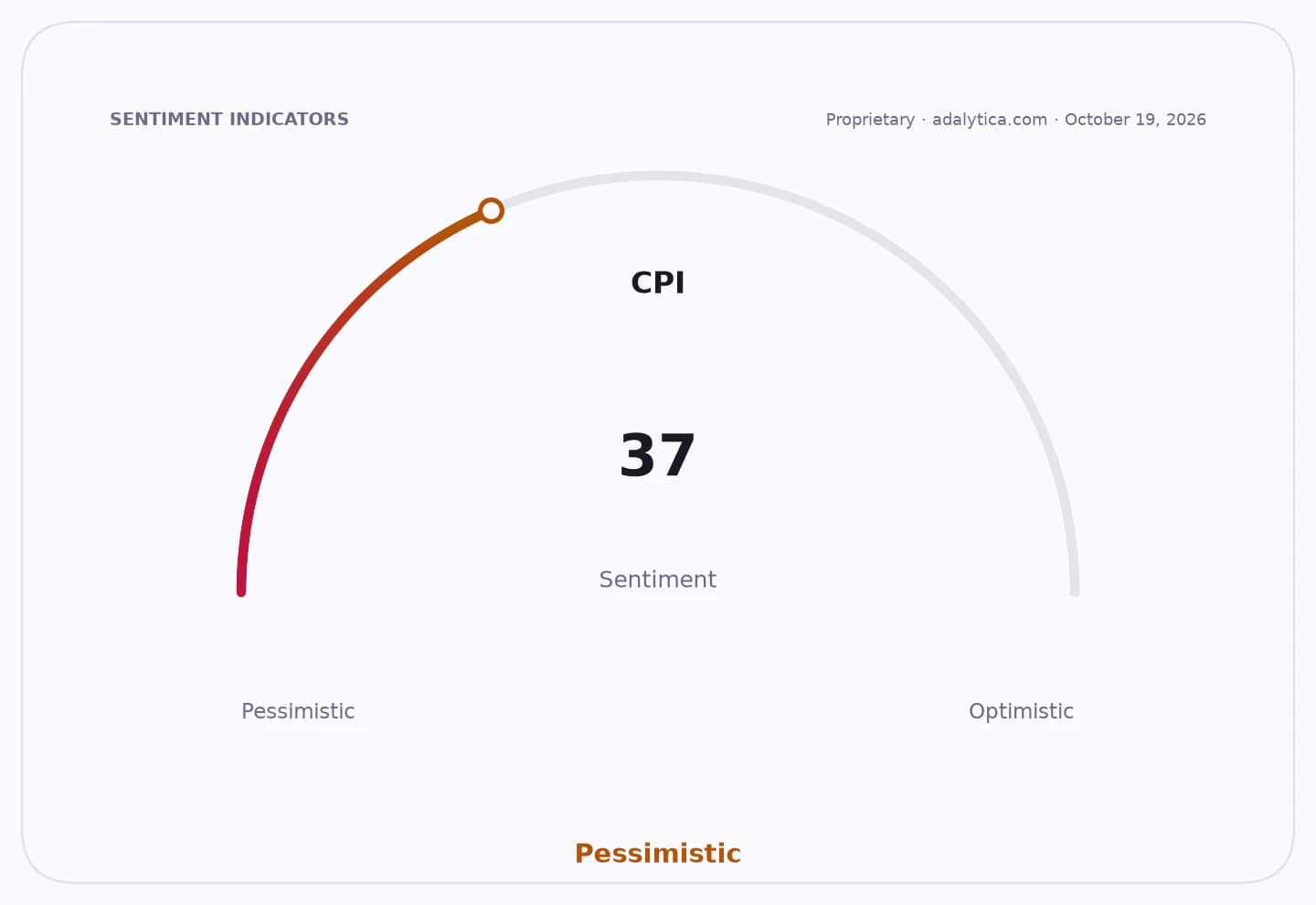
Sentiment IndicatorsⓘProprietary · adalytica.com · October 22, 2026
This is a snapshot — live sentiment, awareness and momentum for 130+ markets update continuously in the dashboard.Open AlphaPulse
For policymakers, the protests underscore how inflationary pressure and declining household purchasing power can spill into deeper social unrest, especially when combined with frustration over public services. The scale of the mobilization suggests the issue is not limited to fringe activists: it reflects a broader strain on French households that could complicate efforts to maintain public support for fiscal restraint, labor-market reform and spending priorities.
For investors, the immediate concern is that prolonged unrest could weigh on domestic confidence, retail activity and tourism in major cities, while increasing pressure on the government to respond politically rather than economically. The violence also raises the risk of a harsher policing response and a more confrontational political environment, both of which tend to make reform harder to deliver.
The unrest comes as France remains one of Europe’s most politically sensitive economies, where large-scale protests can quickly reshape the policy agenda. The government’s attempt to frame the violence as the work of hard-left groups may help it defend public order, but it does little to address the underlying economic anger that brought hundreds of thousands into the streets.
The next test is whether ministers open talks with city leaders and protest organizers, or lean further into security measures. Either path carries market implications: concessions could ease tensions but weaken the government’s reform stance, while escalation could prolong uncertainty in Europe’s second-largest economy.
| Entity | Gains | Losses |
|---|---|---|
| French households | ▲Voice on living costs | ▼Near-term stability |
| Lecornu government | ▲Public order narrative | ▼Political room to maneuver |
| Retailers and city centers | ▲None | ▼Property, sales, traffic |
| Protest organizers | ▲Visibility | ▼Credibility after violence |