France’s political instability is becoming a real market issue for Europe, even as US technology shares bounced after last week’s slump and kept the broader S&P 500 and Nasdaq from extending their losses.
France Political Risk Hits European Stocks, Nasdaq Rebounds

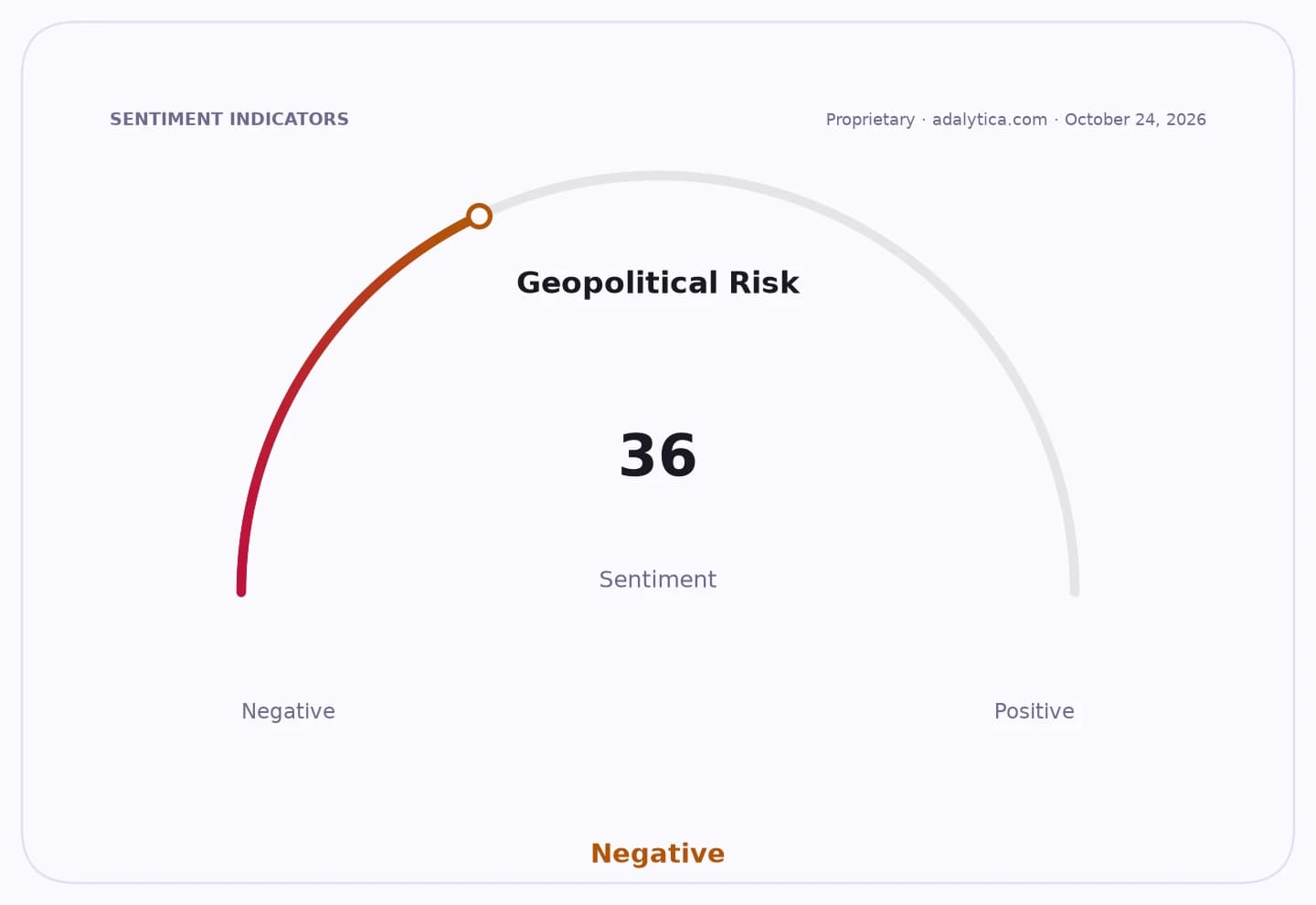
The split screen matters because it shows how quickly regional risk is being repriced. European investors are not just reacting to local headlines; they are reassessing whether France’s turbulence can widen bond spreads, pressure bank and cyclical shares, and drag on an already fragile euro-area growth outlook. That is why European stock markets opened weaker, with France at the center of the selloff.
Sentiment IndicatorsⓘProprietary · adalytica.com · October 24, 2026
This is a snapshot — live sentiment, awareness and momentum for 130+ markets update continuously in the dashboard.Open AlphaPulse
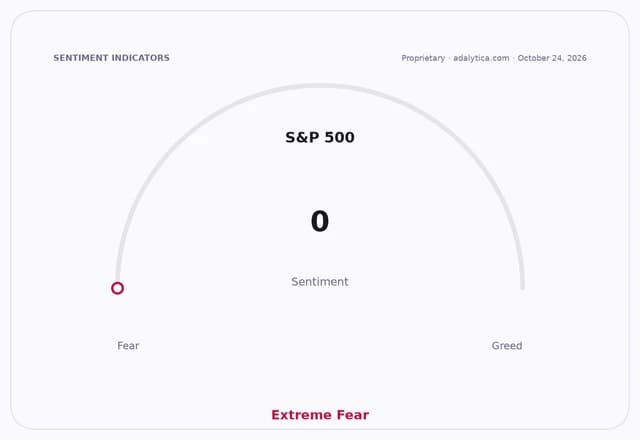
In the US, the tone was different. After a bruising week for artificial intelligence names, buyers stepped back into the Nasdaq on Monday, helping tech recover from the previous session’s pressure. The rebound does not erase the deeper debate over whether AI spending is being rewarded fast enough, but it does show that investors are still willing to buy the dip in megacap growth when sentiment gets stretched.
That distinction matters for asset allocation. Europe is being hit by a policy and political-risk discount, while US tech remains the market’s preferred long-duration growth trade. The result is a widening performance gap between European equities and American technology, and that gap can persist if France’s instability continues to spill into sovereign debt and bank funding conditions.
For investors, the message is straightforward: stay cautious on France-exposed European cyclicals and financials, but treat every tech pullback in the US as a potential entry point rather than a trend reversal. The market may be questioning AI in the short term, but it is still rewarding the companies and funds tied to the long-term compute buildout.
| Entity | Gains | Losses |
|---|---|---|
| US tech stocks | ▲Dip buyers, rebound trades | ▼Short-term AI skeptics |
| European equities | ▲Defensive flows | ▼France-exposed banks and cyclicals |
| French assets | ▲None | ▼Political-risk premium |
| Nasdaq / QQQ | ▲Relative outperformance | ▼Broad-market caution |