France’s Social Security system is recruiting across Occitanie, underscoring how public services are being forced to compete harder for workers in a tight labor market while trying to maintain front-line service quality.
France Social Security hiring in Occitanie

With more than 12,000 employees in the region and nearly 80% of them women, the agency is one of Occitanie’s larger employers and says more than 80 occupations are open, spanning client relations, legal work, human resources, IT, anti-fraud teams and social action. A hiring week starting Sept. 21 is designed to bring in students, experienced staff, career changers and recent graduates through job-dating sessions, webinars and discovery workshops.
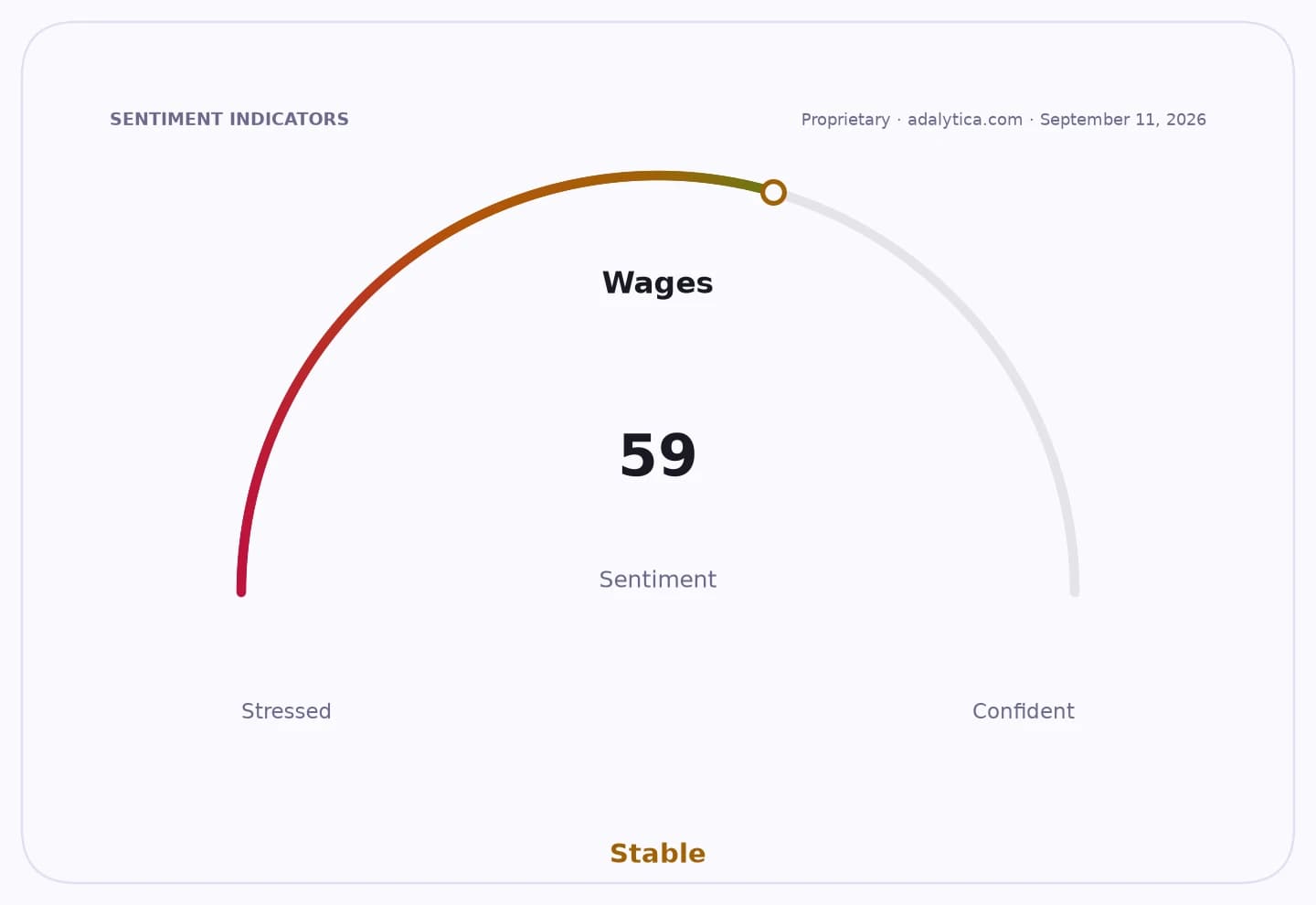
Sentiment IndicatorsⓘProprietary · adalytica.com · September 11, 2026
This is a snapshot — live sentiment, awareness and momentum for 130+ markets update continuously in the dashboard.Open AlphaPulse
The economic significance goes beyond a single recruiter’s open roles. France’s social-protection system is a major pillar of household stability and consumer confidence, and staffing gaps can quickly translate into slower claims handling, weaker customer service and less effective fraud detection. For the state, this is also a reminder that labor shortages are not confined to private industry: public institutions are competing for the same technicians, administrators and digital specialists as hospitals, local governments and employers in the private sector.
The emphasis on IT and anti-fraud hiring is telling. Social security bodies are under pressure to modernize back-office systems, reduce processing delays and curb losses, all of which require skills that are in short supply and often command higher pay in the private market. The need to recruit across such a wide range of roles suggests the challenge is structural rather than cyclical.
For investors, the story matters less as a direct market event than as a read-through on French labor conditions and the durability of public spending demands. Persistent recruitment pressure in essential services can feed wage growth, raise operating costs for the state and keep policy attention on training, reskilling and digitalization. It also reinforces the case for companies that can help public institutions automate workflows, improve cybersecurity and manage citizen-facing services more efficiently.
The bull case is that a broad hiring push can ease bottlenecks and improve service delivery without requiring large policy overhauls. The bear case is that if recruitment remains difficult, understaffing could continue to weigh on efficiency and increase costs, especially in functions tied to fraud control and digital transformation.
For now, Social Security’s campaign in Occitanie is a practical sign of a larger theme in France: essential public employers still need more workers, and they will increasingly have to sell themselves like private-sector firms to get them.
| Entity | Gains | Losses |
|---|---|---|
| Social Security in Occitanie | ▲Wider applicant pool | ▼Recruitment costs |
| Job seekers | ▲More openings | ▼Greater competition |
| French public services | ▲Better staffing | ▼Wage pressure |
| Private-sector employers | ▲None directly | ▼More competition for talent |