French business leaders are pressing the government for tax relief as a planned minimum-wage increase stokes fears that higher entry-level pay will cascade through payrolls and intensify strain on small and midsize companies.
France Businesses Seek Tax Relief on Minimum Wage Rise
Bernard Cohen-Hadad, who heads Entrepreneurs Paris Île-de-France, said ahead of a social conference due Monday that any rise in the SMIC must be matched by measures to preserve wage differentials and offset the cost for employers. Otherwise, he warned, companies would be forced to lift other salaries as well, compounding an already heavy burden on labor costs.
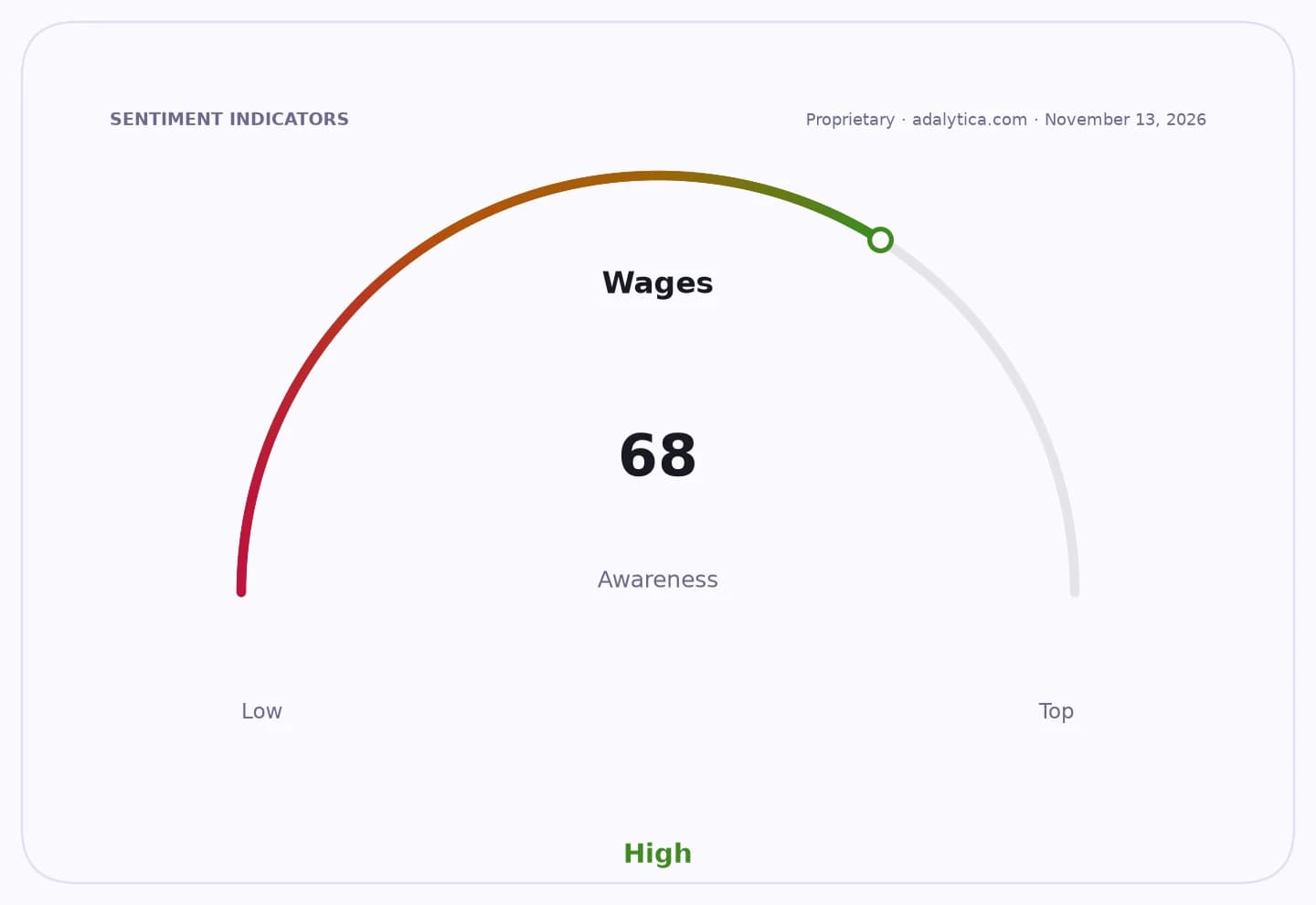
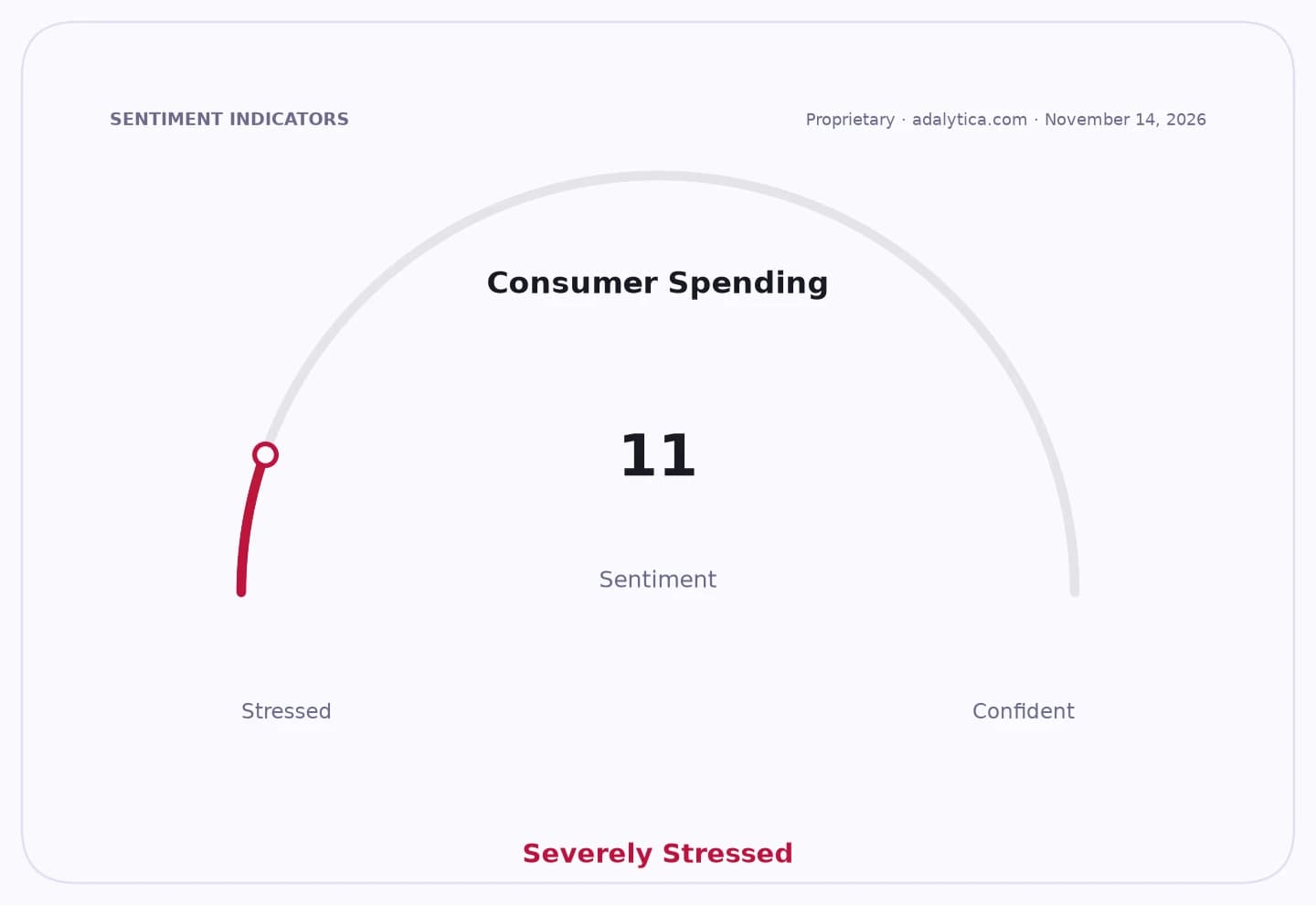
Sentiment Indicators
The argument goes to the heart of France’s wage-setting model. A higher minimum wage can lift purchasing power for lower-income workers, but in a labor market where wages are compressed, it also tends to trigger knock-on raises across pay scales. For employers, that matters because the cost is not limited to the lowest-paid jobs: it can ripple through branches, seniority ladders and incentive schemes, especially in labor-intensive sectors.
Cohen-Hadad said firms are already facing labor charges of 47% to 53%, and asked for a freeze on payroll-tax cuts being phased in, plus broader reductions in levies on jobs for young people. He also pushed for lighter taxation on profit-sharing, participation plans and other variable compensation tools that businesses use to reward staff without permanently raising fixed payroll.
The timing is sensitive. France has been grappling with a rising number of corporate failures, with 77,000 recorded in the first nine months of the year, well above the 60,000 seen over the full year in 2025, according to the business group. That backdrop strengthens the employer case that even modest wage hikes could hit already fragile balance sheets, particularly among TPEs and SMEs that lack the pricing power of larger groups.
The debate also lands in a broader European context. Cohen-Hadad argued that French firms face a tougher cost structure than many of their continental peers, making direct comparisons with minimum-wage increases elsewhere misleading. That claim is likely to resonate with investors in retail, hospitality, food service and other sectors with high labor intensity, where margin sensitivity to wage inflation is immediate.
Publicly listed consumer companies have already been managing labor pressure with mixed success. Walmart and McDonald’s have seen their shares move sharply in recent months as investors reassess margin resilience, while filings from peers such as Target and Starbucks have pointed to higher employee costs and wage-related inflation as a factor in expenses. In Europe, the same dynamic would likely weigh most on chains that rely on large frontline workforces and limited pricing flexibility.
For investors, the key question is whether the French government can pair any minimum-wage increase with offsetting tax relief, or whether businesses will absorb the full cost through thinner margins, slower hiring or more price increases. The first outcome would soften the blow to corporate earnings; the second would deepen pressure on consumption, employment and company profitability heading into 2027.
| Entity | Gains | Losses |
|---|---|---|
| Low-wage workers | ▲Higher take-home pay | ▼None initially |
| TPEs and SMEs | ▲Possible tax relief | ▼Higher payroll costs |
| Labor-intensive retailers | ▲Stronger consumer demand | ▼Margin pressure |
| French government | ▲Social peace | ▼Budget flexibility |