Freshworks has crossed $1 billion in annual recurring revenue while shrinking its workforce by roughly 30%, a stark sign that the AI software era is rewarding companies that move fast, cut deeply and focus only on the products with the best shot at scale.
Freshworks tops $1B ARR after workforce cuts
For investors, that combination matters because it shows how the best software names may be able to grow without the old rule that more revenue requires more employees. Freshworks is now profitable on a GAAP basis, generated a record $73.9 million in adjusted free cash flow in the third quarter and said it expects to stay GAAP profitable going forward. In a market that has been punishing software companies exposed to small-business customers and seat-based pricing, that is exactly the kind of operating discipline the market wants to see.
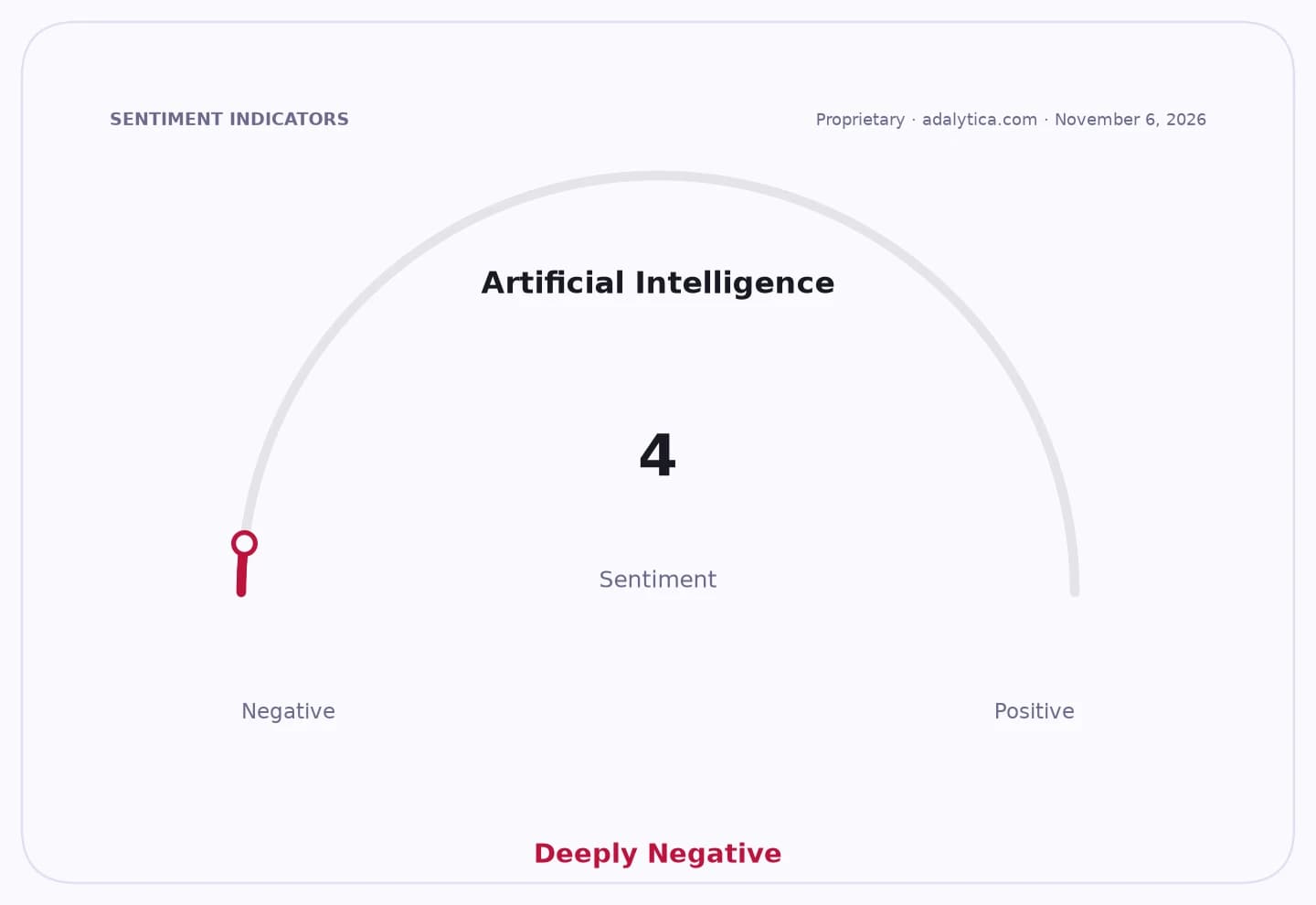
Sentiment Indicators
Chief Executive Dennis Woodside said Freshworks added about $250 million in ARR since he took over in May 2024, lifting third-quarter ARR to about $992 million before the company topped $1 billion in October after closing the acquisitions of Torii and Robusta. ARR, or annual recurring revenue, gives a clearer read on future subscription revenue than reported sales, which is why crossing the billion-dollar mark is such an important milestone for a software company. It marks a new scale phase — and a much bigger valuation conversation.
The strategy behind that growth has been as important as the growth itself. Woodside said Freshworks stopped smaller projects, concentrated on its highest-potential business and shifted resources toward IT software for larger companies, which it calls the employee-experience, or EX, business. That segment now makes up 59% of ARR, or $588 million, up from 35% at the time of its 2021 IPO, and it grew 22% from a year earlier. The customer-service business that made Freshworks known, or CX, still matters, but the company clearly believes the future is in serving the broader “agile enterprise,” not just small businesses.
That reallocation has come with painful trade-offs. Freshworks now has about 3,800 full-time employees, down from a peak of about 5,400 in 2022. Woodside’s message is that AI is not just a feature to sell, but a management tool that changes what work gets done, by whom and how much of it needs to exist at all. Designers prototype in Figma, code is generated more directly and testing is increasingly automated. In other words, the company is not merely adding AI to the product; it is reorganizing the company around AI.
That is the bigger investment story here. Software companies are under pressure from two sides: AI-native startups are attacking incumbents, while investors are questioning whether per-seat pricing will hold up if AI can do more work with fewer users. Freshworks says it is moving toward usage-based pricing tied to assets managed and problems resolved, which could make the business more resilient if AI changes how customers buy software. It is also why the company’s growth in larger customers matters: customers paying more than $100,000 a year rose 25% in the third quarter.
The stock has already started to reflect that pivot. Freshworks shares, which were down sharply earlier this year amid the “Saaspocalypse” selloff, have rebounded strongly and are up more than 25% year to date. That bounce does not mean the risks are gone. Smaller software names remain vulnerable if AI-native products keep eating into incumbent demand, and Freshworks still has to prove it can keep converting its restructuring into durable revenue growth. But the underlying lesson is powerful: in the AI age, the winners may be the companies willing to abandon weak lines of business and build around the parts of the market where they can still win.
For long-term investors, Freshworks is worth watching because it is offering a live case study in how AI can change both software economics and software culture. The next test is whether this leaner, more focused company can keep compounding toward $2 billion in ARR without losing the growth engine that got it to $1 billion in the first place.
| Entity | Gains | Losses |
|---|---|---|
| Freshworks | ▲Higher ARR, profitability | ▼Legacy projects, headcount |
| Shareholders | ▲Better margins, stronger cash flow | ▼Higher execution risk |
| AI-native rivals | ▲Faster customer adoption | ▼Incumbent market share gains |
| Small-business-focused software peers | ▲— | ▼Slower growth, valuation pressure |