General Motors is falling as the escalating Iran conflict raises the risk of higher input costs, tighter supply chains and more pressure on profit margins for automakers already dealing with a fragile global operating backdrop.
General Motors Falls on Iran Conflict Cost Risks
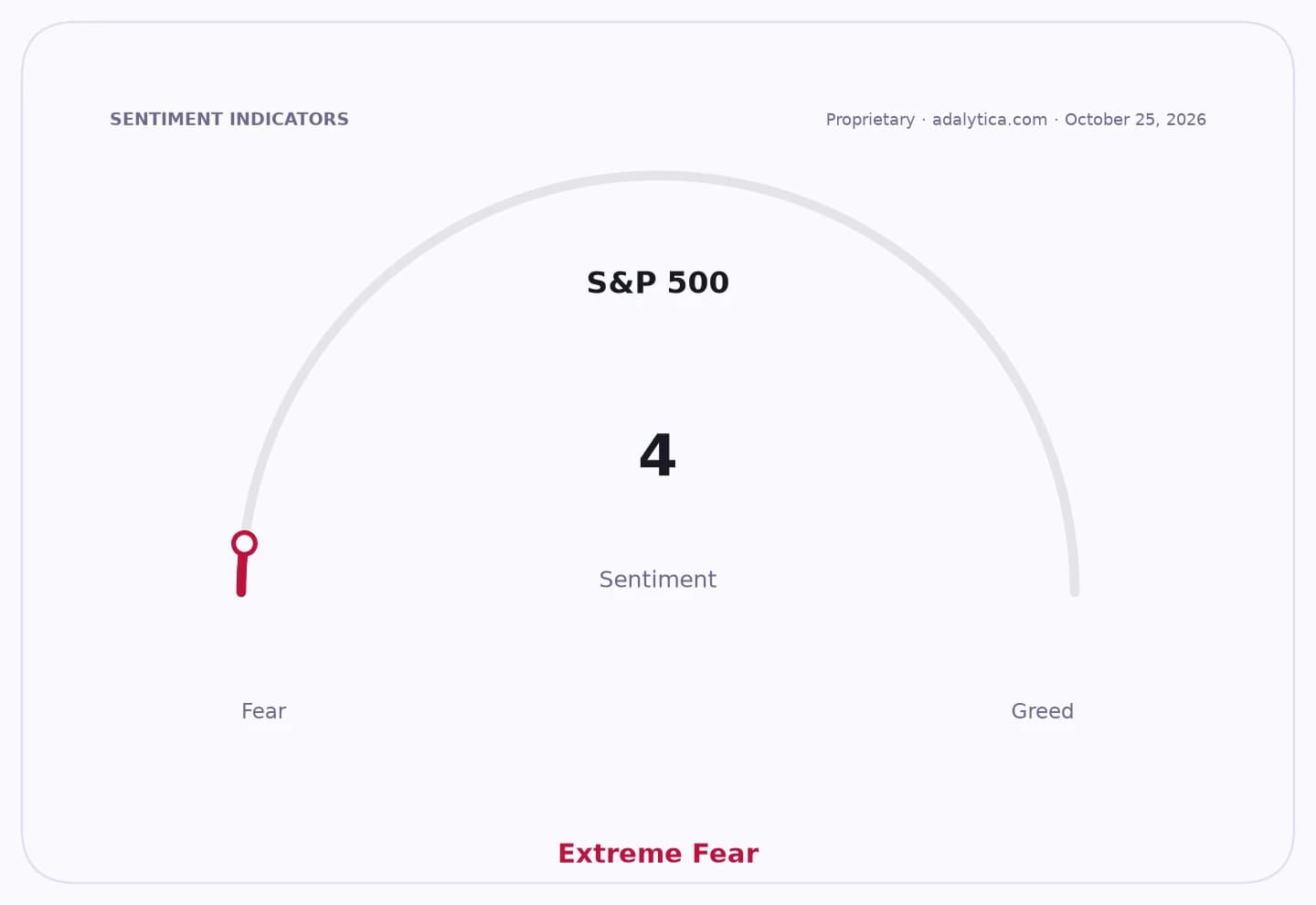
The stock was last down sharply alongside a broader risk-off tone, with Adalytica’s S&P 500 trade signals showing “Extreme Fear” and the Dow Jones industrial average’s auto-heavy industrial cohort under pressure from geopolitics. GM’s shares had already been trading below their 50-day moving average, with the recent close at $75.92 versus a 50-day average of $83.32, underscoring weakening momentum as investors reassess the cost outlook.
Sentiment IndicatorsⓘProprietary · adalytica.com · October 25, 2026
This is a snapshot — live sentiment, awareness and momentum for 130+ markets update continuously in the dashboard.Open AlphaPulse
For GM, the issue is not only fuel and shipping. The company’s latest 10-Q said nine-month costs were already rising from a $1.5 billion EV strategic realignment charge, lower Ultium Cells equity earnings and higher material costs, leaving less cushion if the Middle East conflict pushes up commodity, logistics or supplier expenses again.
That matters because auto makers are highly exposed to swings in energy, metals and freight, and any disruption tied to the Iran conflict can quickly filter through to parts procurement and factory economics. GM, Ford and Tesla all sit in a sector that is sensitive to geopolitical shocks, but GM’s cost structure and capital spending plans make margin protection especially important.
Ford shares also weakened, while Tesla, though less directly exposed to traditional parts inflation, has been volatile as investors rotate away from high-beta growth names. The broader market backdrop is weak as well, with the S&P 500’s sentiment gauge in extreme fear and the U.S. dollar showing rising stress signals, a combination that typically favors defensive positioning over cyclical auto names.
Investors will watch whether the conflict eases quickly, as some officials are signaling, or broadens further and keeps energy and shipping markets elevated. For GM, the next catalyst is whether management can hold the line on margins and procurement costs as the Middle East risk premium works its way into the auto supply chain.
| Entity | Gains | Losses |
|---|---|---|
| Oil, shipping, and defense-linked suppliers | ▲Higher prices and demand | ▼ |
| GM shareholders | ▲ | ▼Margin pressure and cost inflation |
| Ford and other automakers | ▲ | ▼Higher materials and logistics costs |
| Risk-off investors | ▲Safer positioning | ▼Cyclical auto exposure |