Asian automakers are tightening their grip on the US market while Detroit’s legacy brands lose ground, a shift that matters because it points to a structural change in what American buyers want and what the industry can profitably sell.
Asian automakers gain US share as Detroit slips

Cox Automotive expects Asian brands to account for more than half of US new-vehicle sales in the third quarter for a second straight period, close to record highs. At the same time, General Motors, Ford and Stellantis are set to see their combined share fall to just over 36%, the lowest on record, underscoring how far the balance of power has moved away from the Big Three.
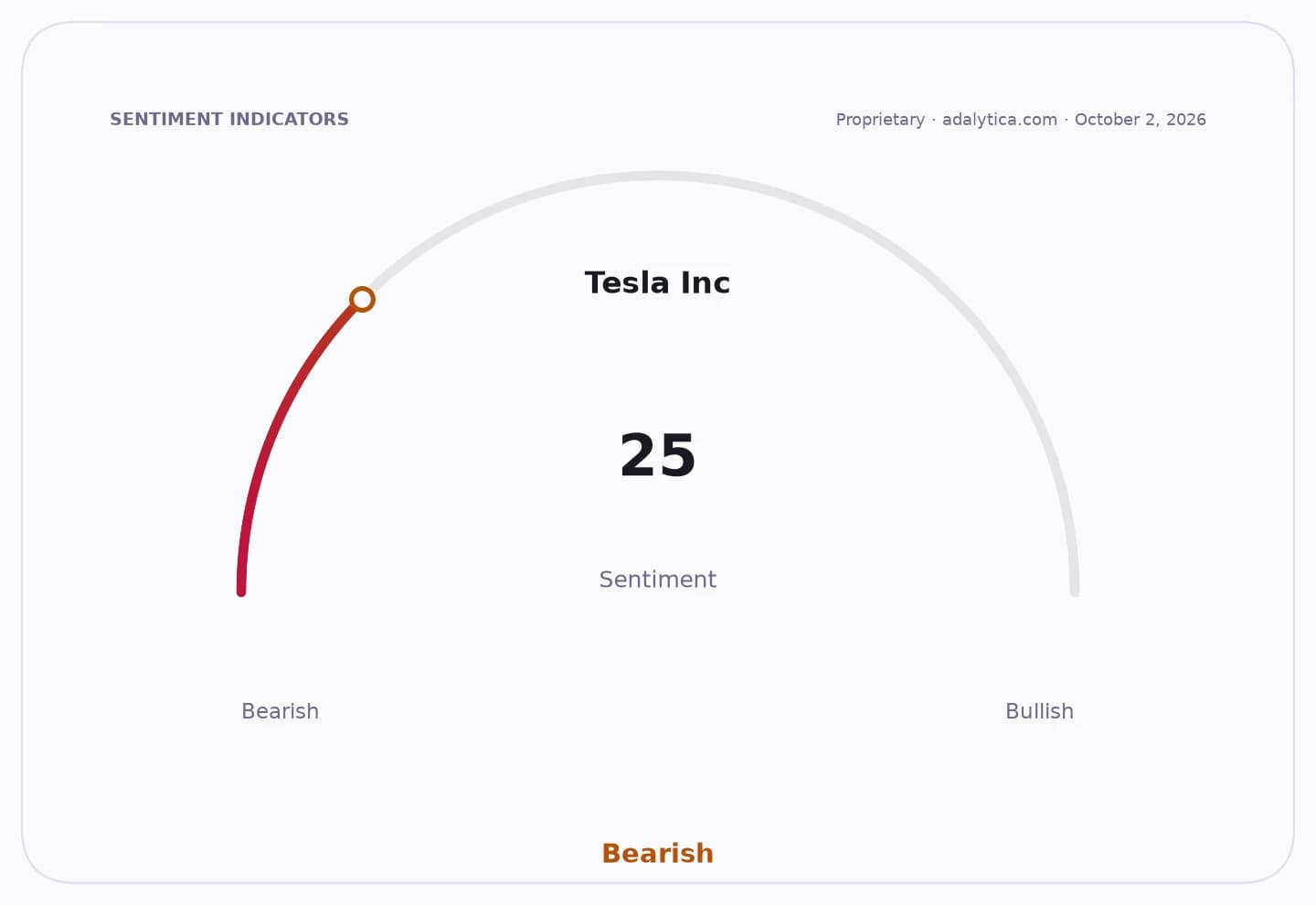
Sentiment IndicatorsⓘProprietary · adalytica.com · October 3, 2026
This is a snapshot — live sentiment, awareness and momentum for 130+ markets update continuously in the dashboard.Open AlphaPulse

The immediate driver is the hybrid market. Asian manufacturers, especially Toyota, Hyundai and Kia, have had a clear advantage in hybrid offerings at a time when volatile gasoline prices are pushing consumers toward more fuel-efficient models. That helps explain why GM’s US share slipped to 16.7% in the first nine months of the year from 17.4% a year earlier, while Toyota’s rose to 15.6% from 15.2%. GM still leads the US market overall, but the gap with Toyota is narrowing.
The sales data show the pressure in concrete terms. GM’s third-quarter US sales fell 5.5% to 670,974 vehicles, while Toyota’s rose 0.6% to 633,223. Ford remains third, but its position looks increasingly vulnerable as Hyundai-Kia continues to outpace it in share gains. Stellantis, the weakest of the Detroit trio, has already fallen behind Honda in US sales.

That competitive squeeze is why President Donald Trump’s suggestion that Chinese carmakers could be allowed into the US market, provided they build factories and hire American workers, drew such a fast and forceful industry backlash. For investors, the issue is not just whether Chinese brands can sell cars in America, but whether the policy debate itself could force further price competition, more capital spending and thinner margins across the sector.
The risk, from the industry’s perspective, is that Chinese manufacturers such as BYD, Geely and SAIC could replicate the price pressure they have already created in Europe, Australia, Southeast Asia and Latin America. Mobility Global has estimated those companies could eventually sell up to 1.7 million vehicles in the US through 2038, or about 11% of the market, if barriers fall. Even if that scenario remains remote, it highlights how exposed US and Japanese incumbents would be to a low-cost entrant with scale, technology and state support.
The policy backdrop is now as important as the product cycle. The Alliance for Automotive Innovation, which represents virtually all automakers operating in the US, has asked Congress for a permanent ban on Chinese cars, citing national-security risks from connected software and hardware. The group’s argument is that the issue is not only market access, but data, cyberrisk and industrial strategy.
For investors, the implications are mixed. Asian carmakers with strong hybrid lineups and US manufacturing footprints look better positioned to defend share, while Detroit’s earnings power faces continuing pressure from a market that is rewarding efficiency and value rather than size alone. GM and Ford shares have already shown strain in recent trading, with technical indicators on both names weakening after recent price swings, reflecting investor unease about margins and demand durability. A more open door for Chinese brands would intensify that pressure, but even without it, the market-share shift now underway suggests the US auto industry is entering a longer period of tougher competition.
| Entity | Gains | Losses |
|---|---|---|
| Asian automakers | ▲US market share | ▼Detroit incumbents |
| Toyota, Hyundai-Kia, Honda | ▲Hybrid demand | ▼Ford, GM, Stellantis |
| Chinese automakers | ▲Potential US access | ▼Industry pricing power |
| Consumers | ▲More choice, better fuel economy | ▼Automaker margins |
| GM, Ford, Stellantis | ▲— | ▼Share, leverage, margins |