Georgia’s central bank has raised both its economic growth and inflation forecasts for 2026, signaling that the country’s economy is still expanding briskly even as price pressures prove harder to shake.
Georgia central bank raises 2026 growth and inflation forecast

That combination matters because it tells investors the near-term story in Georgia is not weak demand, but a still-healthy economy running hot enough to keep inflation above target for longer. The National Bank of Georgia now expects gross domestic product to grow 7.2% in 2026, up from a prior estimate of 6.5%, while inflation is projected at 5.4%, higher than the earlier 5.2% forecast.
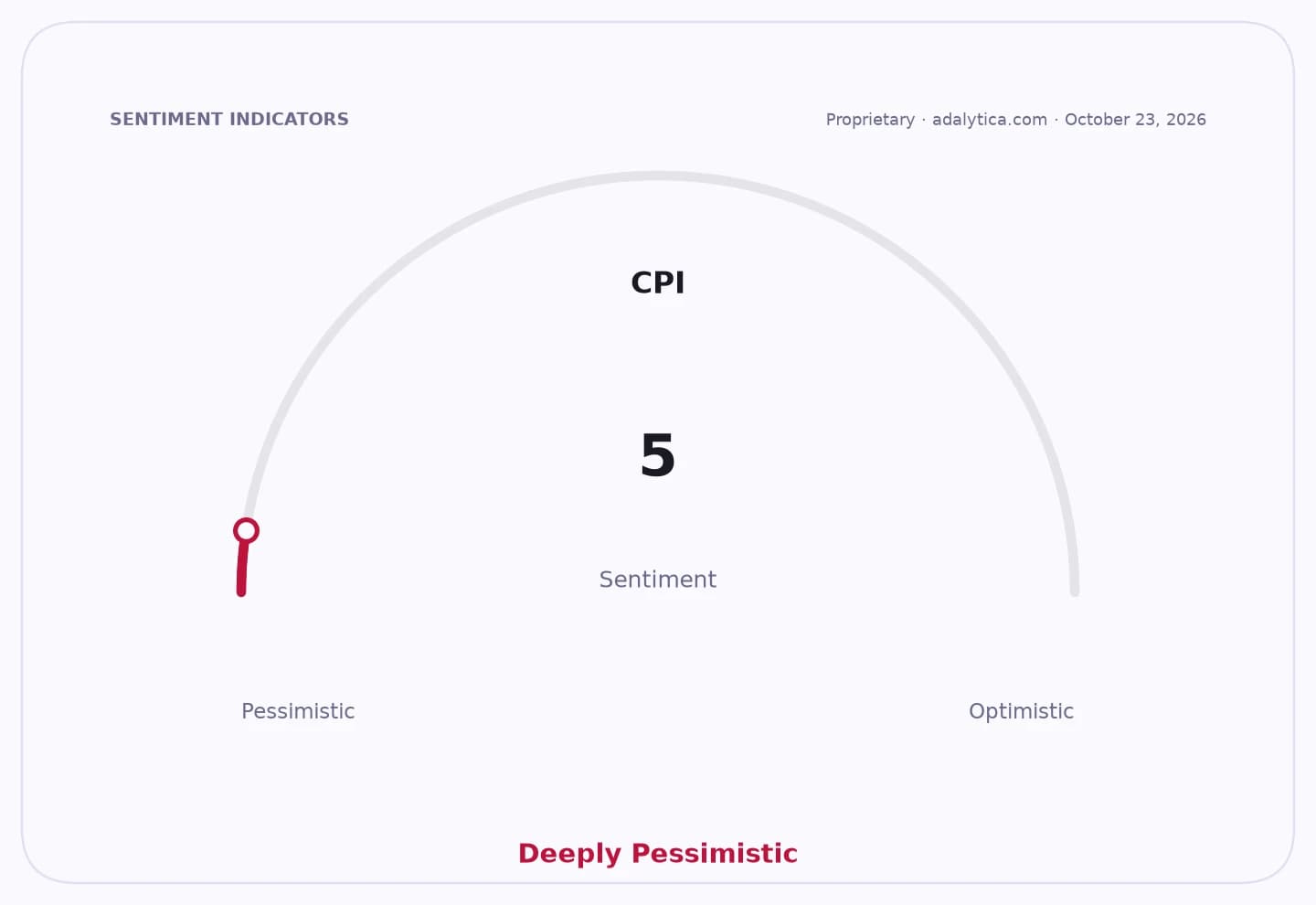
Sentiment IndicatorsⓘProprietary · adalytica.com · October 27, 2026
This is a snapshot — live sentiment, awareness and momentum for 130+ markets update continuously in the dashboard.Open AlphaPulse

The upgrade to growth reflects what the bank called stronger-than-expected performance in January through August, with the expansion still being driven by higher-productivity sectors rather than broad-based overheating. Manufacturing, information and communications, finance and insurance, real estate, trade, and transport all helped lift activity in August, while construction contracted. For long-term investors, that mix is important: growth led by productive sectors is usually more durable than a short-lived consumer boom.
Still, inflation remains the key pressure point. Consumer prices rose 5.6% in September from a year earlier, well above the bank’s 3% target, with transport, goods and services, hotels and cafes, utilities and healthcare among the biggest contributors. The central bank said persistent global inflation trends were behind its higher forecast, and it sees price growth only gradually drifting back toward target in the second half of 2027. By then, inflation is expected to average 3.5%.

For investors, the message is straightforward: Georgia is not facing a growth problem, but a timing problem. Strong expansion can support corporate revenues, tax receipts and credit demand, yet elevated inflation tends to keep borrowing costs, wage pressure and valuation uncertainty in the picture. That can be a headwind for rate-sensitive sectors, even while exporters and businesses tied to resilient domestic demand may continue to benefit.
The broader takeaway is that Georgia’s economy appears resilient enough to keep growing above trend, but the central bank will likely have to stay cautious until inflation cools more decisively. For investors with a multi-year horizon, that means watching not just headline growth, but whether the country can preserve its momentum without allowing inflation to become embedded. That is the real test worth following.
| Entity | Gains | Losses |
|---|---|---|
| Georgia economy | ▲Faster growth | ▼Higher inflation |
| Domestic businesses | ▲Stronger demand | ▼Cost pressure |
| Borrowers | ▲More economic activity | ▼Sticky interest rates |
| Consumers | ▲Job and income gains | ▼Lower purchasing power |