Egypt’s annual urban inflation slowed to 13.9% in September, giving the central bank more scope to keep policy on a disinflation path even as food prices picked up.
Egypt Inflation Slows to 13.9% in September

The reading from the Central Bank of Egypt marked a step down from 14.5% in August and the lowest pace in years, driven largely by softer non-food inflation and a favourable base effect. That matters because Egypt’s monetary authorities have been trying to balance support for growth with the need to anchor prices after a prolonged inflation shock that has strained household purchasing power and corporate margins.
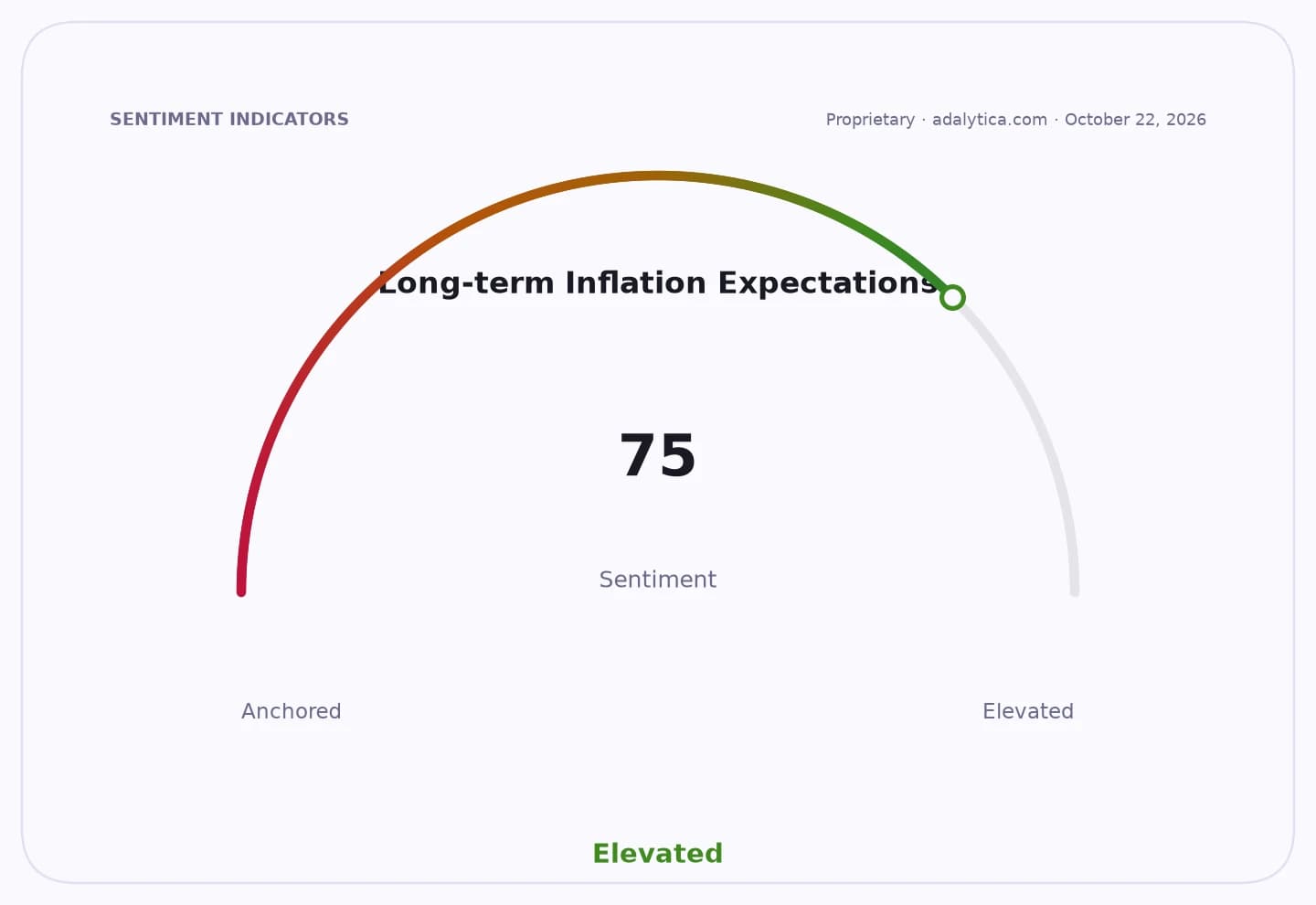
Sentiment IndicatorsⓘProprietary · adalytica.com · October 24, 2026
This is a snapshot — live sentiment, awareness and momentum for 130+ markets update continuously in the dashboard.Open AlphaPulse
The drop in annual non-food inflation to 18% from 19.5% was the main driver of the slowdown, with services inflation easing to 24.4% from 27.8% and regulated items slipping to 12%. Annual core inflation also cooled to 14.1% from 14.9%, reinforcing the view that underlying price pressures are gradually easing rather than merely reflecting temporary volatility.
For investors, the direction of travel is more important than the monthly noise. Monthly headline inflation accelerated to 1.3% from 0.1% in August, mainly because food prices rose after three months of declines, but the annual trend still points to easing pressure. That supports the case for the CBE to continue lowering borrowing costs cautiously if the disinflation trend persists, a key consideration for banks, local bondholders and companies dependent on domestic credit.
Food remains the main source of volatility. Annual food inflation rose to 7.2% from 6.3%, while monthly food prices climbed 2.8% as fresh vegetables, poultry and fish got more expensive. But the broader story is that non-food inflation — the larger and stickier part of the basket — is still cooling, helped by easing rent inflation and the absence of new fiscal consolidation measures on regulated items.
The nationwide inflation rate, a weighted average of urban and rural prices, was broadly unchanged at 12.8%, underscoring that the disinflation process is uneven. Rural inflation actually accelerated to 11.6% from 10.9%, a reminder that household price pressures remain geographically mixed and that one month’s improvement should not be mistaken for victory over inflation.
Still, the latest figures are consistent with the CBE’s stated goal of bringing inflation down toward 7% by 2027. Moody’s recent upgrade of Egypt to B3 with a positive outlook, alongside stronger foreign investment inflows, gives policymakers some credibility as they pursue stabilization. The immediate market implication is that local-rate expectations, the pound and Egyptian sovereign debt will remain tightly linked to whether inflation continues to slow without reigniting pressure in food and services.
For now, the September print strengthens the argument that Egypt’s disinflation trend is intact, even if not yet smooth enough to justify complacency.
| Entity | Gains | Losses |
|---|---|---|
| Egyptian households | ▲Slower price erosion | ▼Still-high food costs |
| Central Bank of Egypt | ▲More policy flexibility | ▼Pressure to stay credible |
| Borrowers and rate-sensitive firms | ▲Lower-rate prospects | ▼No quick easing cycle |
| Savers and inflation hedges | ▲Some relief in real rates | ▼Higher inflation-linked demand |