Egypt’s inflation accelerated to its highest level since May last year in March, underscoring how the wider Middle East conflict is spilling into the region’s second-largest economy through capital flight, a weaker currency and higher utility and fuel costs.
Egypt inflation rises to 15.2% in March
Consumer prices rose 15.2% in March from 13.4% in February, a sharper-than-expected jump that raises pressure on households, businesses and policymakers just as Egypt tries to restore investor confidence and stabilize its external accounts. The increase came as billions of dollars of foreign portfolio money left the country, the Egyptian pound hit a record low and the government passed on higher energy costs to consumers and industry.
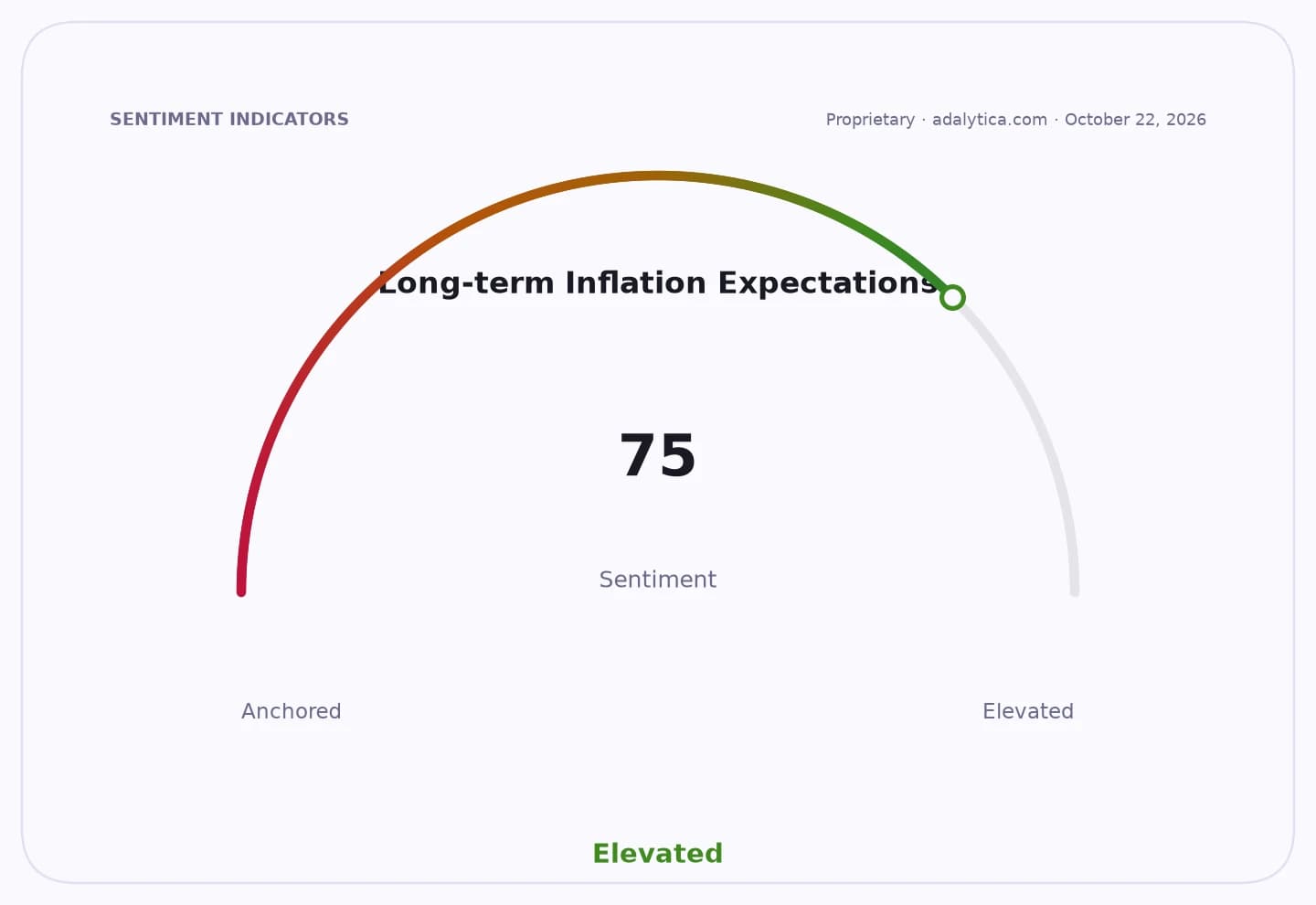
Sentiment IndicatorsⓘProprietary · adalytica.com · October 22, 2026
This is a snapshot — live sentiment, awareness and momentum for 130+ markets update continuously in the dashboard.Open AlphaPulse
The inflation spike matters because Egypt is still managing the aftershocks of a prolonged balance-of-payments squeeze. A weaker pound makes imported food, fuel and industrial inputs more expensive, while capital outflows limit the central bank’s room to support the currency without draining reserves. That combination tends to feed into broader inflation, erode real incomes and complicate fiscal planning.
Authorities have already moved to contain the shock. The government raised fuel and public transport prices in March and then lifted electricity tariffs for businesses and large consumers by 16% to 20% over the weekend. Food and beverage prices were still up 5.8% year on year last month, suggesting the pass-through from currency weakness and higher input costs is broadening beyond energy.
For investors, the report is a reminder that Egypt remains highly exposed to regional risk even after recent efforts to stabilize the economy. Higher inflation can delay any easing in interest rates, keep local borrowing costs elevated and weigh on consumer demand and corporate margins. It also keeps attention on how much further the pound may weaken if portfolio flows stay volatile.
The backdrop is not entirely negative. Egypt has been working to shore up reserves, attract foreign capital and restore market access, and Moody’s recently upgraded the country’s credit rating to B3 with a positive outlook. But March’s price data shows those gains can be quickly undermined by geopolitical shocks.
The key question now is whether the inflation surge proves temporary or becomes entrenched. If the conflict continues to pressure capital flows and energy costs, Egypt may face a longer period of higher prices, tighter policy and subdued growth.
| Entity | Gains | Losses |
|---|---|---|
| Egyptian government | ▲Higher tariff revenue | ▼Political pressure from consumers |
| Export-oriented firms | ▲More competitive pricing in hard currency | ▼Input-cost volatility |
| Egyptian households | ▲None | ▼Real incomes and purchasing power |
| Foreign bond and equity investors | ▲Potential higher yields | ▼Currency risk and inflation erosion |