Egypt’s annual urban inflation eased to 13.9% in September, its lowest reading since February, giving households, businesses and policymakers a bit more room to breathe after years of punishing price spikes.
Egypt inflation eases to 13.9% in September

That matters because inflation is still the main variable shaping Egypt’s recovery. When price growth slows, real incomes stop being eroded as quickly, companies can plan with a little more confidence and the central bank gets more flexibility to keep rates steady or eventually ease them. For investors, that combination is often the difference between a fragile stabilization story and a more investable one.
Sentiment IndicatorsⓘProprietary · adalytica.com · October 12, 2026
This is a snapshot — live sentiment, awareness and momentum for 130+ markets update continuously in the dashboard.Open AlphaPulse
The September reading marks a clear step down from recent pressure, even though prices were not falling across the board. Monthly inflation still rose 1.5%, driven by vegetables, housing, transport and education. Core inflation, which strips out volatile items, also cooled to 14.1%, suggesting the moderation is not just a one-off move in food prices.
For long-term investors, that is the key takeaway: Egypt is not out of the woods, but the inflation backdrop is becoming less hostile. Lower inflation can support consumer spending, reduce policy uncertainty and improve the outlook for companies exposed to domestic demand. It can also help stabilize the local currency and attract capital, especially when paired with stronger foreign exchange reserves and improving trade ties across Africa.
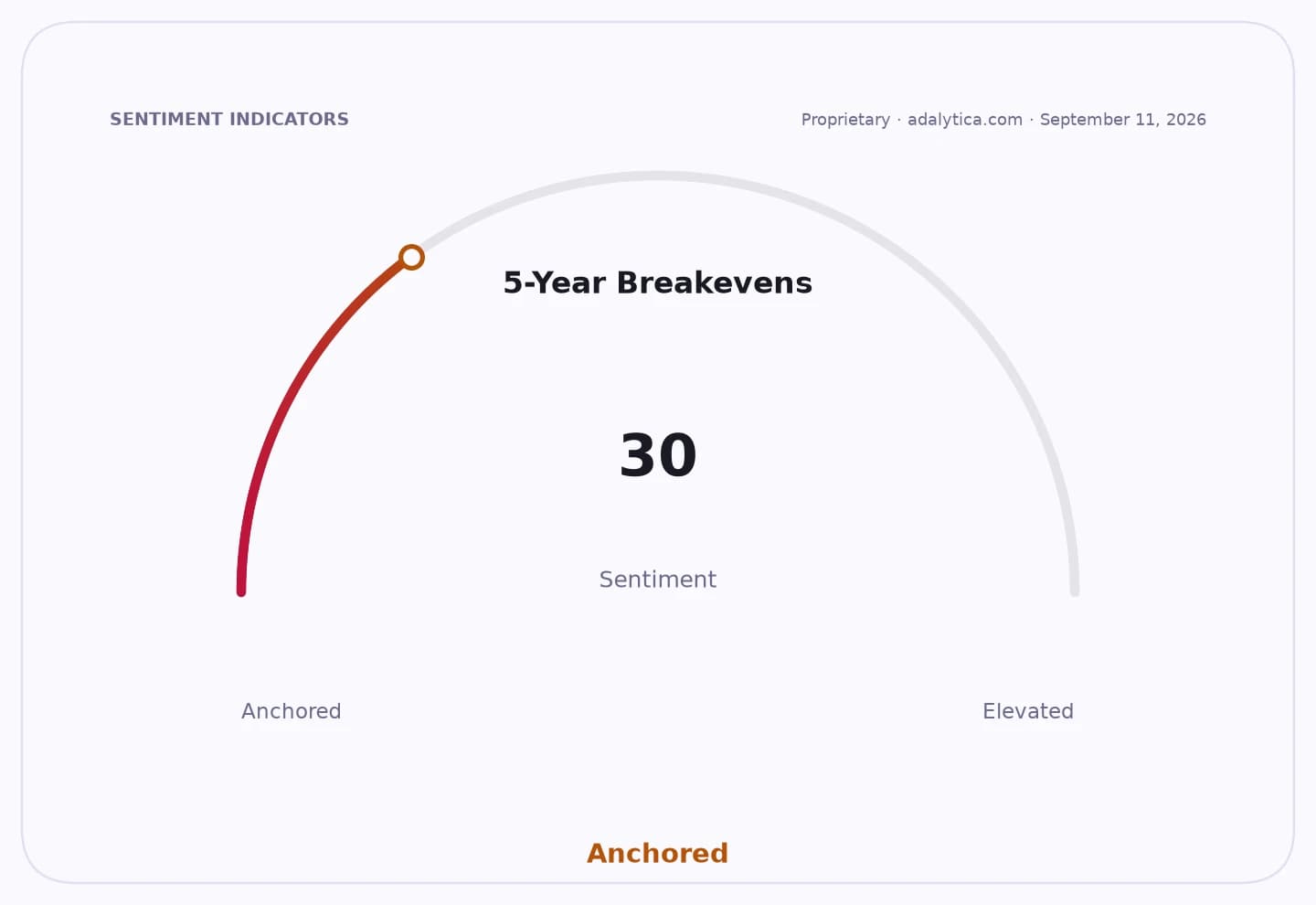
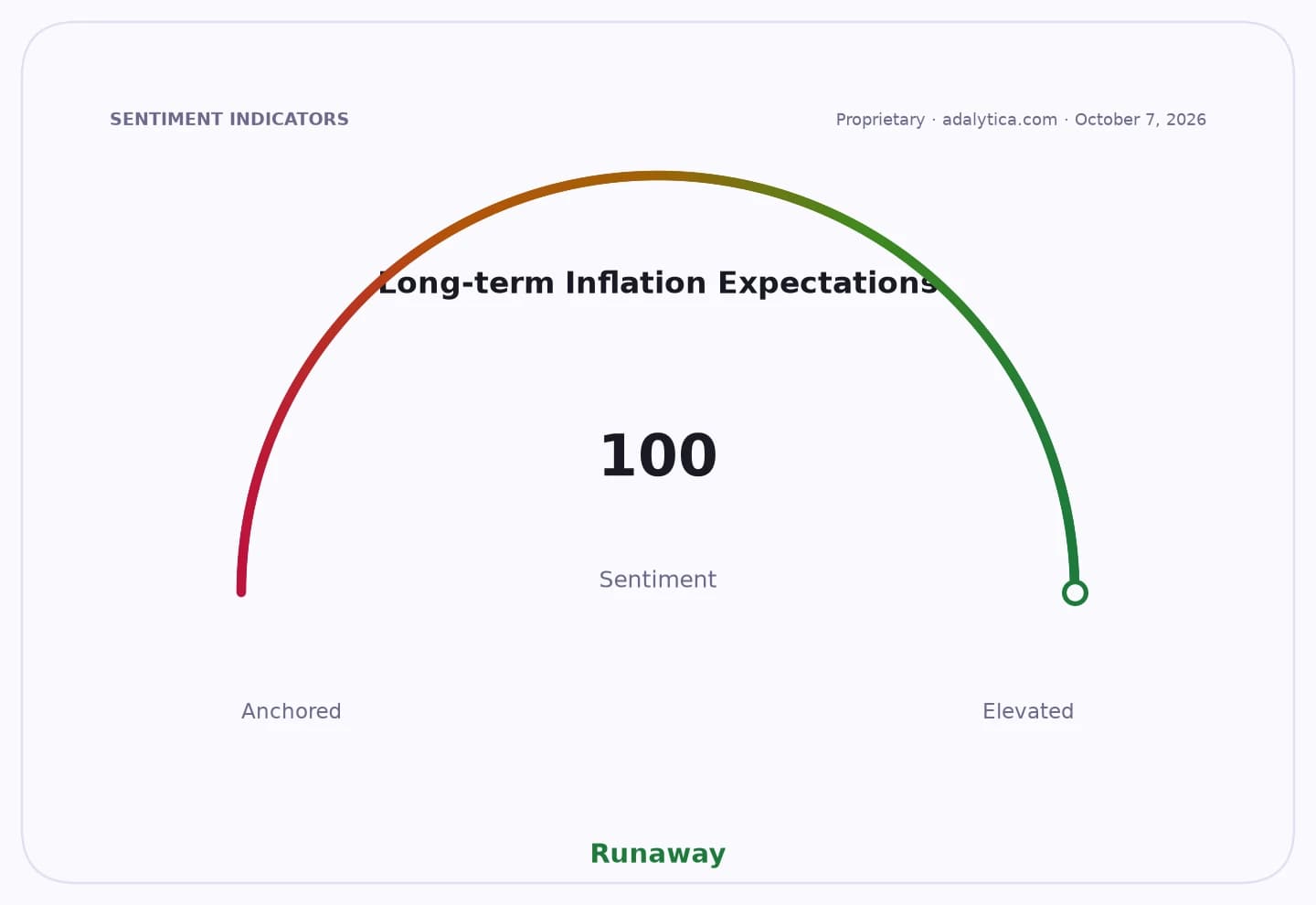
Adalytica’s Long-Term Inflation Expectations Sentiment remains elevated, but it has cooled from the extreme readings seen earlier in the month, while confidence in the Fed’s 2% inflation target has softened sharply. Those gauges may not be Egypt-specific, but they underscore a broader market reality: investors are still highly sensitive to the path of inflation and policy credibility.
Egypt’s challenge is to turn this progress into something durable. Food prices, external shocks and regional tensions can still reverse the trend quickly. But if inflation keeps easing, the case for a steadier Egyptian economy gets stronger, and that is exactly the kind of backdrop patient investors should want to see. For now, Egypt remains a market worth watching, not chasing.
| Entity | Gains | Losses |
|---|---|---|
| Egyptian households | ▲Slower erosion of buying power | ▼Less immediate pain relief from prices |
| Egyptian companies | ▲Better planning and margin visibility | ▼Still face higher input costs |
| Egypt’s central bank | ▲More policy room | ▼Less urgency for aggressive tightening |
| Inflation-linked assets / short sellers | ▲Lower upside from price pressure | ▼Weaker inflation hedge appeal |