Bank of America says America’s economy is still humming, but the benefit to investors may come with an uncomfortable tradeoff: higher prices at the pump and a renewed risk that interest rates stay elevated longer than markets want.
Bank of America sees stronger growth, higher rates

That is the real message tucked inside the bank’s latest U.S. Economic Weekly report. Bank economists lifted their estimate for third-quarter growth to a 3.6% annualized pace, while inflation-adjusted consumer spending was tracking at 3.5% annualized. On the surface, that is the kind of growth picture that usually supports earnings, employment and corporate confidence. But the details show households are not spending freely across the board — they are spending more because some essentials are costing more.
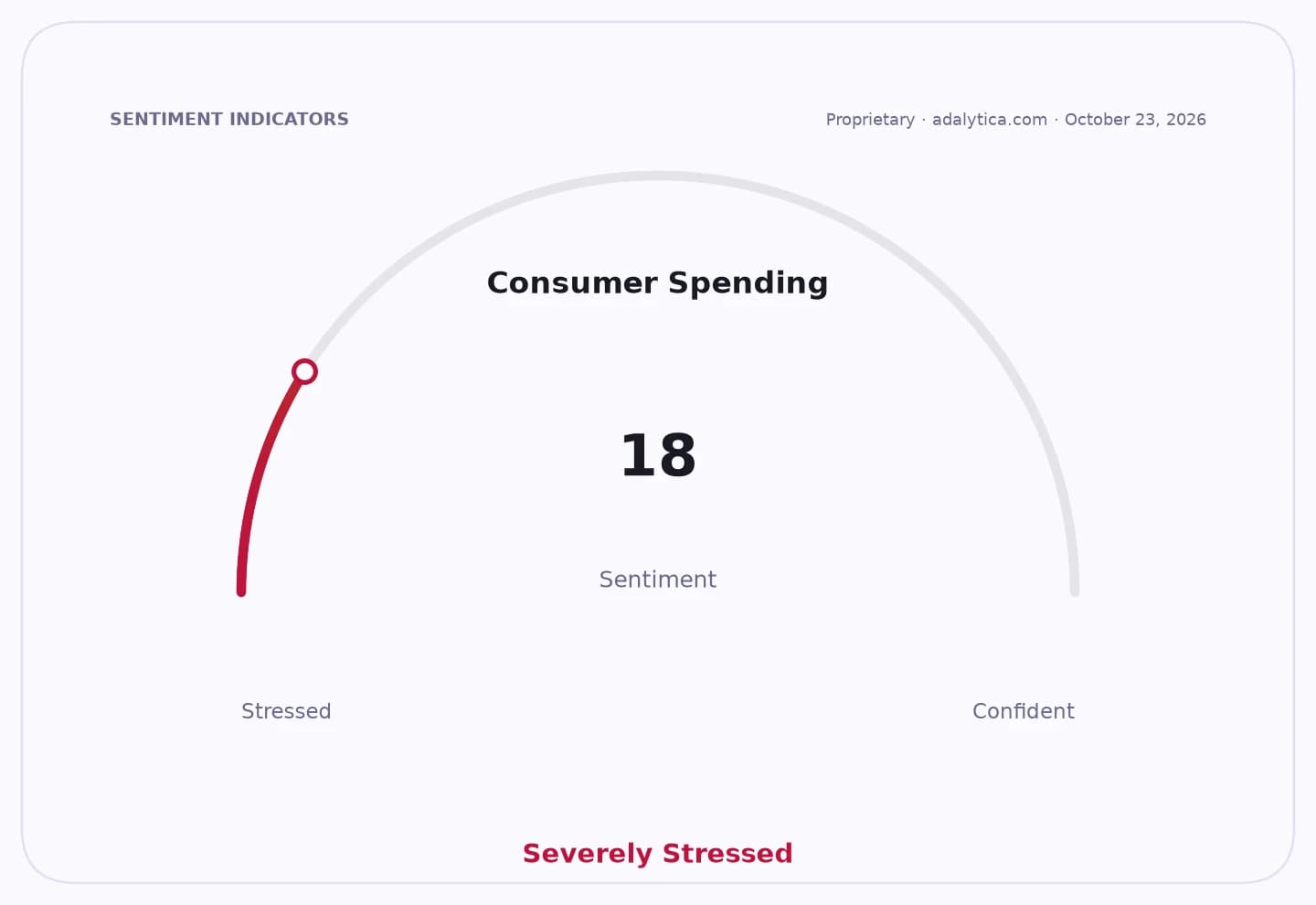
Sentiment IndicatorsⓘProprietary · adalytica.com · October 24, 2026
This is a snapshot — live sentiment, awareness and momentum for 130+ markets update continuously in the dashboard.Open AlphaPulse
For the week ended Oct. 10, spending per household on Bank of America credit and debit cards rose 5.1% from a year earlier. Gas-station spending surged 25.1%, while spending excluding gasoline rose just 4%. At the same time, department-store purchases fell 5.1% and furniture spending declined 4.7%, a reminder that not all consumer categories are sharing in the strength. Online retail rose 7.7%, but the broader pattern still points to an economy where inflation is doing part of the work that real demand normally would.
That matters because a strong headline growth rate can mask strain underneath. If more of the consumer budget is being diverted to fuel, households have less left for discretionary goods and big-ticket purchases. That is bad news for retailers selling durable goods, and it is a warning sign for margins if consumer demand becomes more selective. It also complicates the Federal Reserve’s task: Bank of America’s read on the data suggests policy may have to remain restrictive — and could even need another rate hike — if inflation pressures refuse to cool.
For investors, the implication is straightforward. This is not the kind of strength that automatically lifts every stock. It favors companies with pricing power, recurring demand and strong balance sheets, while leaving rate-sensitive corners of the market more exposed. Banks may benefit if loan demand holds up and credit stays manageable, but higher-for-longer rates can also keep pressure on borrowing costs and slow deal activity. Retailers, furniture makers and other consumer cyclical names could keep feeling the squeeze if gasoline absorbs a larger share of household spending.
Bank of America’s own stock has been volatile recently, and the latest trading setup reflects the tension between a resilient economy and a market that still worries about rates. The shares recently traded below their 50-day moving average, with technical indicators showing a weaker short-term tone than earlier in the year. But for long-term investors, the bigger story is not the next few sessions in BAC. It is whether the U.S. consumer can keep growing through a period of expensive money without forcing the Fed to stay tight for longer.
That is why this report matters. It shows an economy that remains resilient enough to surprise on growth, but not comfortable enough to make inflation and rates a solved problem. For patient investors, that usually means focusing on quality, diversification and businesses that can compound through uneven cycles.
| Entity | Gains | Losses |
|---|---|---|
| Bank of America | ▲Stronger growth backdrop | ▼Higher-rate uncertainty |
| U.S. consumers | ▲Solid income support for spending | ▼More budget pressure from gasoline |
| Retailers of discretionary goods | ▲Online sellers with demand | ▼Department stores, furniture chains |
| Fed | ▲Evidence of resilient economy | ▼Less room to cut rates quickly |