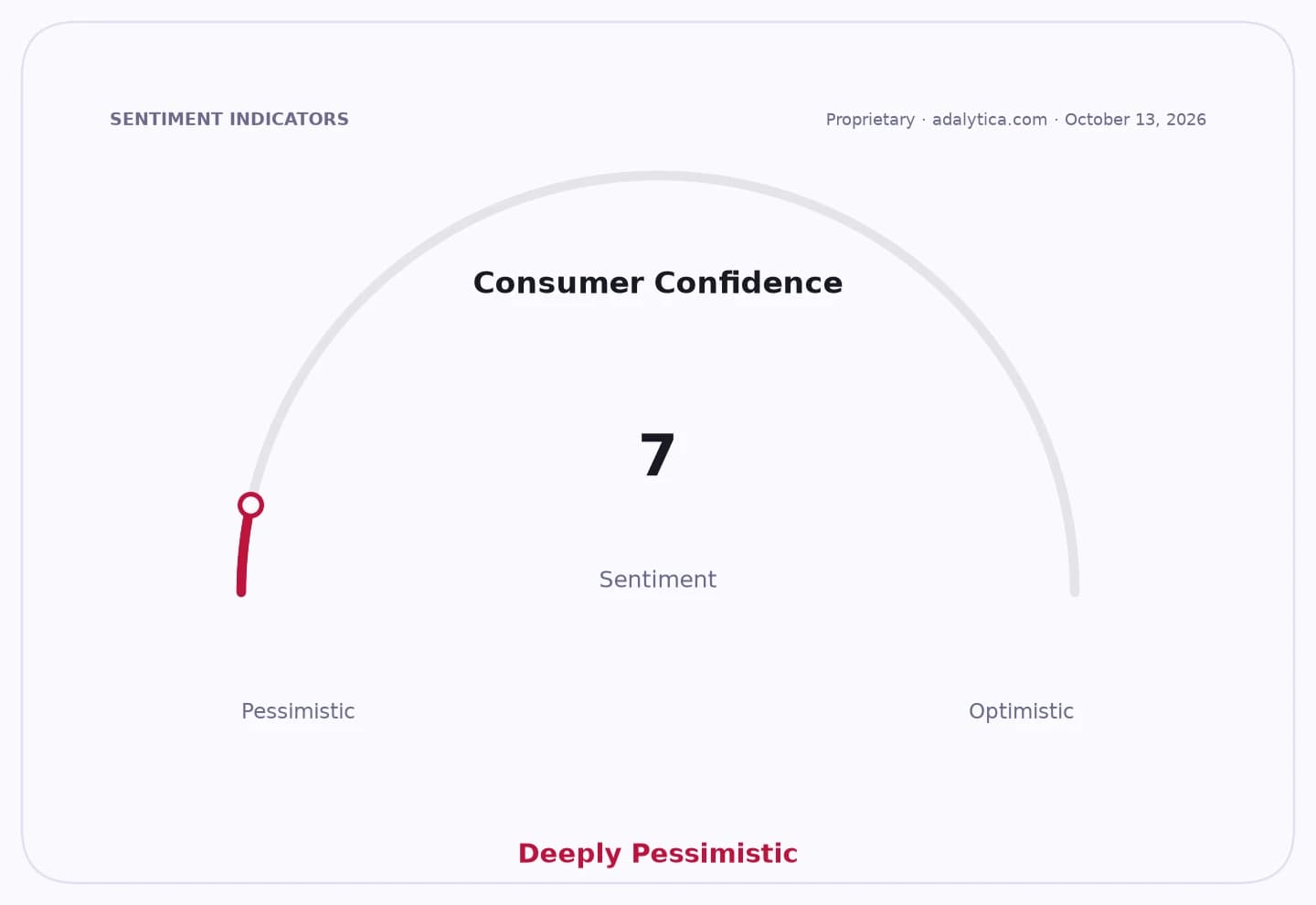
UK consumer confidence has fallen to its weakest level in more than three years, underscoring the growing strain on household finances just as inflation and interest-rate expectations threaten to curb spending further.
UK consumer confidence falls to three-year low
The S&P Global survey showed confidence dropping for a third straight month to 41.3 in October, the lowest reading since July 2023. The survey, which has tracked 1,500 British households monthly since 2009, found 57% of families expect borrowing costs to rise, reinforcing fears that higher rates will bite into disposable income and savings.
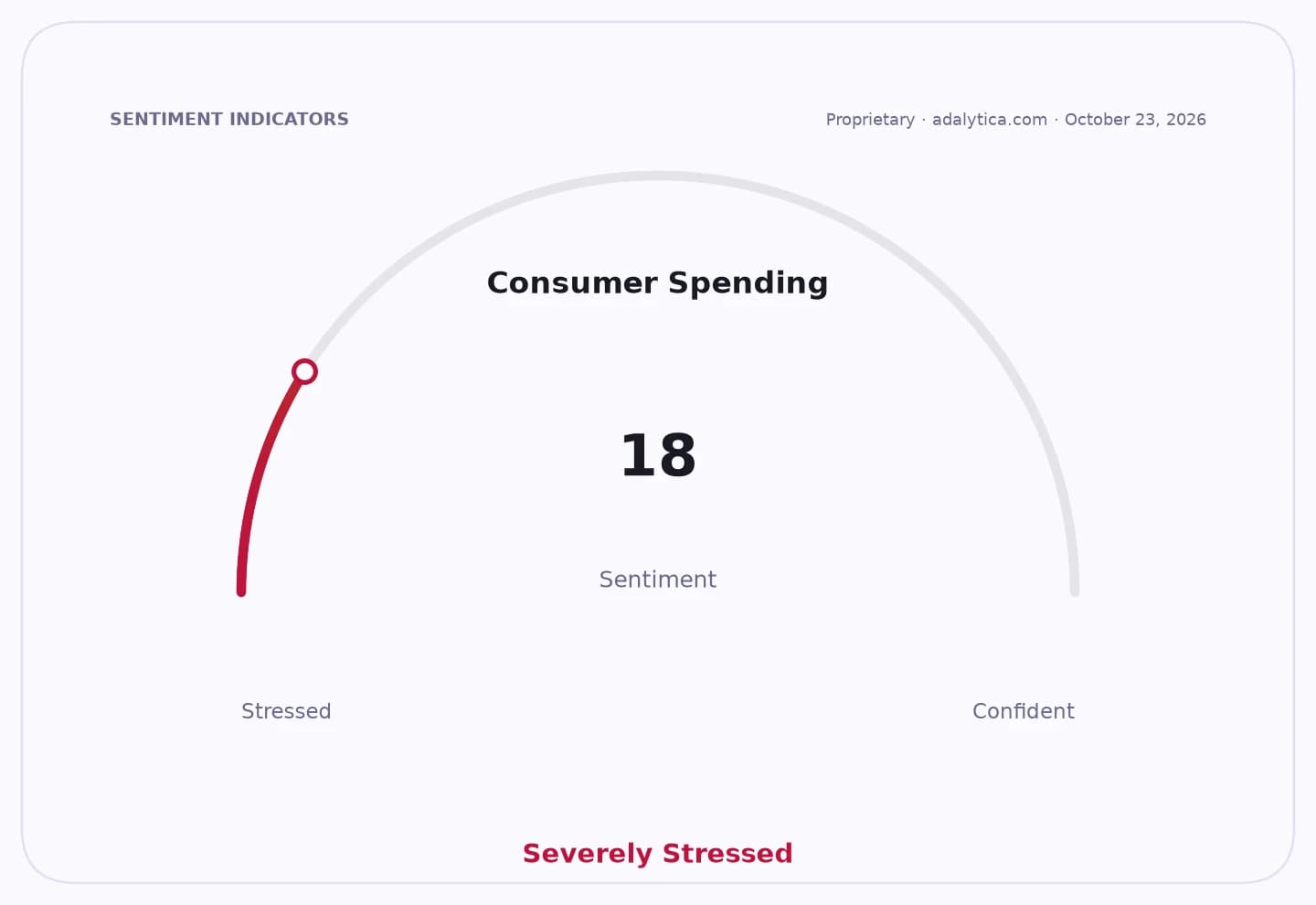
Sentiment IndicatorsⓘProprietary · adalytica.com · October 23, 2026
This is a snapshot — live sentiment, awareness and momentum for 130+ markets update continuously in the dashboard.Open AlphaPulse
That matters because consumer demand remains one of the main supports for the UK economy, and a deterioration in sentiment often shows up first in discretionary spending, then in retail sales, leisure demand and broader services activity. With inflation still weighing on real incomes, households appear increasingly reluctant to spend, a dynamic that risks slowing growth at a time when policymakers have limited room to offset weakness without reigniting price pressures.
The survey’s sharp drop in 12-month financial expectations suggests the damage is not just about current conditions but about the outlook. Households are signalling that they expect the squeeze to persist, which can encourage precautionary saving and reinforce a weaker consumption cycle. For the Bank of England, that creates a delicate policy backdrop: rate rises may still be needed if inflation proves sticky, but tightening too far risks deepening the downturn in consumer demand.
For investors, the implications are straightforward. Domestically focused retailers, hospitality groups and other consumer-facing companies face a tougher trading environment if spending softens further. More defensive sectors and firms with overseas earnings may look relatively better insulated. In rates markets, the data strengthens the argument that the BOE will be cautious about overtightening, even as households brace for more pressure.
The key question now is whether this is a temporary sentiment slump or the start of a more durable weakening in spending. If inflation cools and rate expectations ease, confidence could stabilise. If not, the UK’s consumer-led growth engine may lose more momentum into year-end.
| Entity | Gains | Losses |
|---|---|---|
| UK savers | ▲higher deposit returns | ▼weaker purchasing power |
| UK consumers | ▲eventual inflation relief | ▼rising debt-service pressure |
| BOE doves | ▲case for caution | ▼less room if inflation stays sticky |
| Retailers & hospitality | ▲none | ▼softer spending demand |