German government bond yields nudged higher as the recent equity rout paused, a reminder that investors are still wrestling with sticky rate expectations even after risk assets stopped sliding.
German bond yields edge higher as stocks stabilize

The move matters because Bunds sit at the center of Europe’s pricing for growth, inflation and European Central Bank policy. When yields edge up while stocks merely stabilize, it usually means the market is not abandoning its tighter-for-longer view — it is simply taking a pause in the rush to safety. That keeps pressure on duration-sensitive assets and reinforces the idea that the bond rally has not yet earned a durable vote of confidence.
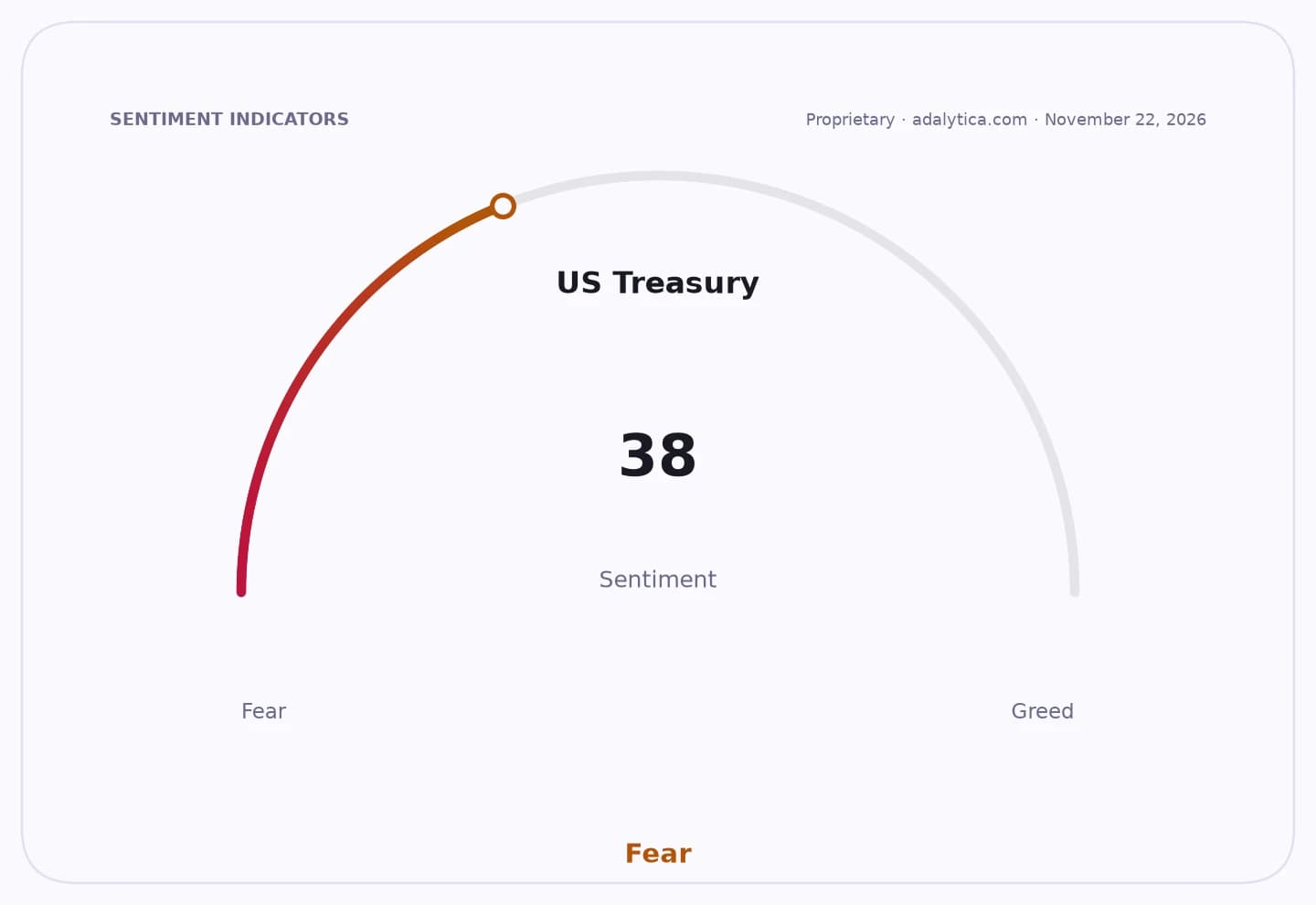
Sentiment Indicators

In the US, the 10-year Treasury yield is still sitting above 5.1%, close to a one-month peak, reflecting persistent inflation and hawkish Federal Reserve messaging. German and Japanese rates have been moving more cautiously, but the broad message is the same: policy remains restrictive, and investors are reluctant to price an early pivot. The German 10-year yield forecast in the data points to 4.84% after a recent print of 4.91%, while the 10-year minus 2-year curve is still barely positive at about 0.28 percentage point, underscoring how fragile growth optimism remains.
That backdrop explains why bond ETFs are drawing heavy attention. iShares 20+ Year Treasury Bond ETF, or TLT, rose to $82.24 on Nov. 25 from $81.49 the day before, with volume jumping to nearly 48.8 million shares. The fund is trading back above its 50-day moving average, and its MACD has turned positive, showing that traders are still willing to buy duration on dips even as yields remain elevated. The iShares 7-10 Year Treasury Bond ETF, SHY, also inched higher to 81.64, reinforcing the message that the market is positioning cautiously rather than decisively.

For investors, the opportunity is less about chasing a quick bond breakout than about recognizing where the asymmetry sits. If growth slows and inflation cools, duration can still reprice sharply higher from here. If rates stay higher for longer, equities remain vulnerable and bond yields can keep grinding up. That makes intermediate and long-duration Treasuries the key tactical hedge, while rate-sensitive equity sectors — especially high-multiple growth names — remain at risk until the market gets clearer proof that central banks are finished tightening.
The real trade now is not whether yields are high, but whether they are high enough to break something. Until that answer arrives, every pause in the equity selloff is likely to be met by a test of bond discipline, not a full embrace of risk.
| Entity | Gains | Losses |
|---|---|---|
| Treasury bond buyers | ▲Lock in higher yields | ▼Face mark-to-market swings |
| Equity bulls | ▲Get a short-term breather | ▼Lose momentum if yields climb |
| Duration-sensitive stocks | ▲Benefit from any bond rally | ▼Suffer if rates stay elevated |
| Central banks | ▲Keep policy restrictive | ▼Risk over-tightening into slowing growth |