Germany’s political mainstream is facing a familiar and uncomfortable question: does bringing a hard-right party closer to power weaken it over time, or normalize it for good?
Germany AfD and Austria Coalition Lessons

That is the lesson investors and policymakers should take from Austria, where conservatives broke a long-standing taboo by partnering with the Freedom Party in government, only to see the far right suffer setbacks, split and then return stronger years later. The story matters well beyond Vienna. In Germany, the Alternative for Germany is now close enough to real power that just three votes could help deliver the first far-right state premier in the country since World War II, a development that would mark another breach in Europe’s so-called firewall against the extreme right.
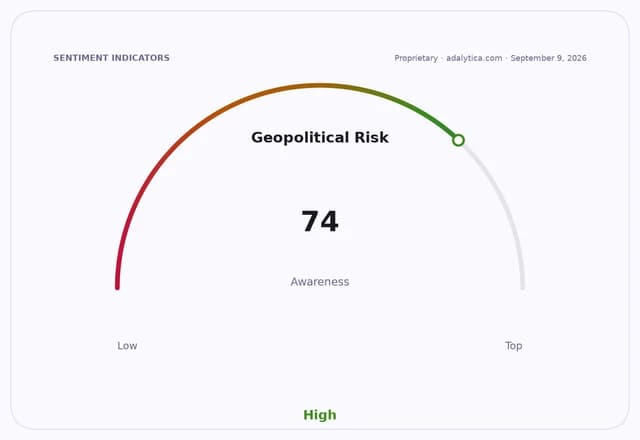
Sentiment IndicatorsⓘProprietary · adalytica.com · September 9, 2026
This is a snapshot — live sentiment, awareness and momentum for 130+ markets update continuously in the dashboard.Open AlphaPulse
Austria shows why that would matter economically as much as politically. When the Austrian People’s Party brought the Freedom Party into government in 2000, the move briefly helped the conservatives and was framed as a way to “tame” the far right by making it accountable. Instead, the coalition exposed the freedom party’s weaknesses but did not soften its ideology. The pattern repeated in 2017, when the taboo was broken again and the far right entered government a second time. That ended in scandal, collapse and another vote of protest. Yet nearly a decade after the Ibiza affair, the Freedom Party is back on top in the polls, with roughly 39% support.
For investors, the larger point is that populist gains rarely stay neatly contained inside party politics. Once a far-right force becomes part of governing arithmetic, it can change the policy mix around migration, labor, fiscal restraint, regulation and relations with the European Union. Those shifts matter for growth expectations, investor confidence and the stability premium attached to German and broader euro-area assets. Germany is the bloc’s biggest economy; even a localized political shock there can spill into the euro, bank shares and export-sensitive sectors.

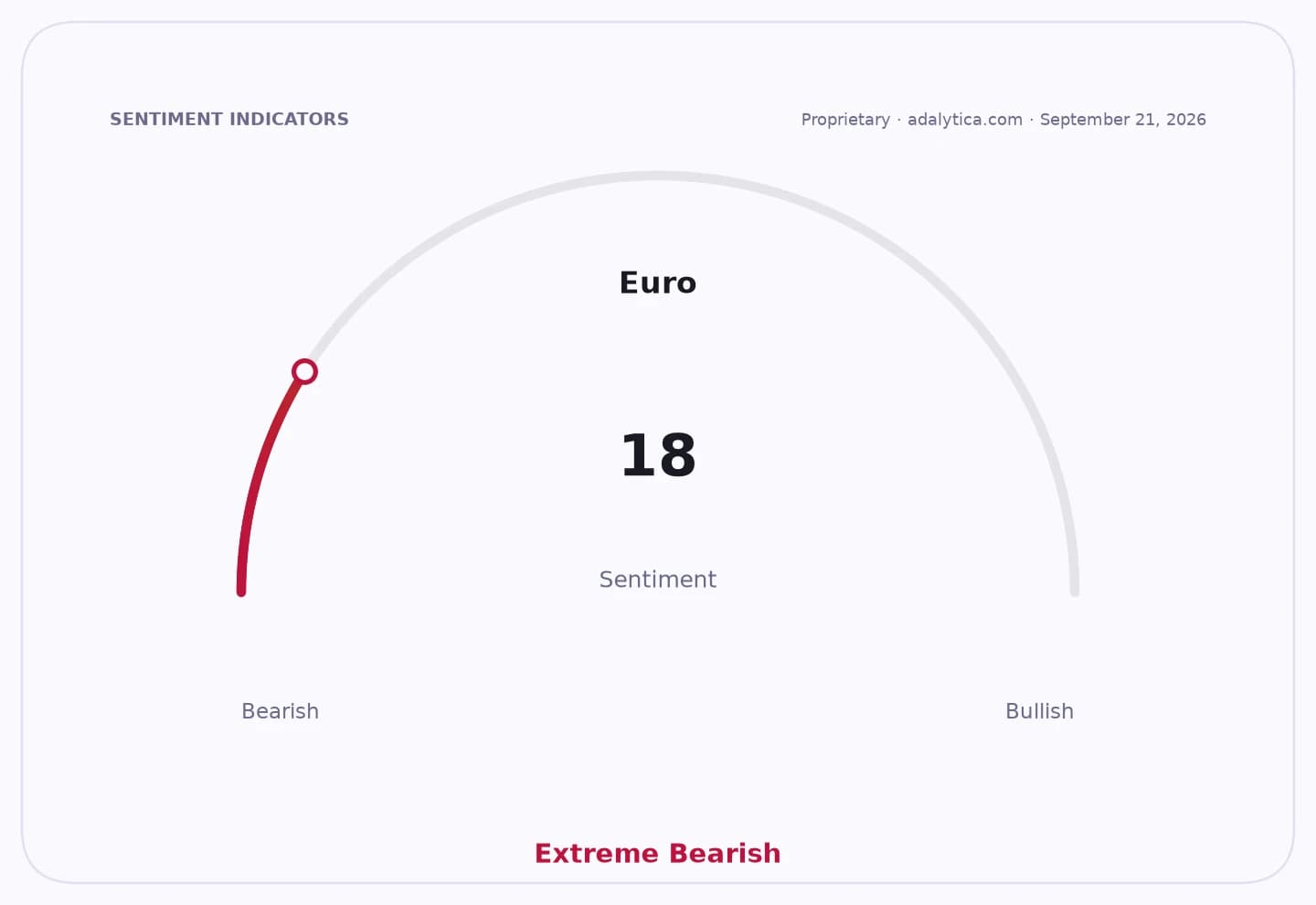
Markets have already been reminding investors that politics and geopolitics are inseparable. Germany’s recent accusation that Russia was behind a drone attack on Leipzig airport has sharpened debate over security, retaliation and the government’s response to Moscow. That kind of tension tends to support defense spending but adds to uncertainty for industrial companies, exporters and anything linked to Europe’s energy and trade balance. On the currency side, the euro is flashing caution. Adalytica’s Euro Trade Signals snapshot shows sentiment at 23, a “Fear” reading, with awareness at 88, or “Extreme Greed,” a sign of crowded attention rather than calm conviction.
The equity market response has been more nuanced. Germany-focused and eurozone-related vehicles have held up better than the political headlines might suggest. The iShares MSCI Germany ETF, ticker EWG, recently traded at $43.08, above both its 50-day moving average of 42.86 and its 200-day moving average of 41.70, while Deutsche Bank shares stood at $40.72, also above their 50-day and 200-day averages. Those are not panic charts. But Deutsche Bank’s relative strength also underlines the market’s preference for institutions with diversified earnings and enough resilience to absorb political noise.
That is why Austria is such a useful case study for Germany. The short-term temptation is always to assume that admitting the far right into power will make it less radical or more responsible. Sometimes it can even help mainstream conservatives electorally in the near term. But the long run has often told a different story: the far right is normalized, the center is weakened, and volatility rises. For long-term investors, that usually argues for patience, diversification and a focus on companies and funds with durable cash flow rather than trying to trade each political headline.
The best takeaway is simple. Austria suggests the firewall does not disappear all at once — it erodes by precedent. If Germany follows that path, investors should expect more policy uncertainty, not less, and keep Europe exposure diversified and long term.
| Entity | Gains | Losses |
|---|---|---|
| AfD / far right | ▲Greater legitimacy | ▼Isolation by mainstream parties |
| German conservatives | ▲Short-term vote gains | ▼Firewall credibility |
| Germany-focused investors | ▲Clearer policy premium in strong firms | ▼Higher political volatility |
| EU institutions | ▲Renewed urgency on democratic norms | ▼Stability and cohesion |