Germany’s government is tapping its state-owned real estate agency for 1.5 billion euros next year even as the country faces an acute housing shortage, a move that may help plug budget holes now but risks undercutting one of the few public tools available to expand affordable homes over time.
Germany taps BImA for 1.5 billion euros in 2027
That is the core tension in Lars Klingbeil’s budget plan: immediate fiscal relief versus long-term housing supply. According to a Spiegel report citing budget documents, the Bundesanstalt für Immobilienaufgaben, or BImA, is set to transfer 1.5 billion euros to the federal budget in 2027, up from 1.35 billion euros this year. The agency owns about 38,400 homes and controls land that could be used to build more, modernize existing units or bring vacant properties back into use.
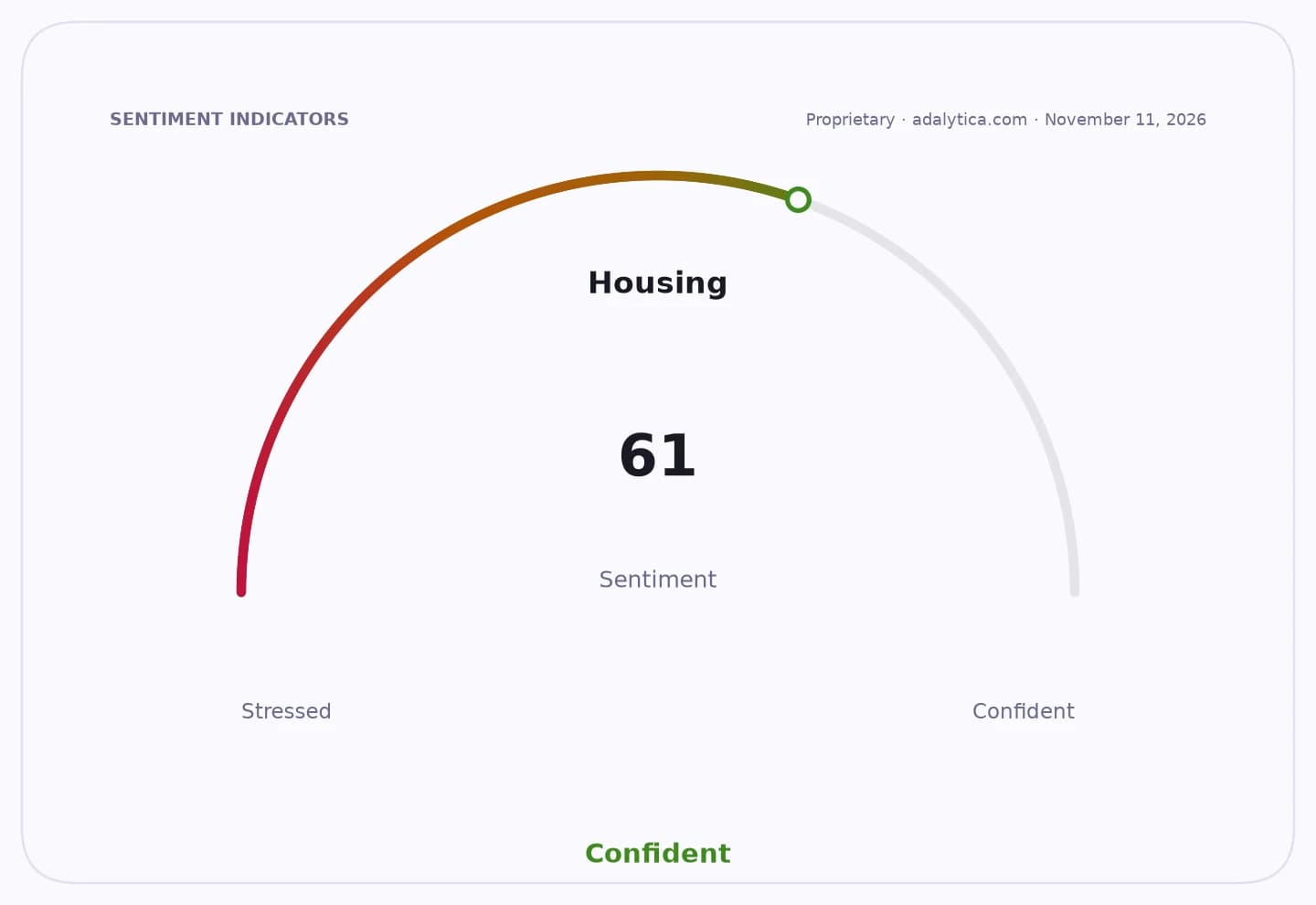
Sentiment Indicators
For investors, the bigger message is not the accounting maneuver itself but what it says about Germany’s policy priorities. When a government leans on an asset-rich housing vehicle to close deficits, it can leave less capital for the very projects that would ease rent pressure and support construction activity. That matters for anyone watching German residential real estate, builders, housing-related suppliers and broader consumer demand, because high housing costs have become a drag on mobility, hiring and disposable income.
The criticism from the opposition is straightforward: if affordable housing is the goal, the state should be bolstering the BImA’s development capacity rather than siphoning off cash. Green politician Lisa Paus argued the government is “selling off the foundation” of affordable housing. The finance ministry’s defense is that the agency is already fully stretched, especially with more work tied to the defense ministry, and that other federal funds are channeling more money into affordable housing than before.
Still, the numbers underline the tradeoff. A 150 million euro increase in the annual transfer may sound modest in budget terms, but it is money that cannot be recycled into new units, refurbishments or land development. At a time when housing shortages are worsening and affordability remains a political flashpoint, the decision reinforces a familiar European theme: governments want more homes, but budget discipline keeps crowding out the upfront spending needed to build them.
For long-term investors, that means Germany’s housing shortage is unlikely to be solved quickly, and any benefit to the fiscal balance may come at the expense of future supply. The policy mix should remain supportive for builders, landlords and housing ETFs over the long run only if it eventually shifts from extracting cash to funding construction. Until then, the housing market remains a structural problem worth watching, not a turnaround story.
| Entity | Gains | Losses |
|---|---|---|
| German federal budget | ▲Short-term cash relief | ▼Long-term housing capacity |
| BImA | ▲Limited near-term spending pressure | ▼Less capital for new homes |
| Housing buyers and renters | ▲Little immediate benefit | ▼Continued supply strain |
| Homebuilders and housing investors | ▲More policy attention on shortage | ▼Delayed public investment |