Housing is becoming more data-driven and more efficient just as U.S. homebuilder stocks stay volatile and affordability pressures keep demand under strain. The latest housing-innovation showcases in France point to a sector that is trying to cut energy bills, reduce noise complaints, improve resilience and make home search itself faster and more precise.
U.S. Homebuilder Stocks Face Housing Tech Shift

At the 1st Conference of Innovation in Housing at France’s housing ministry, startups pitched tools that could change how buildings are heated, renovated and designed. Kocliko says its connected sensors and 3D modeling can optimize collective heating and is already being deployed in 50,000 homes, while Sonalyze offers a “sound performance diagnostic” for apartments, scoring noise from A to G.
Sentiment Indicators

Other companies are targeting the energy and climate side of the market. Sensspace measures how buildings behave across seasons and under different conditions to guide retrofits, while Terria is using prefabricated raw-earth blocks made from construction waste to build walls and facades that can better withstand heat.
The broader shift is in software as much as hardware. At the RENT property-tech conference, artificial intelligence was presented as a new layer across brokerage, management and search, with systems moving from keyword matching to intent-based recommendations that blend prices, transport links and environmental data.
Housing (Real Estate) — 30-day sentimentadalytica.com
Explore this data interactively — full history, time series and cross-market comparisons.
Housing (Real Estate)
For investors, the theme is that housing is increasingly about operating costs, data and user experience, not just square footage. That matters for landlords, builders and proptech firms because lower energy use and smarter maintenance can support margins, while AI tools could compress search and transaction times and make platforms stickier.
The backdrop in U.S. equities is a sector still wrestling with affordability and rate sensitivity. The SPDR S&P Homebuilders ETF, XHB, has rebounded to about $102.07 from a November low near $101.32, while ITB closed at $94.01 and Lennar at $83.61 after sharp swings this year as traders reassess demand, inventory and the path for mortgage rates.
Technical readings still show an uneasy market. XHB sits just above its 200-day moving average of about 104.09 and below its 50-day average near 98.39, while ITB remains under its 200-day line at 94.87. Lennar is also trading below its 200-day average of 88.95, even after a recent rebound from the low $70s.
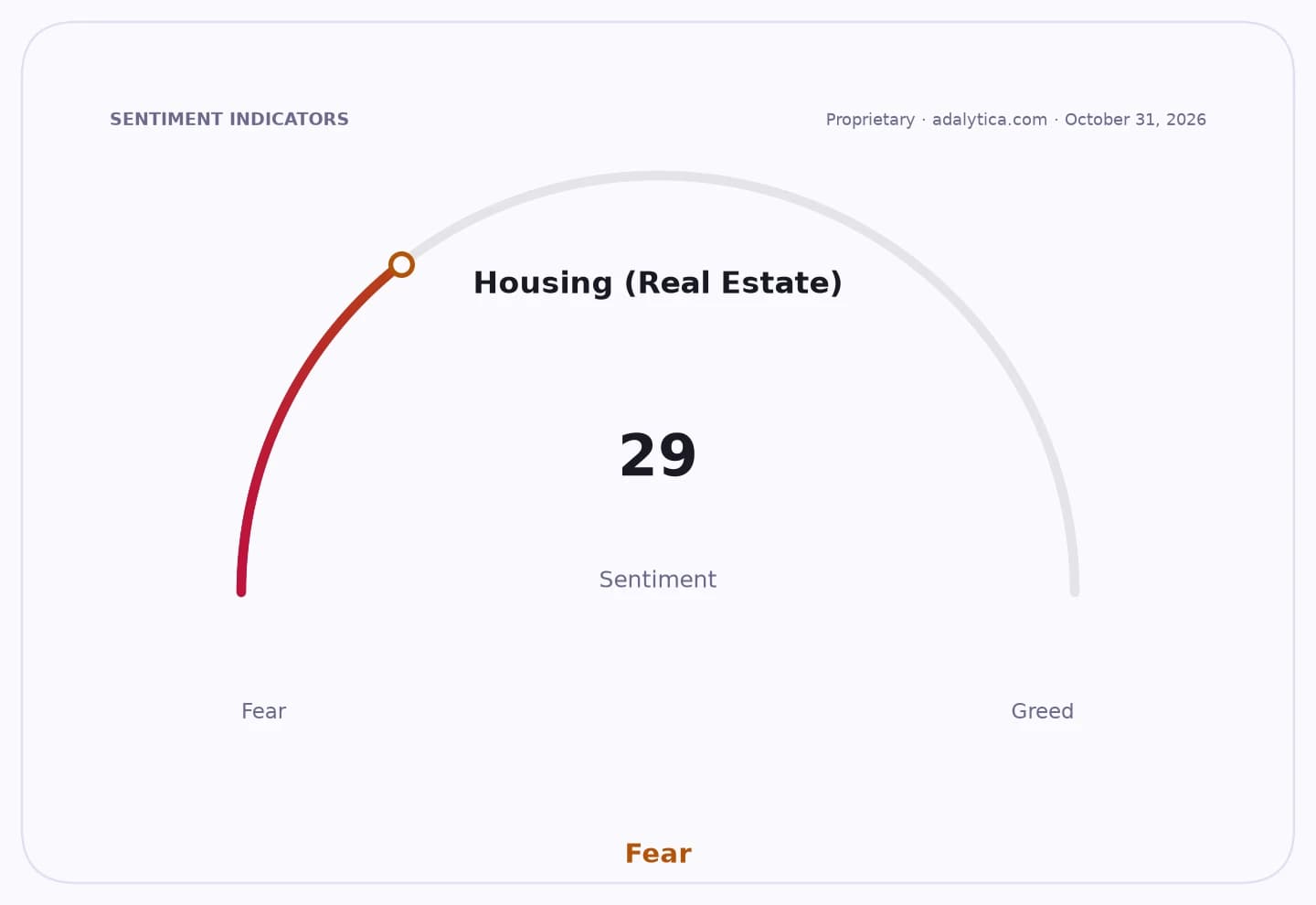
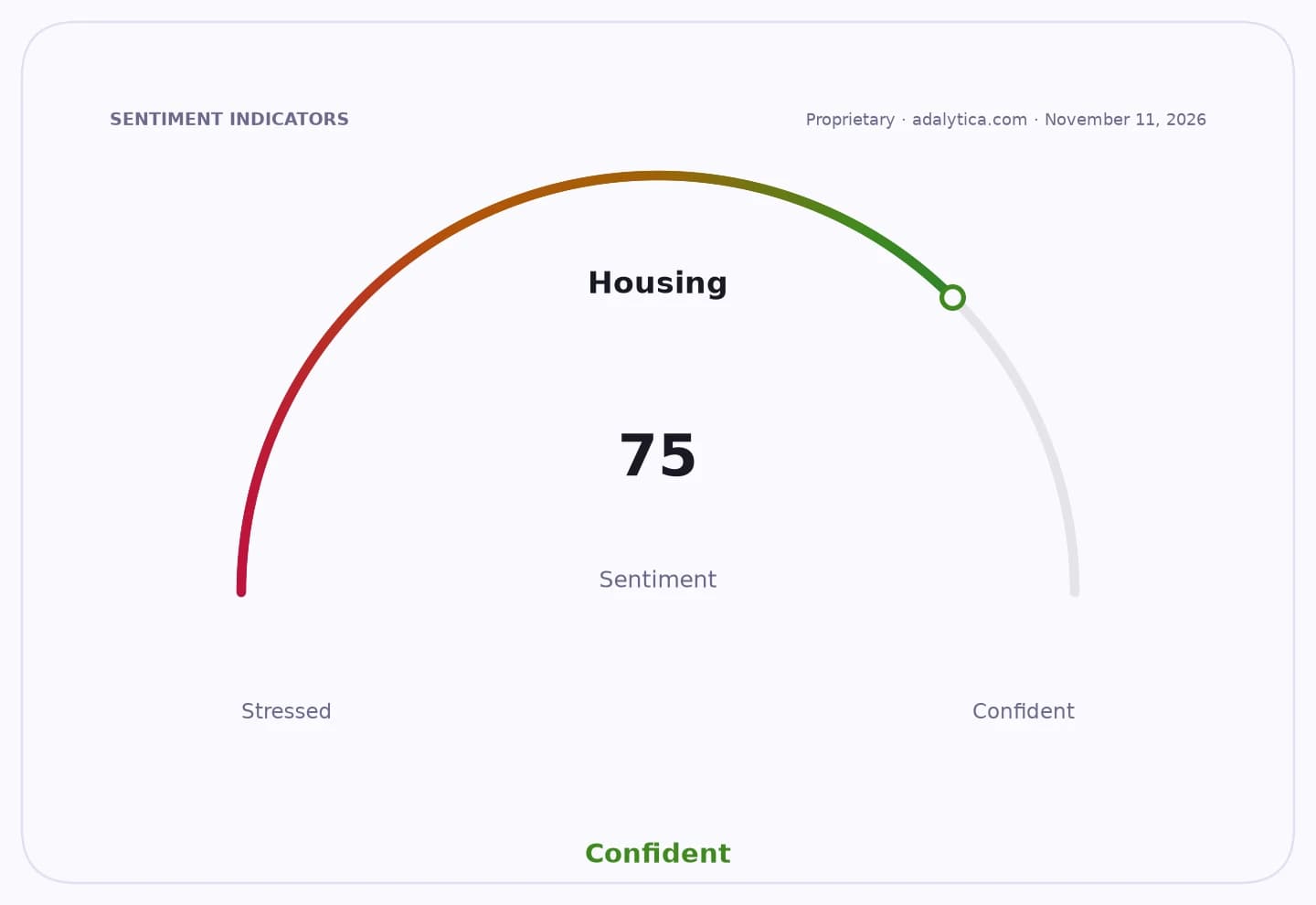
Adalytica’s Housing Fear & Greed Index stands at 75, in greed territory, but its awareness gauge remains in extreme fear, underscoring how quickly sentiment can improve even as underlying participation stays thin. For investors, that mix suggests the housing trade can recover on innovation and easing macro fears, but sustained upside still depends on affordability, rates and whether new tools translate into real margins.
| Entity | Gains | Losses |
|---|---|---|
| Housing tech startups | ▲Faster adoption, higher visibility | ▼Slower funding if demand weakens |
| Landlords and social housing operators | ▲Lower energy costs, smarter maintenance | ▼Upfront retrofit spending |
| Homebuilders and proptech firms | ▲Better efficiency, richer data tools | ▼Margin pressure if affordability stays tight |
| Buyers and tenants | ▲Lower bills, better search and living quality | ▼Higher costs if innovation is passed through |