A new lender is entering a mortgage market still pinned near 7%, but the bigger question for borrowers and investors is whether it can do anything meaningful to bring down the cost of housing finance.
Mortgage Rates Stay Near 7% as New Lender Enters

The 30-year fixed mortgage rate was 7.18% in the latest reading, only a touch below the prior week’s 7.24%, after rising as high as 7.32% late last month. The 10-year Treasury yield, the benchmark most closely tied to mortgage pricing, sat at 4.88%, while the two-year yield was 4.56%, underscoring a still-elevated funding backdrop that limits how far lenders can cut rates without sacrificing margin.
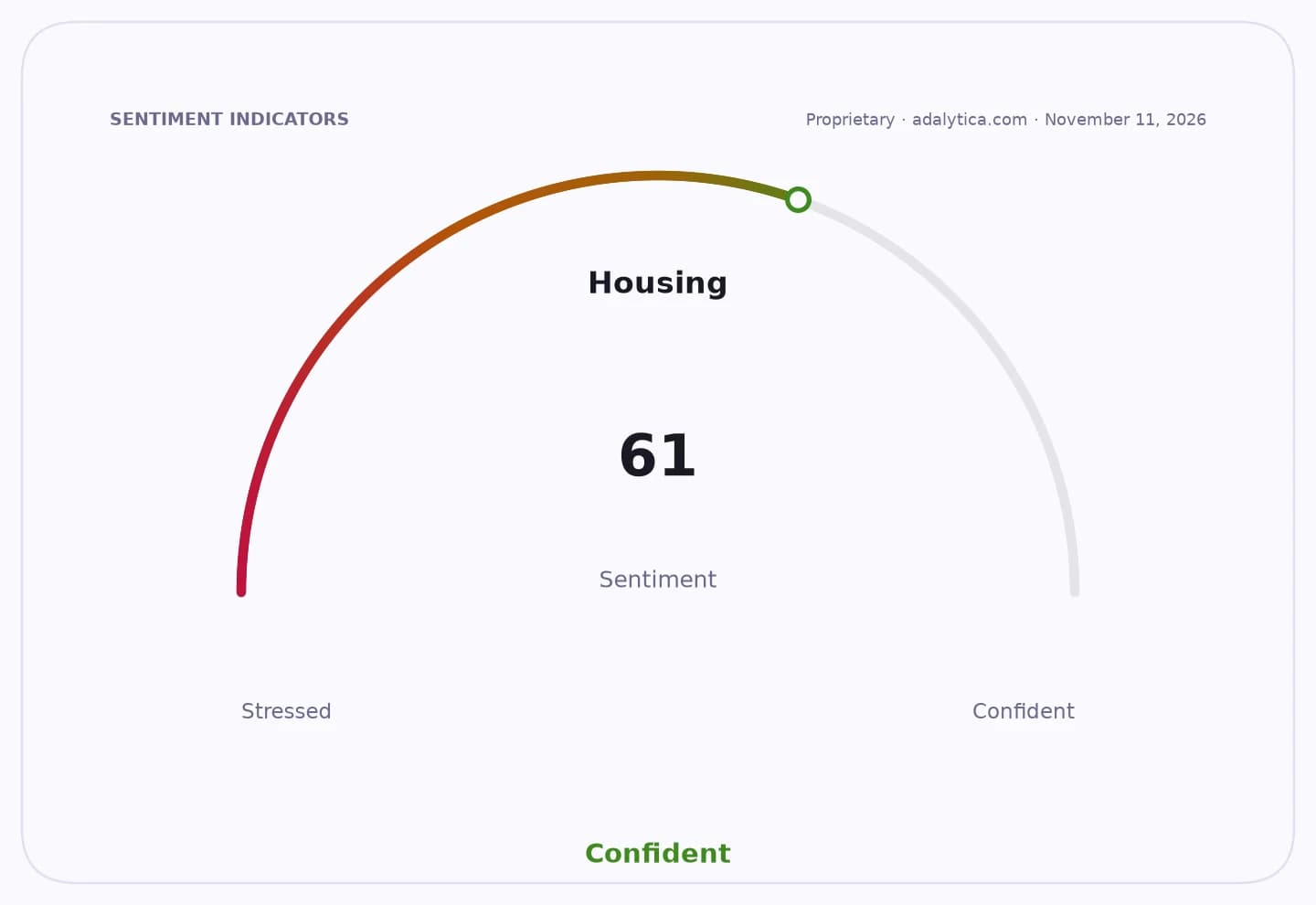
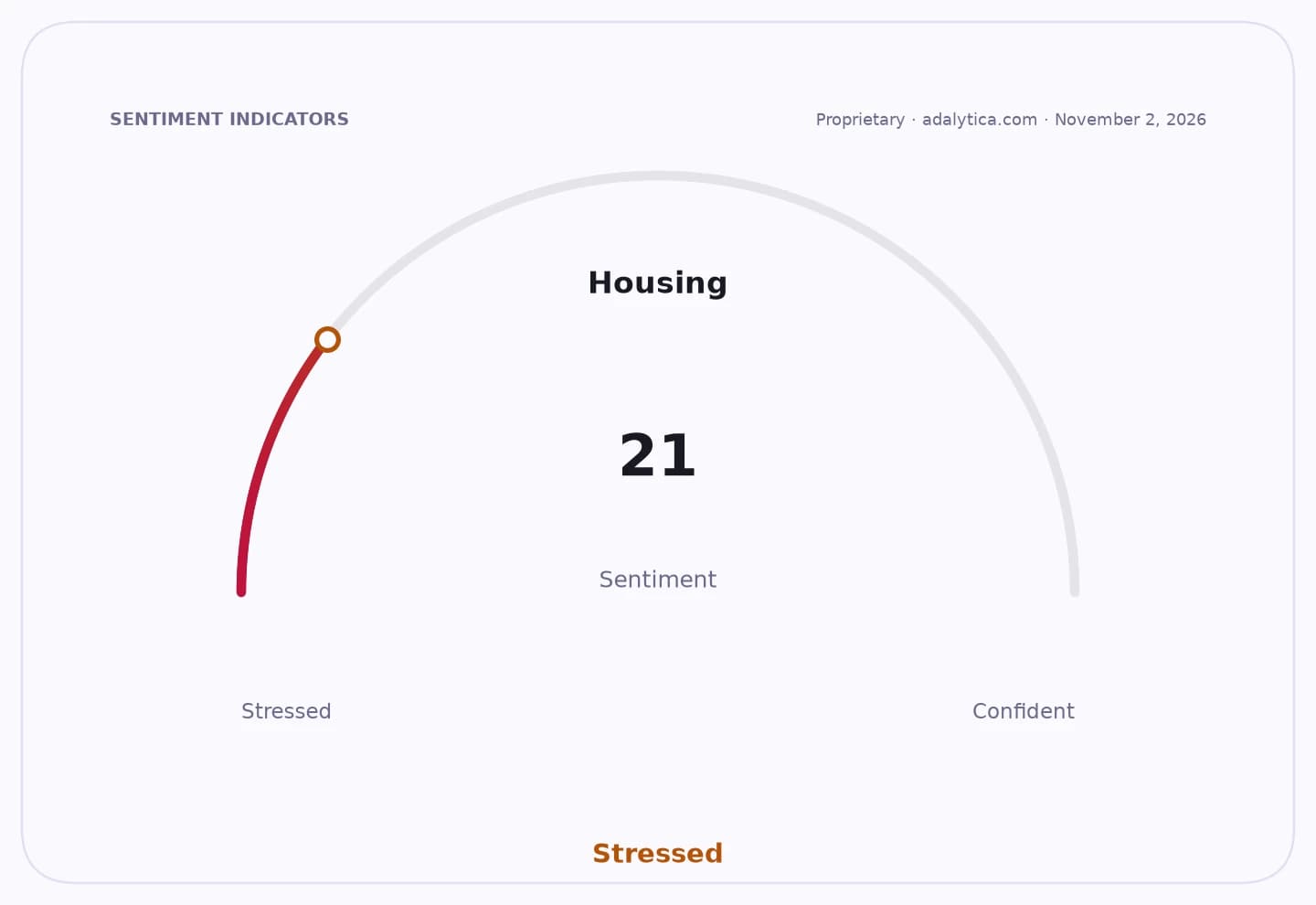
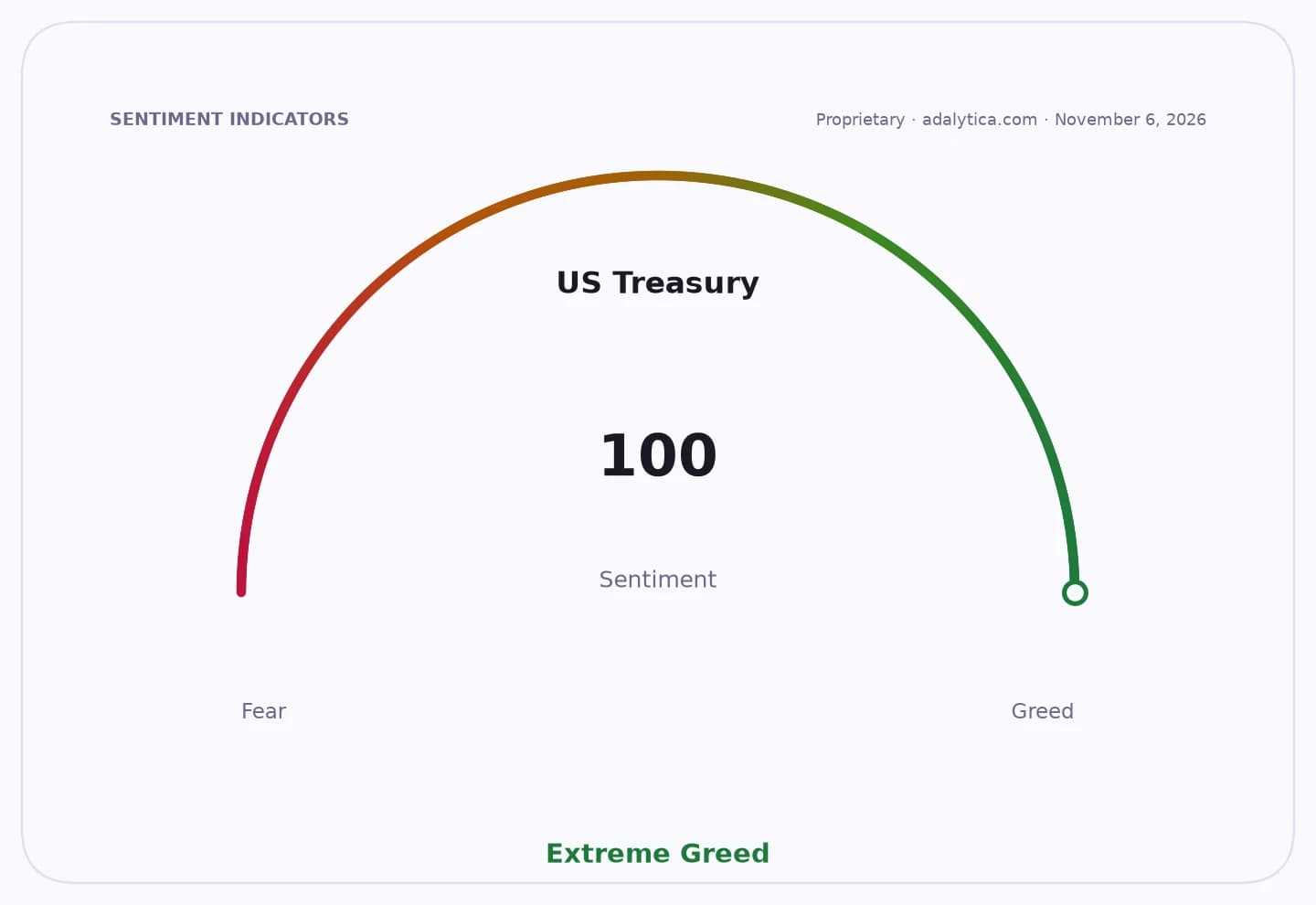
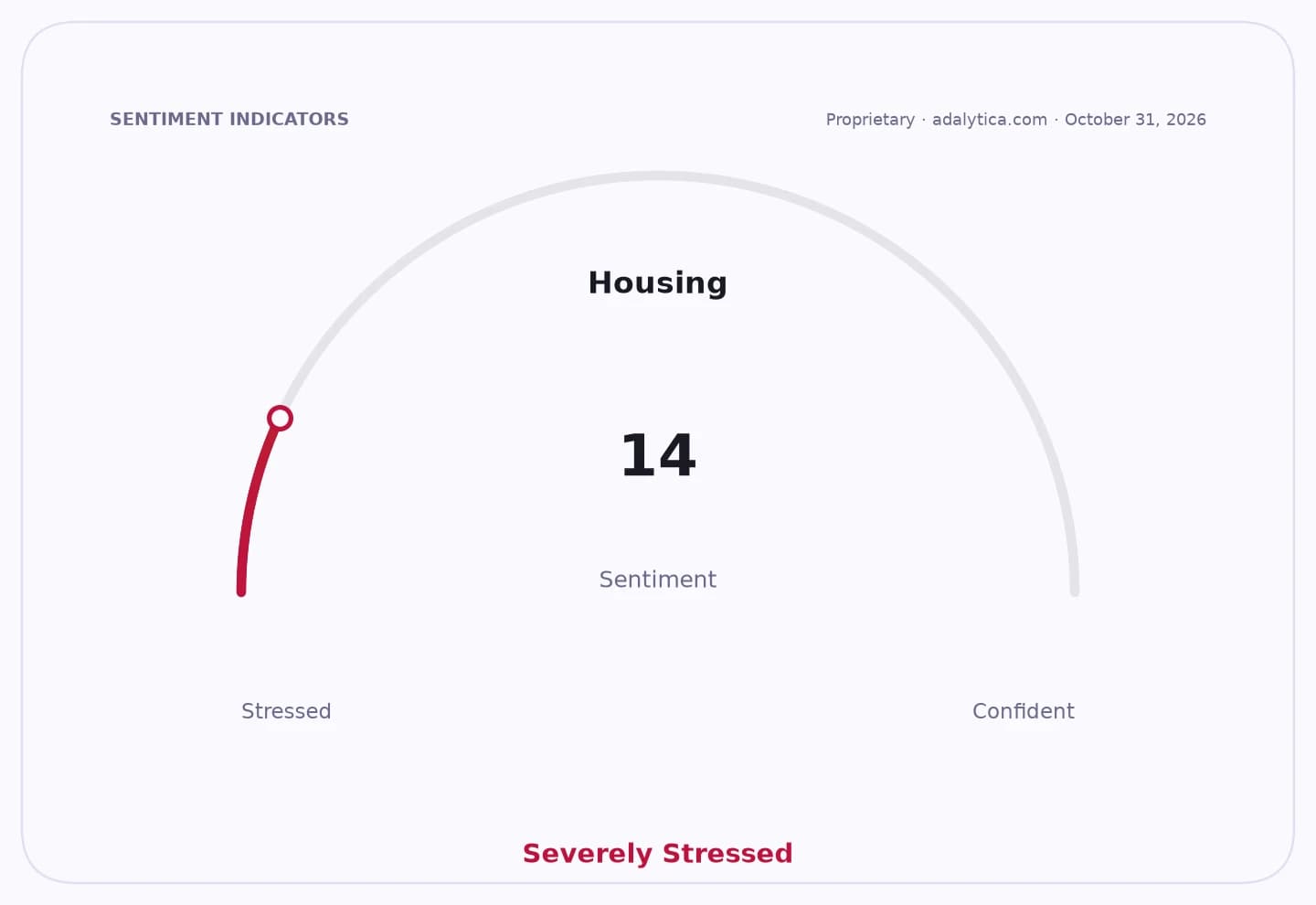
Sentiment Indicators
That matters because mortgage costs remain a direct drag on housing turnover, affordability and household cash flow. Even a few tenths of a percentage point on a loan can translate into thousands of dollars over the life of a mortgage, but lenders’ room to discount pricing is constrained by the cost of capital and the spread they need to keep originating loans profitable.
The market backdrop also explains why banks are still trying to compete for mortgage business even as rates remain stubbornly high. Big lenders such as Wells Fargo and Rocket Companies have seen their shares react to swings in rates and refinancing expectations, while United Wholesale Mortgage has been pushed back toward the lower end of its trading range as higher borrowing costs continue to weigh on origination volumes. Rocket’s stock has recovered from a deep selloff earlier this year, but its latest readings still show a company trading near its 200-day moving average, a sign that investors remain cautious about the durability of housing demand.
Technical signals in the shares suggest the market is looking for more than a headline discount. Rocket’s 50-day moving average has crossed back above its 200-day average, and its relative strength index is elevated, implying recent momentum. But United Wholesale Mortgage remains far below its 200-day average despite a short-term rebound, reflecting skepticism that lower monthly payments will arrive fast enough to revive broad mortgage activity.
Adalytica’s Housing and Rent Inflation Sentiment gauge, meanwhile, is flashing “Extreme Greed” on housing prices and rents even as awareness remains in “Extreme Fear.” That combination suggests the story is less about an imminent easing in housing stress than about a market that is highly sensitive to any sign of cheaper credit, but still deeply unsure that relief will last.
For investors, the implication is straightforward: mortgage lenders can benefit from even modest increases in application volumes if they can hold margins, but a meaningful housing recovery still depends on a sustained decline in Treasury yields and mortgage rates. Until then, competition will likely center on selective discounting, refinancing recapture and balance-sheet strength rather than a broad-based rebound in home affordability.
| Entity | Gains | Losses |
|---|---|---|
| Borrowers | ▲Slightly lower monthly payments | ▼Still-stretched affordability |
| Mortgage lenders | ▲More origination volume | ▼Margin pressure |
| Homebuyers | ▲More rate competition | ▼Limited price relief |
| Existing homeowners | ▲Refinance opportunities | ▼Little relief if rates stay high |