Amazon’s sale of a two-story prefabricated house with a roof terrace for 17,869 euros underscores a bigger shift in housing: the market for lower-cost, modular, quickly installed homes is moving from niche curiosity toward a mainstream consumer product.
Amazon prefab house listing highlights modular housing
That matters because affordability remains the central problem in residential real estate. U.S. housing starts were running at an annualized 1.275 million in August, well below the pace needed to ease shortages, while the S&P CoreLogic Case-Shiller national home price index was still up sharply from pre-pandemic levels. In other words, the gap between what families can pay and what traditional construction can supply remains wide. That is exactly the opening prefab housing is trying to exploit.
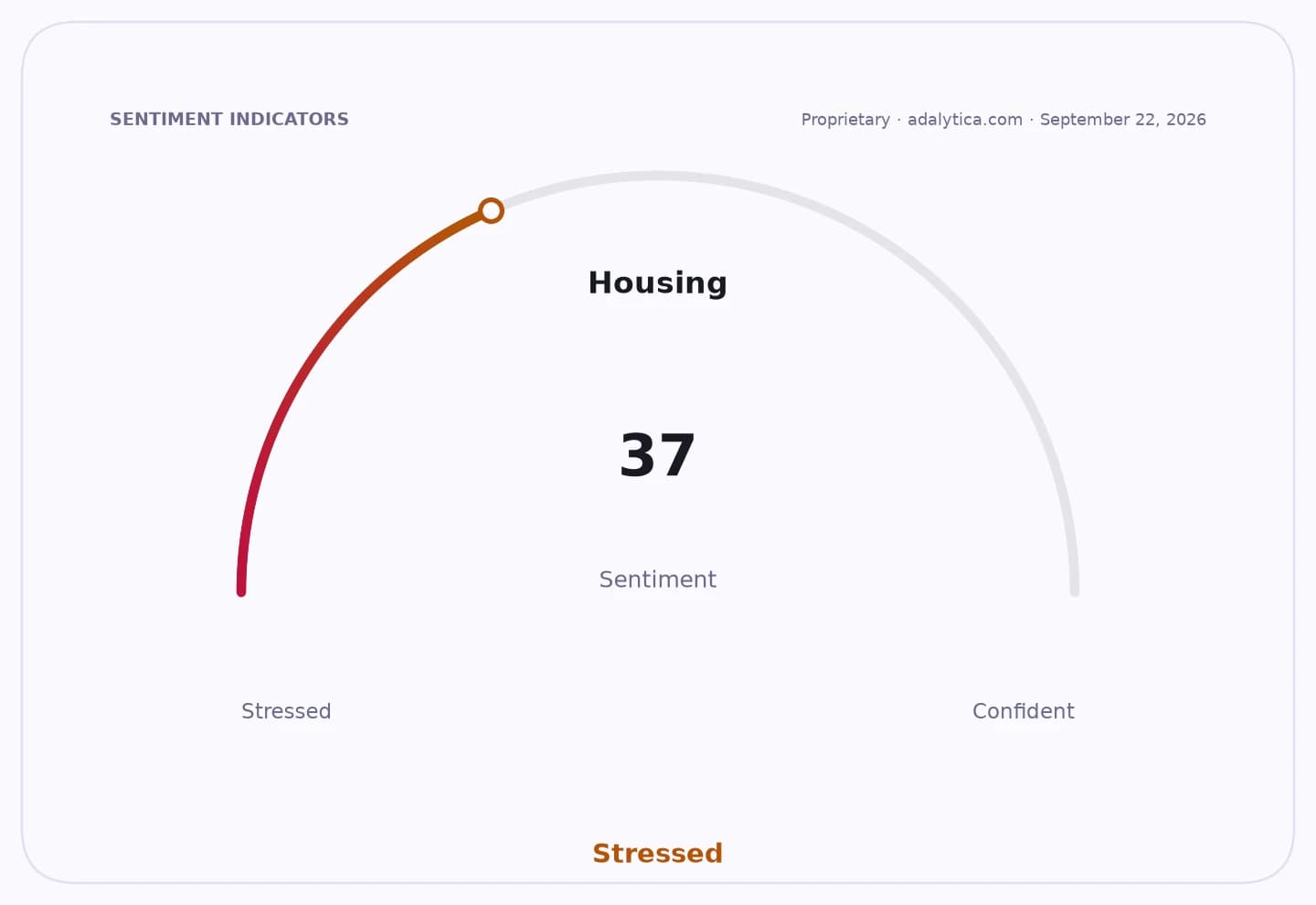
Sentiment IndicatorsⓘProprietary · adalytica.com · October 13, 2026
This is a snapshot — live sentiment, awareness and momentum for 130+ markets update continuously in the dashboard.Open AlphaPulse
Amazon’s listing is more than a novelty. The steel-framed design can be configured as a residence, office or vacation unit, with room for a bedroom, kitchen and bathroom, and it is pitched as a fast-install, modular structure that can be mounted and reconfigured. Those features speak directly to the economics of construction: lower labor intensity, shorter build times and more flexible use of capital. In a housing market still constrained by affordability and supply, the winning model is the one that can be deployed faster and sold in more variants.
Investors should view this as a second-order opportunity. Amazon is not becoming a homebuilder, but it is helping normalize a distribution channel for prefabricated housing and adjacent products. That expands the addressable market for manufacturers, logistics providers, component suppliers and, eventually, financiers willing to underwrite modular housing at scale. The companies best positioned are not necessarily the largest builders; they are the ones that can industrialize production and capture demand from cost-sensitive buyers, landlords and vacation-rental operators.
The public-market read-through is constructive for industrialized housing names and for select real estate operators tied to affordability, while it is a warning sign for traditional builders that remain exposed to labor, land and financing costs. Skylar? No — the better framing is that the market underestimates how quickly retail distribution can compress the path from factory to front door. That is why this kind of listing matters: it turns prefab housing from a speculative concept into a consumer proposition with price, features and purchase intent.
The next catalyst is scale. If consumers continue to respond to modular units at this price point, the competitive advantage will shift toward manufacturers that can standardize designs, cut delivery friction and offer financing or installation partnerships. For investors, the takeaway is simple: look for the picks-and-shovels of the prefab buildout, not the novelty of the listing itself.
| Entity | Gains | Losses |
|---|---|---|
| Amazon | ▲marketplace traffic, housing visibility | ▼none material |
| Prefab manufacturers | ▲broader demand, retail channel access | ▼traditional builders with higher costs |
| Cost-conscious buyers | ▲lower entry price, faster installation | ▼buyers waiting on conventional homes |
| Traditional homebuilders | ▲none | ▼pricing power, volume share |