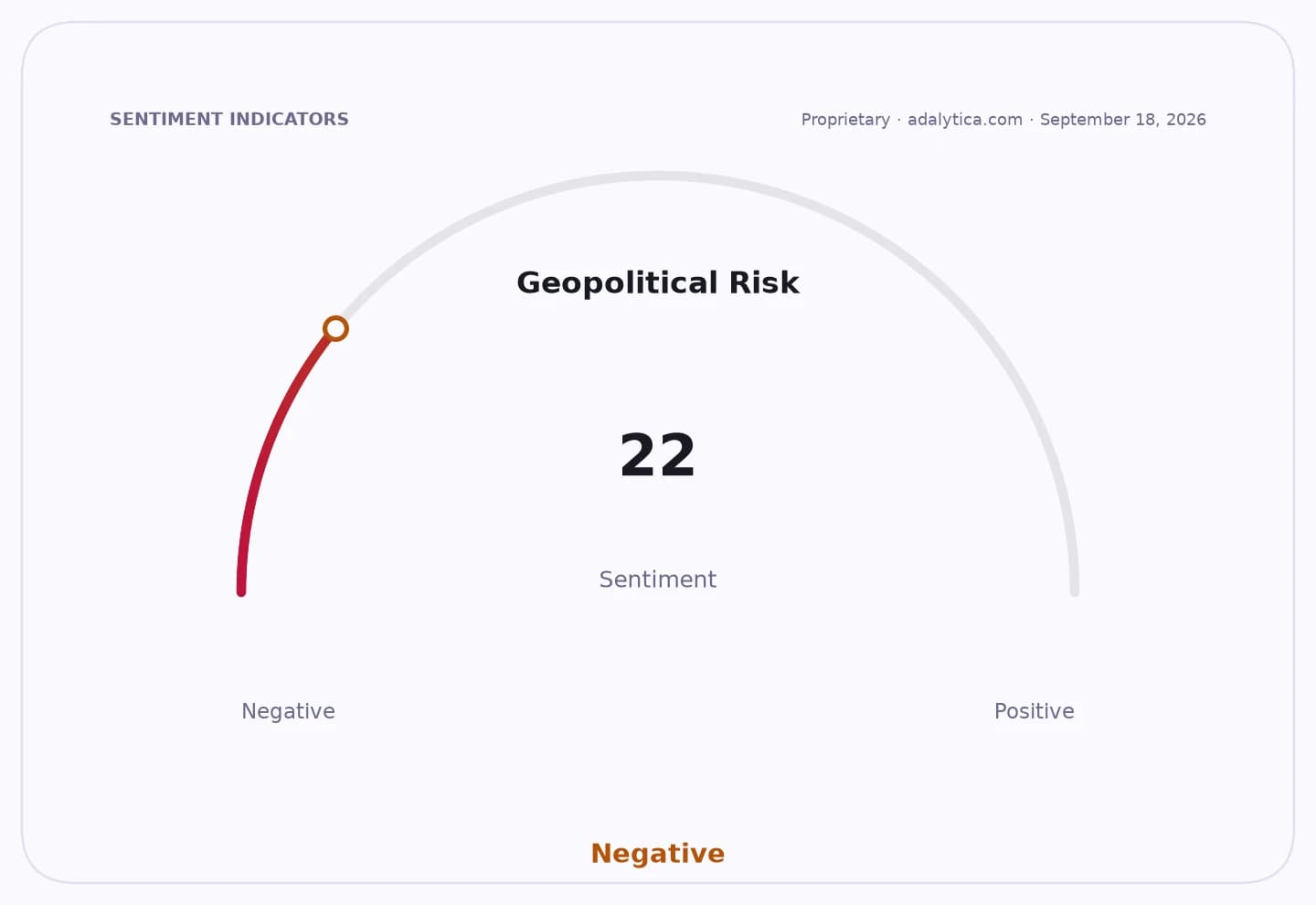
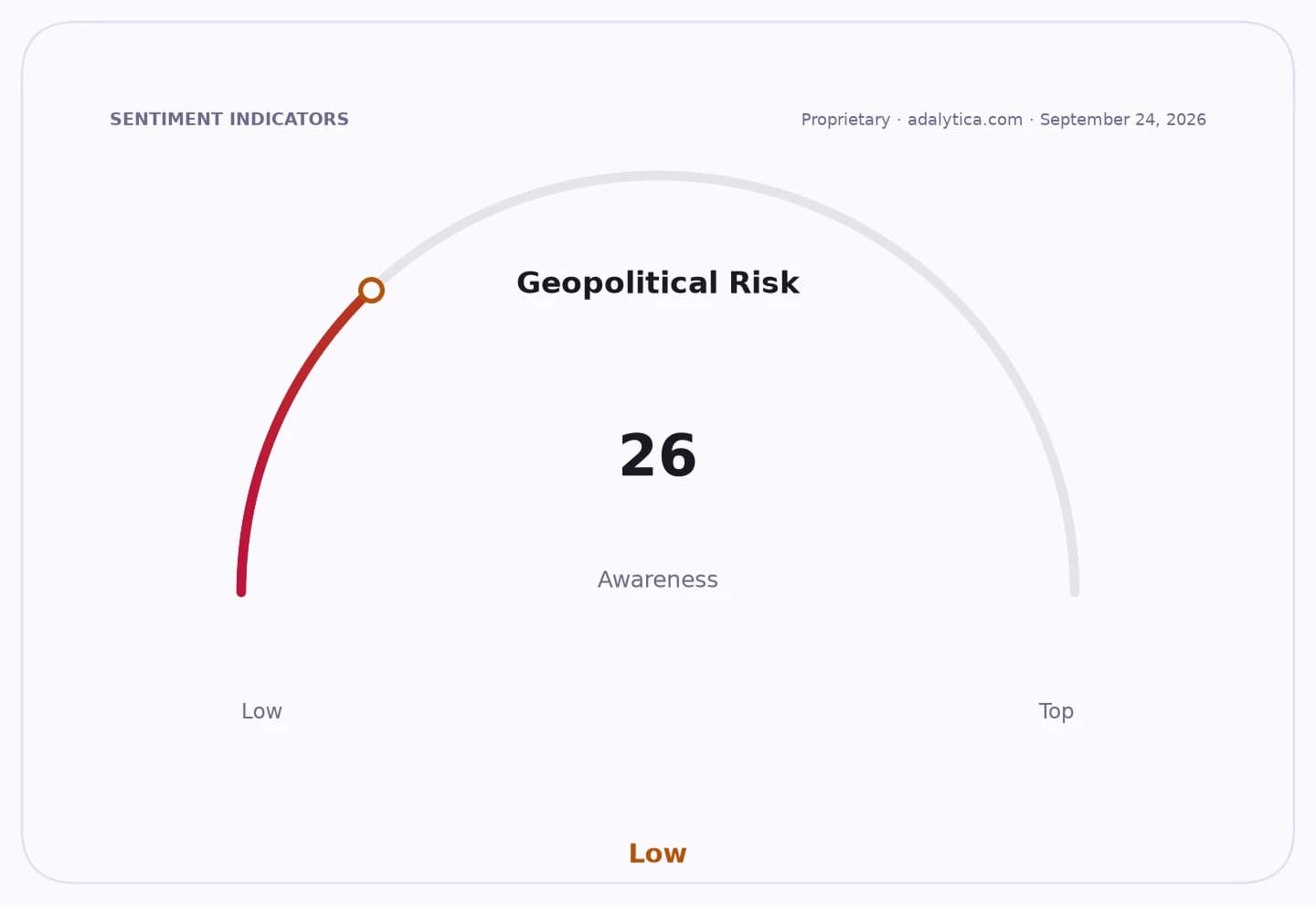
Germany says its gas storage is sufficient for the winter at 55% filling, a reassuring message for households and industry — but not enough to erase the risk premium still hanging over European energy markets.
Germany Gas Storage at 55% Before Winter
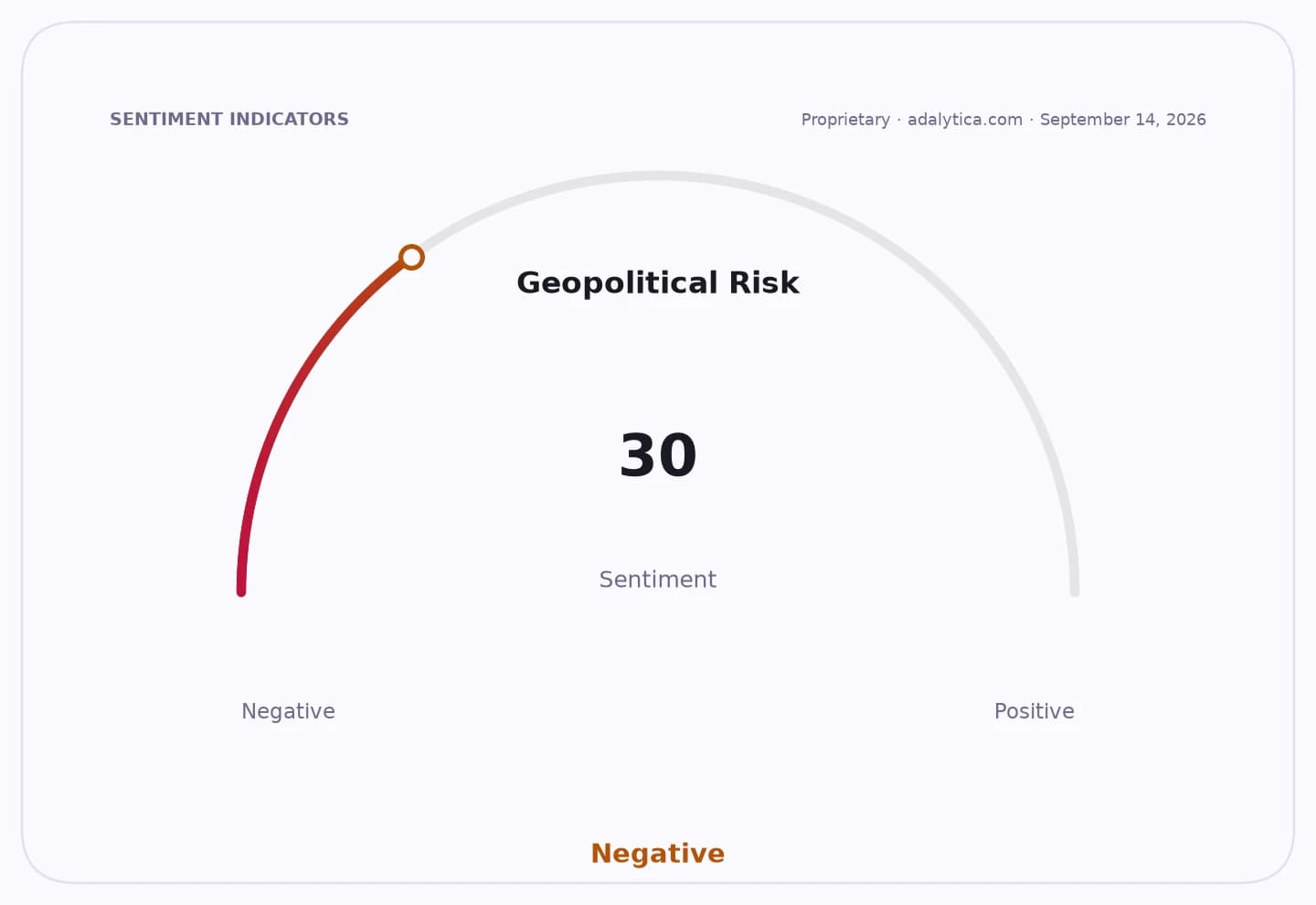
That matters because Germany sits at the center of Europe’s industrial economy, and gas availability still shapes everything from power prices to chemical output and manufacturing margins. A comfortable winter storage level can reduce the odds of emergency rationing, but it does not restore the deep cushion Europe once had before the energy shock. With the continent entering heating season unevenly stocked and Germany still lagging peers, the market will continue to price in vulnerability, especially if colder weather arrives early or pipeline flows weaken.
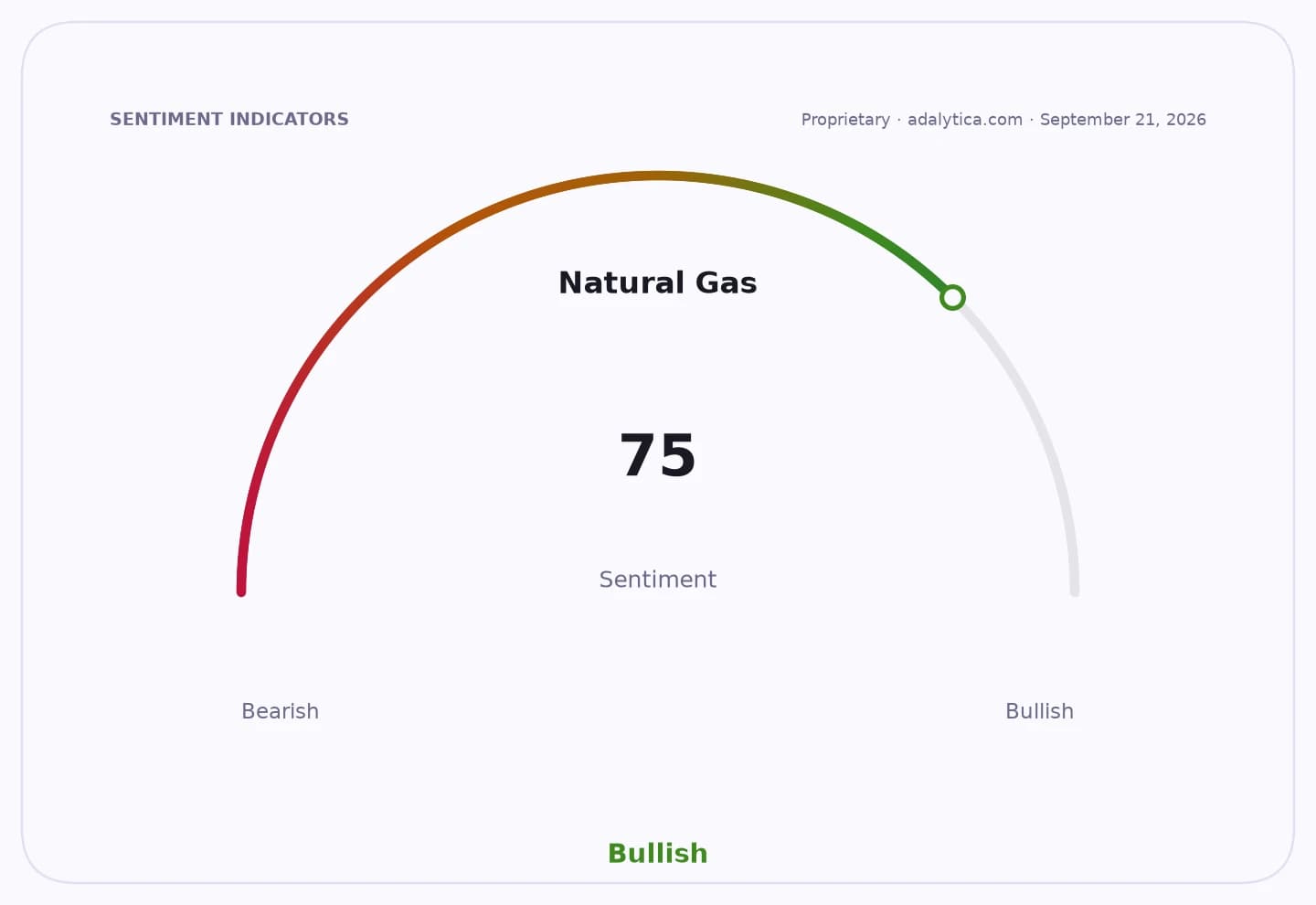
Sentiment IndicatorsⓘProprietary · adalytica.com · September 14, 2026
This is a snapshot — live sentiment, awareness and momentum for 130+ markets update continuously in the dashboard.Open AlphaPulse
The immediate implication is for natural gas prices, which have already shown how sensitive they remain to storage headlines. U.S. gas futures have been highly volatile, and European benchmarks have been even more reactive whenever inventories look thin. For investors, that means continued opportunity — and danger — in everything tied to winter supply: gas producers, LNG exporters, utilities, industrials, and leveraged products such as the United States Natural Gas Fund, which can swing hard on shifting expectations for demand and supply.
Azerbaijan’s proposal to store gas for European buyers in Ukrainian underground facilities adds another layer to the story. It is a reminder that Europe’s energy security is becoming a logistics and infrastructure trade, not just a question of production. Any arrangement that expands storage access or diversifies routing can ease the squeeze at the margin, but it also underscores how dependent the region remains on external suppliers and politically sensitive transit corridors.
The market is not pricing a return to crisis-era panic, but neither is it pricing true resilience. Germany’s 55% reading is good enough to avoid immediate alarm, yet it still leaves little room for error if winter demand surges. For investors, the asymmetric setup remains clear: winter scarcity keeps upside alive in gas-linked assets, while a smoother-than-feared season would punish crowded longs quickly. The key is to stay positioned for volatility, not complacency.
| Entity | Gains | Losses |
|---|---|---|
| German households and industry | ▲Lower rationing risk | ▼Still exposed to price spikes |
| European gas bulls | ▲Winter scarcity premium | ▼If weather stays mild |
| Utilities and LNG suppliers | ▲Stronger pricing power | ▼If storage fills faster than feared |
| Gas importers | ▲Short-term supply security | ▼High procurement costs |