Germany’s economy ministry is signaling it will not rush into direct gas purchases to refill storage, warning that state intervention could itself lift prices at a time when Europe’s energy market is already tight and industrial costs remain elevated.
Germany Economy Ministry on Gas Storage Buying

Economics Minister Katherina Reiche said the government is prepared for any gas scenario, but cautioned that the state must not become a “price driver” through its own buying. The warning matters because Germany is Europe’s largest gas-consuming economy, and any policy that adds demand into an already fragile market can ripple through wholesale prices, power costs and industrial margins.
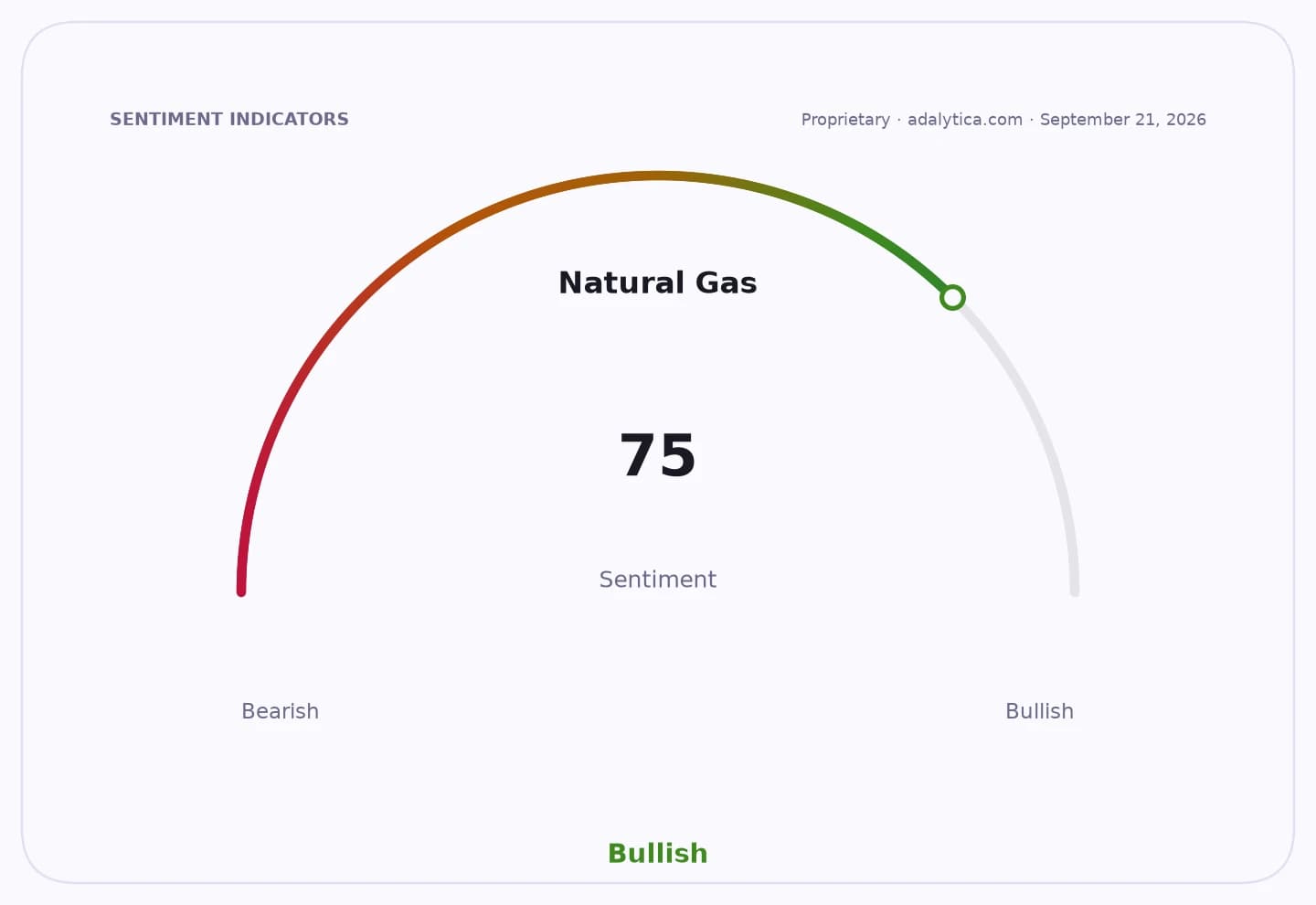
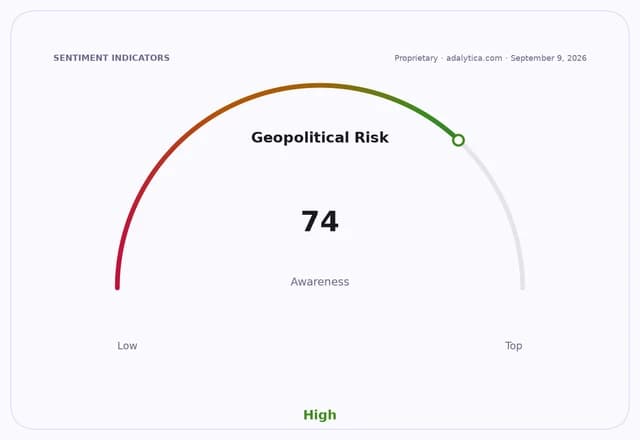
Sentiment IndicatorsⓘProprietary · adalytica.com · September 9, 2026
This is a snapshot — live sentiment, awareness and momentum for 130+ markets update continuously in the dashboard.Open AlphaPulse
Storage levels are currently a little above 54%, low by recent standards but still not, for now, a signal of an imminent supply emergency. The ministry said a gas shortage next winter is not expected, pointing to Norwegian pipeline flows and LNG terminal capacity as backstops. That is a meaningful shift from the crisis response in 2022, when Berlin stepped in to buy gas after Russian supplies collapsed and financed the intervention through a storage levy on customers.
For investors, the message is two-sided. On one hand, it reduces the odds of a sudden government-led scramble that could squeeze the market and lift spot prices further. On the other, it leaves the burden of winter replenishment largely with private players, which can mean continued volatility if traders doubt that inventories can be filled fast enough before colder weather arrives. The ministry itself warned that state purchases could crowd out private injections and create an expectation that the government will always rescue low storage levels, weakening market discipline over time.
That tension is already visible in energy markets. European natural gas has climbed sharply this year amid geopolitical stress and supply uncertainty, while gas-linked vehicles such as the UNG ETF have remained well above their 200-day moving average even after recent pullbacks. BOIL, a leveraged fund tied to U.S. natural gas, has also been extremely volatile, underscoring how sensitive the sector remains to policy signals, weather and storage data.
The political backdrop is no less important. Greens lawmaker Michael Kellner accused Reiche of insufficient precaution and warned that Germany is becoming more dependent on U.S. LNG, tying the issue to broader transatlantic energy reliance. For industrial users, the central question is whether Berlin can keep winter security high without reigniting the price spike it is trying to avoid. For energy investors, the next catalyst is whether storage injections accelerate enough to keep policymakers on the sidelines.
| Entity | Gains | Losses |
|---|---|---|
| German government | ▲Keeps market discipline | ▼Faces criticism over preparedness |
| Gas consumers | ▲Lower risk of state-driven price spike | ▼Still exposed to high winter prices |
| LNG and pipeline suppliers | ▲Continued demand support | ▼Less chance of emergency state buying |
| Industrial users | ▲Avoids added policy demand shock | ▼Higher energy costs persist |