Germany is preparing to make mini-jobs materially more expensive in 2027, a shift that could reshape hiring in retail, hospitality and the skilled trades while nudging some workers into fully insured employment.
Germany mini-jobs face higher costs in 2027

The biggest immediate change is not the debate over whether mini-jobs should survive, but the cost pressure building around them. From Jan. 1, 2027, employers’ flat health insurance contribution on mini-jobs is due to rise to 17.5% from 13%, while the coalition has also agreed to lift the flat tax on mini-jobs to 5% from 2%. A separate draft would add a 3.6% employer contribution to long-term care insurance, though that step is not yet final. At the same time, Germany’s minimum wage is set to rise to 14.60 euros from 13.90 euros, lifting the monthly mini-job earnings cap to 633 euros from 603 euros.
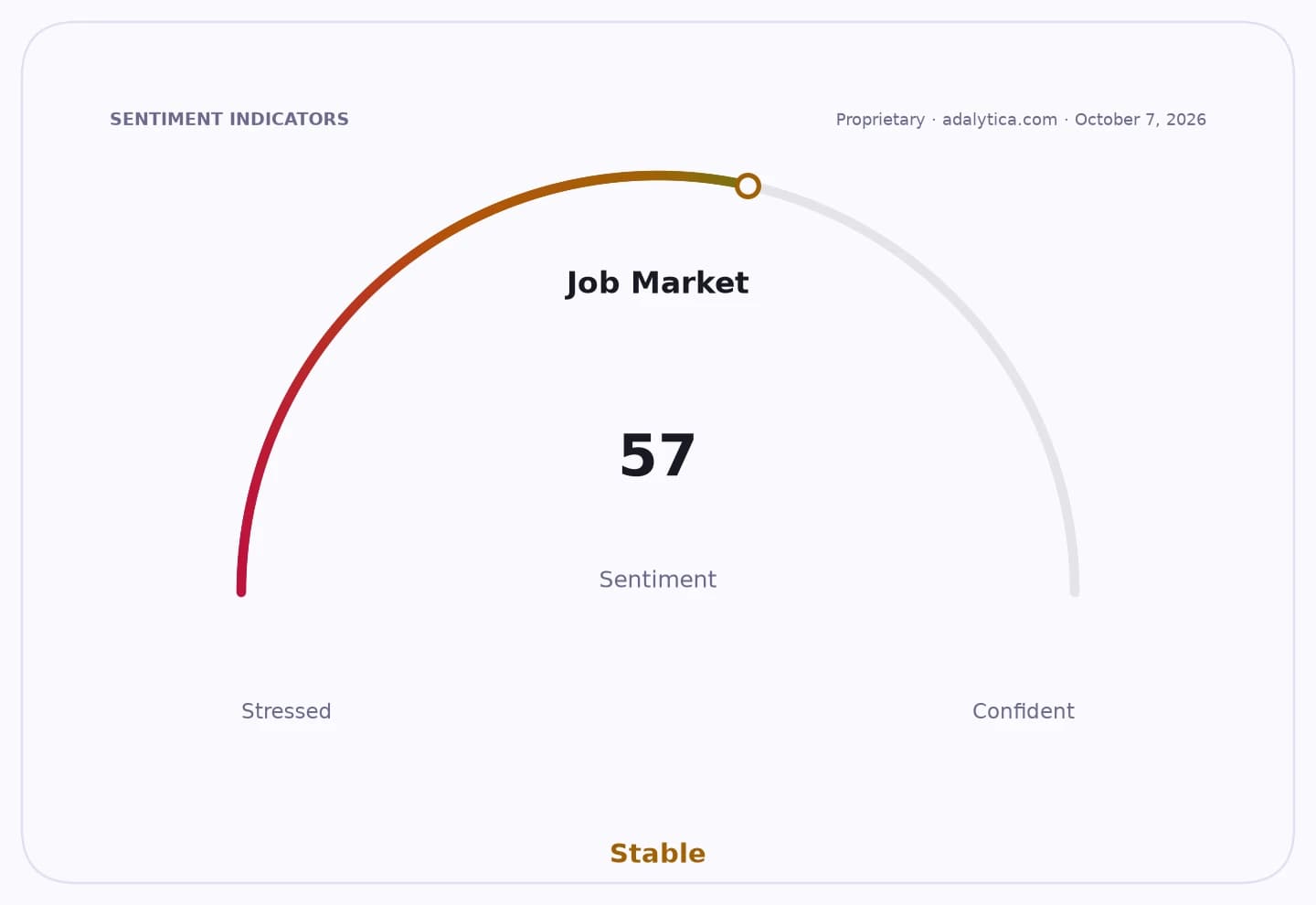
Sentiment IndicatorsⓘProprietary · adalytica.com · October 8, 2026
This is a snapshot — live sentiment, awareness and momentum for 130+ markets update continuously in the dashboard.Open AlphaPulse
That combination matters because mini-jobs are a central part of Germany’s low-wage labour market and a key staffing model for sectors that depend on flexible, low-administration hiring. The higher charges increase the all-in cost of a job category that has long been attractive precisely because it was cheap and simple. For employers already facing tighter margins, the policy risks turning mini-jobs from a buffer into a cost line that needs to be reconsidered.
The economic logic behind the reform is straightforward: Berlin wants more workers to contribute to the social system and, over time, build higher pension entitlements. Supporters argue the current model encourages people to string together multiple mini-jobs without making adequate social-security contributions, leaving the burden on full-time employees and the welfare system. Critics say the change removes an easy route into work, especially for students, pensioners and secondary earners, and could push some activity into the shadow economy.
That tension is central to the policy debate. Jörg Dittrich, president of the German Crafts Association, said mini-jobs remain important in the skilled trades, even as he acknowledged the government’s rationale. Labour unions argue the model entrenches insecurity, particularly for women: about 56% of mini-jobbers are female, according to the supplied material, and Verdi says the system limits advancement and worsens old-age poverty. The reform also fits a broader policy push to strengthen pension funding, after the government’s pensions commission recommended phasing out mini-jobs’ special status altogether.
For investors, the implications are more practical than ideological. Businesses with labour-intensive models may face higher payroll costs, more administrative complexity and potentially weaker flexibility in adjusting staffing. That could weigh on earnings in industries with high mini-job exposure, particularly where pricing power is limited. On the other hand, companies that rely more on standard employment contracts, or that can absorb higher wages through productivity gains and higher ticket prices, may be relatively less exposed.
The risk is that the policy produces fewer mini-jobs without fully converting workers into regular jobs. Germany’s unemployment rate remains relatively contained at about 4.1%, based on the supplied data, but the number of vacancies has eased from post-pandemic highs, suggesting the labour market is not in a position to absorb all displaced mini-job labour frictionlessly. If employers cut back rather than upgrade jobs, some demand could shift to informal work, a concern raised by critics and one that would blunt the policy’s intended boost to social-insurance revenues.
The reform’s final shape will determine how disruptive it becomes. If the care-insurance contribution is approved and the rent-insurance rules remain unchanged, the cost burden on employers will be heavier still. For now, the direction of travel is clear: Germany is moving away from a labour model built on tax and contribution advantages, and toward one that favours broader social-insurance coverage even at the cost of higher payroll expenses.
| Entity | Gains | Losses |
|---|---|---|
| Social insurers/state pension system | ▲Higher contribution revenue | ▼Less mini-job flexibility |
| Full-time employees | ▲Fairer burden sharing | ▼— |
| Employers in retail/hospitality/crafts | ▲— | ▼Higher labour costs |
| Mini-job workers | ▲More pension coverage, formal jobs | ▼Lower flexibility, fewer slots |