Germany’s personal bankruptcies climbed to about 88,000 in 2025, the highest since 2021, underscoring how higher living costs, easy consumer credit and a growing pile of short-term loans are squeezing households even as the broader economy struggles to regain momentum.
Germany Personal Bankruptcies Rise to 88,000 in 2025
The increase matters because household insolvency is usually a lagging but powerful signal of financial strain: when more consumers miss obligations, banks, lenders and payment providers face higher losses, while local spending can weaken further. Schufa, Germany’s main credit bureau, said the country is not seeing a broad-based bankruptcy wave, but it warned that financial pressure is becoming more severe for a rising share of the population.
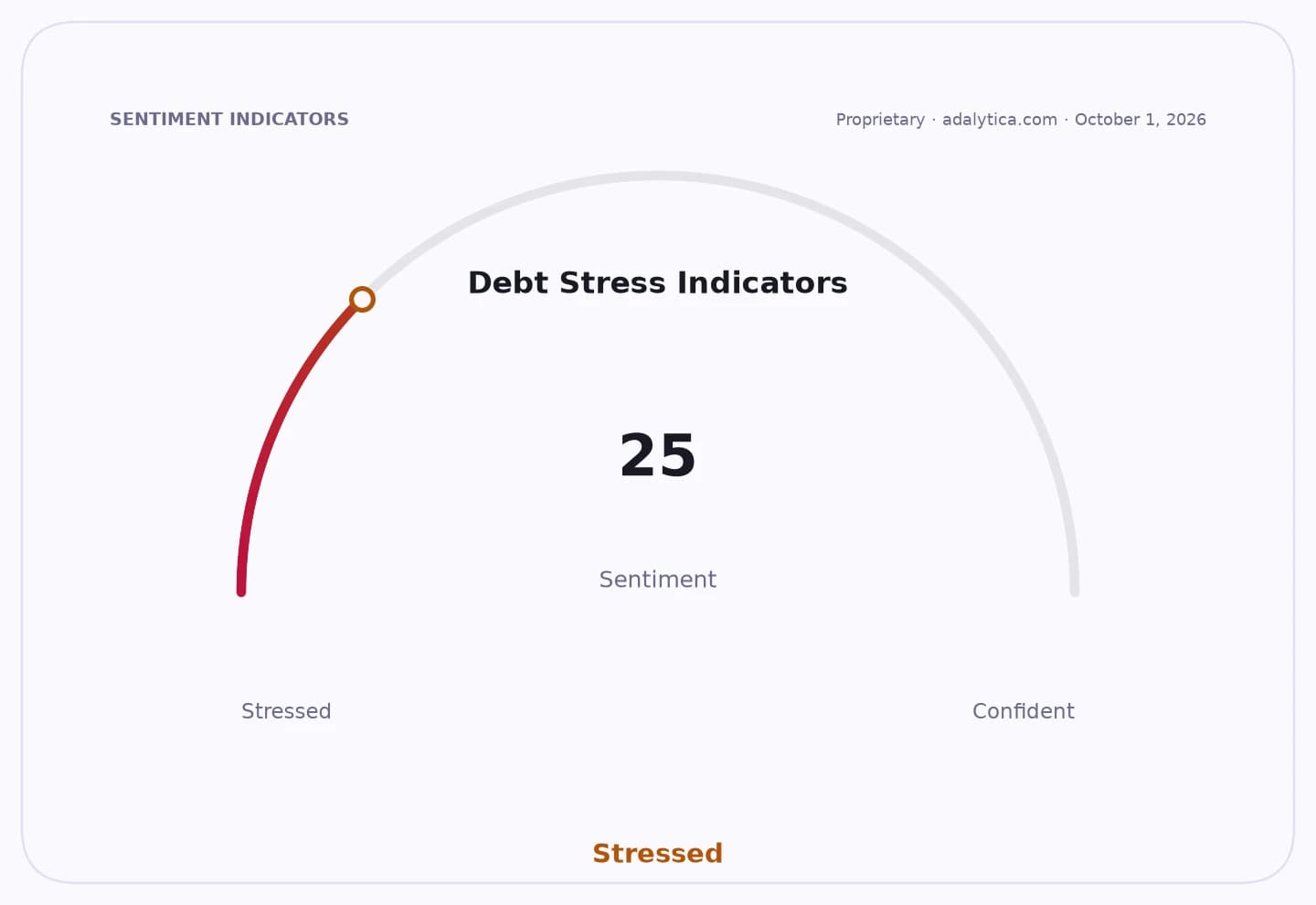
Sentiment IndicatorsⓘProprietary · adalytica.com · October 10, 2026
This is a snapshot — live sentiment, awareness and momentum for 130+ markets update continuously in the dashboard.Open AlphaPulse
The stress is concentrated in parts of western Germany. In Duisburg, 19.9% of adults had at least one negative credit record at the end of last year, while Gelsenkirchen stood at 19.4%, far above the national average of 8.1%. By contrast, the Bavarian district of Eichstätt had just 3.6%, highlighting how uneven the debt burden remains across Europe’s largest economy.
A key feature of the stress is the rise of installment-style borrowing, especially small loans below €1,000, including buy-now-pay-later products. Schufa said 7.5 million such agreements were signed in 2025, up 11% from a year earlier. More troubling, 74,000 people were simultaneously repaying more than 10 installment loans, a figure that has increased 28-fold over five years. That points to a growing reliance on fragmented, short-duration borrowing to cover day-to-day expenses rather than larger planned purchases.
For investors, the implications extend beyond consumer distress. Lenders that expanded aggressively into point-of-sale credit, BNPL and micro-loans may face rising delinquencies if borrowers are carrying multiple obligations and little income buffer. Consumer-facing fintech groups such as Klarna and PayPal are likely to face more scrutiny over affordability checks, while banks and credit insurers will be watching whether higher arrears start to feed into provisions.
Regulators are already responding. From Nov. 20, creditors will have to check creditworthiness even on small loans, and borrowers showing signs of repayment trouble must be directed to debt counseling services. But those services are already stretched: only about one in 10 overindebted people receives help, according to the consumer association cited in the report, and waits can last for months.
The broader message is that Germany’s consumer balance sheet is weakening at the margins rather than collapsing outright. That leaves room for a gradual deterioration in credit quality rather than a sudden crisis — but it also means domestic demand could stay under pressure, and lenders exposed to lower-income borrowers may continue to see credit risk rise into 2026.
| Entity | Gains | Losses |
|---|---|---|
| Debt counselors | ▲More demand for services | ▼Overstretched capacity |
| Conservative lenders | ▲Tighter underwriting credibility | ▼Slower loan growth |
| BNPL providers | ▲Higher usage in small loans | ▼Greater scrutiny and default risk |
| German households | ▲Short-term access to credit | ▼Rising repayment stress |