Getty Images has filed for Chapter 11 bankruptcy, turning a once-dominant stock-photo franchise into one of the clearest casualties of generative AI’s assault on legacy content businesses.
Getty Images files for Chapter 11 bankruptcy
The filing formalizes a restructuring that will take the company off the New York Stock Exchange and hand control to the Getty family and Koch Equity Development, underscoring how quickly a high-margin licensing model can unravel when customers can generate images instead of paying for them. For investors, the case is a blunt reminder that AI disruption is no longer confined to software or media buzzwords: it is now colliding with balance sheets, debt covenants and equity value.
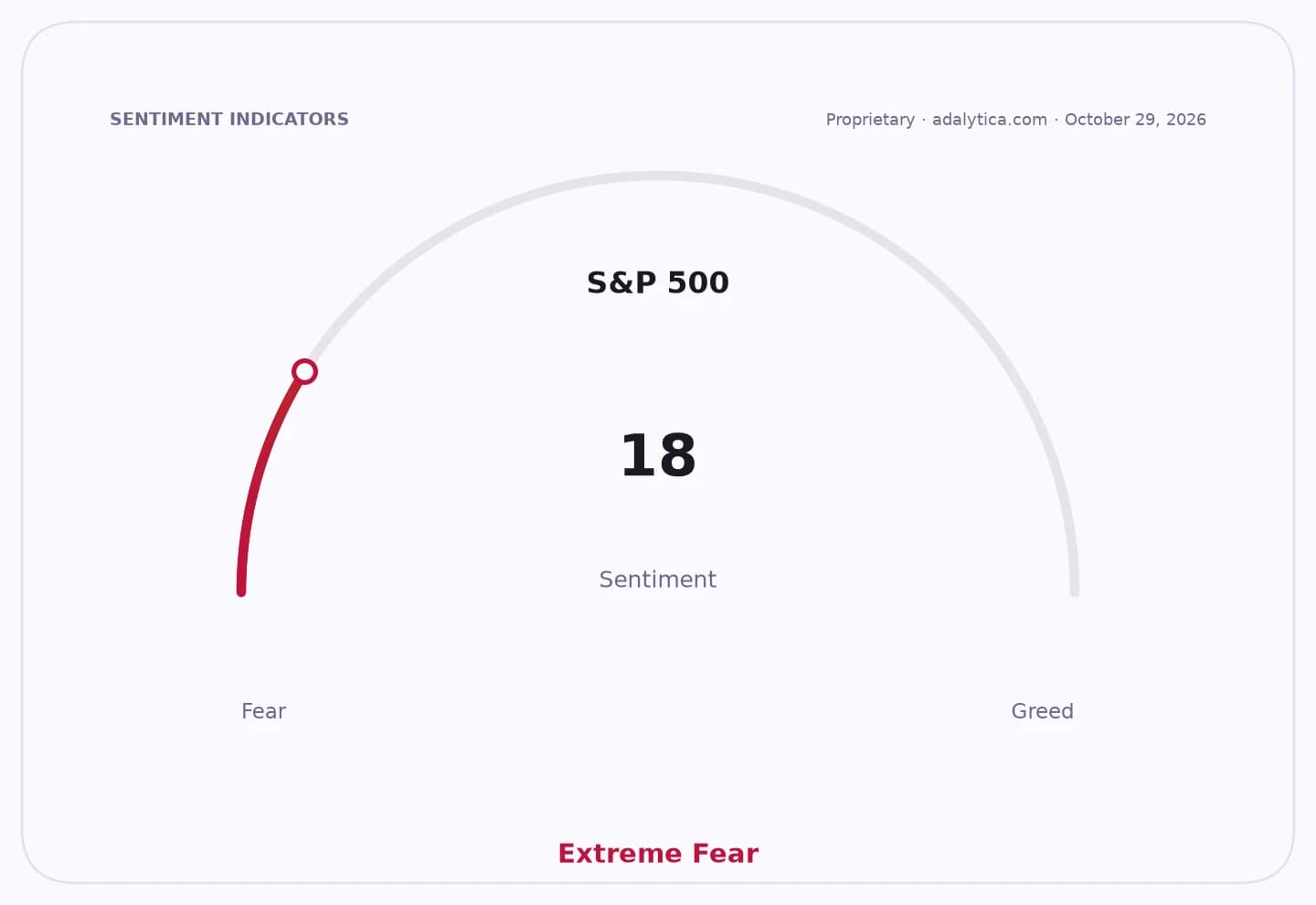
Sentiment Indicators
Getty was valued at $4.8 billion when it listed in 2022. By this week, its market capitalization had collapsed to about $20.7 million, a near-total wipeout that reflects not only strategic pressure but also financial leverage. The company said its restructuring aims to implement an approved plan in the most efficient way possible. It also follows the failure of merger talks with Shutterstock, a deal that might have created scale and bargaining power but instead fell apart under regulatory scrutiny.
The business problem is structural. Getty and its iStock unit built a global licensing empire around curated images and video sold to publishers, advertisers and corporate clients. Generative AI has upended that model by producing near-instant, low-cost visuals that bypass much of the traditional stock-photo market. That shift does not just compress margins; it challenges the core premise that a proprietary image library is worth paying for at scale.
The company’s legal fight with Stability AI shows how limited the defensive options have been. Getty accused the AI developer of training on millions of copyrighted images without permission, but the British court ruling was largely unfavorable, weakening one of the few avenues available to defend licensing economics. In parallel, Getty’s debt load of about $2.1 billion left little room for an extended revenue decline. The bankruptcy also follows the company’s decision to withdraw financial guidance in August, another sign that management had lost visibility into a business being reshaped faster than it could adapt.
For shareholders, the lesson is stark: premium valuations built on content ownership can evaporate when technology changes the distribution and creation of that content. For creditors, the restructuring may preserve some value through a deleveraged private company, but the equity story that accompanied the 2022 listing has effectively ended. The family-owned and Koch-backed ownership structure now suggests a smaller, more controlled company rather than a public growth asset.
The broader market implication is that AI’s most immediate damage may fall on companies that once seemed insulated by intellectual property and brand. Stock imagery, translation, design, search, and other licensing-heavy businesses all face the same question: if a machine can create the product instantly, what exactly is the moat worth? Getty’s bankruptcy suggests the answer may be far less than the market once thought.
| Entity | Gains | Losses |
|---|---|---|
| Getty family / Koch Equity Development | ▲Control of reorganized business | ▼Public shareholders |
| AI image generators | ▲Cheaper adoption tailwind | ▼Licensed stock-photo vendors |
| Shutterstock | ▲Potential relative share gains | ▼Merger synergies |
| Getty bondholders / lenders | ▲Restructuring recovery prospects | ▼Existing equity holders |