Jeff Bezos is using the Amazon dotcom collapse to make the case that today’s AI surge looks like a classic industrial bubble: overfunded, overheated and still fundamentally real.
Amazon AI Bubble Debate After Bezos Comments

That matters because the market is once again pricing the winners before the dust settles. Bezos’ argument is not that AI is fake or destined to burst into nothingness, but that the capital flooding into the sector is obscuring which businesses will become the next Amazon and which will be left holding expensive infrastructure with too little payoff. For investors, that distinction is everything.
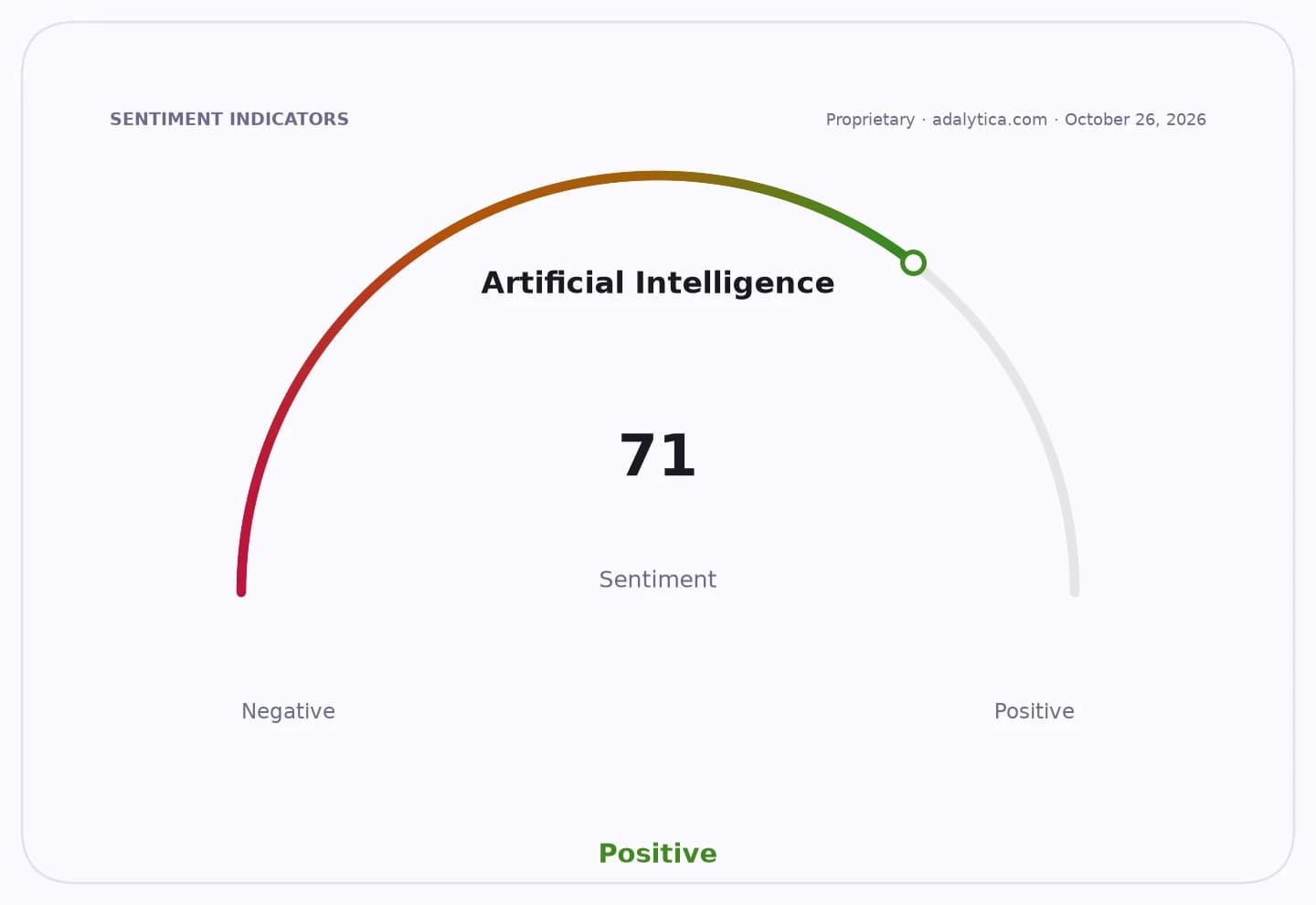
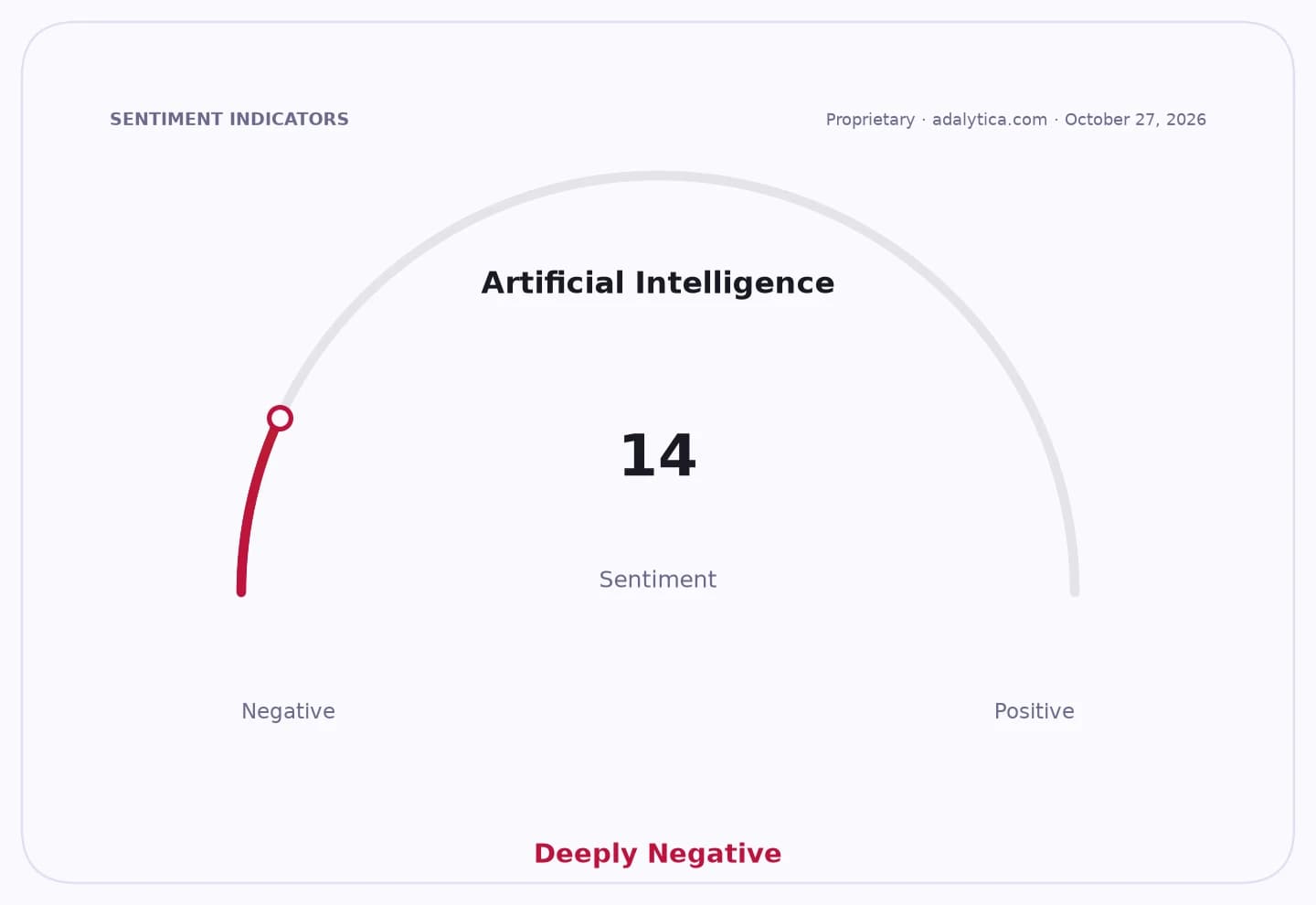
Sentiment Indicators
Artificial Intelligence
At Italian Tech Week in Turin, Bezos recalled how Amazon’s shares plunged from $113 to about $6 in the 2000 crash, even as customers kept rising and gross profit improved month after month. The lesson, he said, was to ignore the stock price and build a “heavy” company, borrowing from Benjamin Graham’s idea that markets vote in the short run and weigh in the long run. Amazon’s later rise to a roughly $2.83 trillion market value is the proof point that fundamentals eventually win.
That history is why the AI trade should be read through a second-order lens, not a hype lens. Bezos said the same pattern is now playing out: every experiment gets funded, good ideas and bad ideas alike, making it hard for investors to separate durable platforms from speculative noise. He also stressed that this does not make AI less real. It means the technology is real enough to reshape industries, even if parts of the financing cycle get ugly.
The economic significance is larger than one company or one stock. AI spending is already rippling through hardware, cloud, chips and power infrastructure, and the broader boom is lifting profits across the ecosystem. The latest evidence from the sector shows that demand for AI hardware remains robust, with companies tied to the buildout benefiting even as individual names swing violently. That is exactly the kind of environment that creates both outsized opportunity and dangerous mispricing.
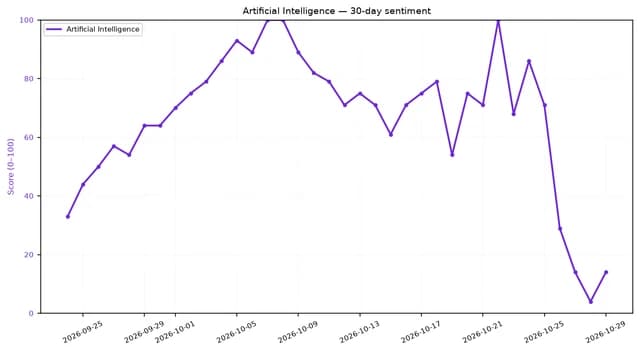
The market is already telegraphing that split. Adalytica’s AI sentiment gauge showed “Extreme Fear” at 14, even as Nvidia’s earnings sentiment hit 100, or “Extreme Greed,” while Microsoft’s earnings sentiment sat at 11, deep in “Extreme Fear.” Amazon, meanwhile, was trading near $243.79, just under its 50-day moving average of $254.67 and barely above its 200-day average of $243.38, a reminder that even the strongest AI-linked franchises can be punished when investors question the path from capex to returns.
That is where the opportunity lies. Bezos’ framework argues for owning the toll roads, not the fad-driven detours: the semiconductors, cloud platforms, data-center suppliers and power infrastructure that get paid regardless of which model wins. Nvidia remains the purest AI leverage play, while Microsoft and Amazon offer the deeper platform exposure, but the real asymmetry may sit one layer down in the picks-and-shovels suppliers the market still underestimates.
I believe Bezos is warning investors to stop treating AI like a simple momentum trade and start treating it like a capital-cycle trade. The winners will be the companies that turn today’s spending frenzy into durable cash flow and structural advantage. The losers will be the overfunded names that confuse access to capital with real business substance. Position accordingly now, while the market is still arguing about whether this is a bubble instead of mapping the survivors.
| Entity | Gains | Losses |
|---|---|---|
| Nvidia | ▲AI chip demand | ▼Short-term valuation swings |
| Microsoft | ▲Azure AI spend | ▼Margin pressure from capex |
| Amazon | ▲AWS AI infrastructure | ▼Price volatility |
| Overfunded AI startups | ▲Easy capital | ▼Funding discipline |