Nearly 300 authors have filed individual complaints against Meta Platforms over alleged use of their books to train artificial intelligence models, sharpening a legal fight that could become costly not just in damages but in the economics of how big tech builds AI.
Meta faces author copyright claims over AI training

That matters because the dispute goes to the heart of one of the industry’s biggest unresolved questions: whether companies can keep feeding large language models on copyrighted works and later defend the practice as fair use. If courts force licensing or compensation, the cost of training frontier AI systems rises, and the winners may be authors, publishers and rights holders who finally gain bargaining power in a market that has so far rewarded the platforms.
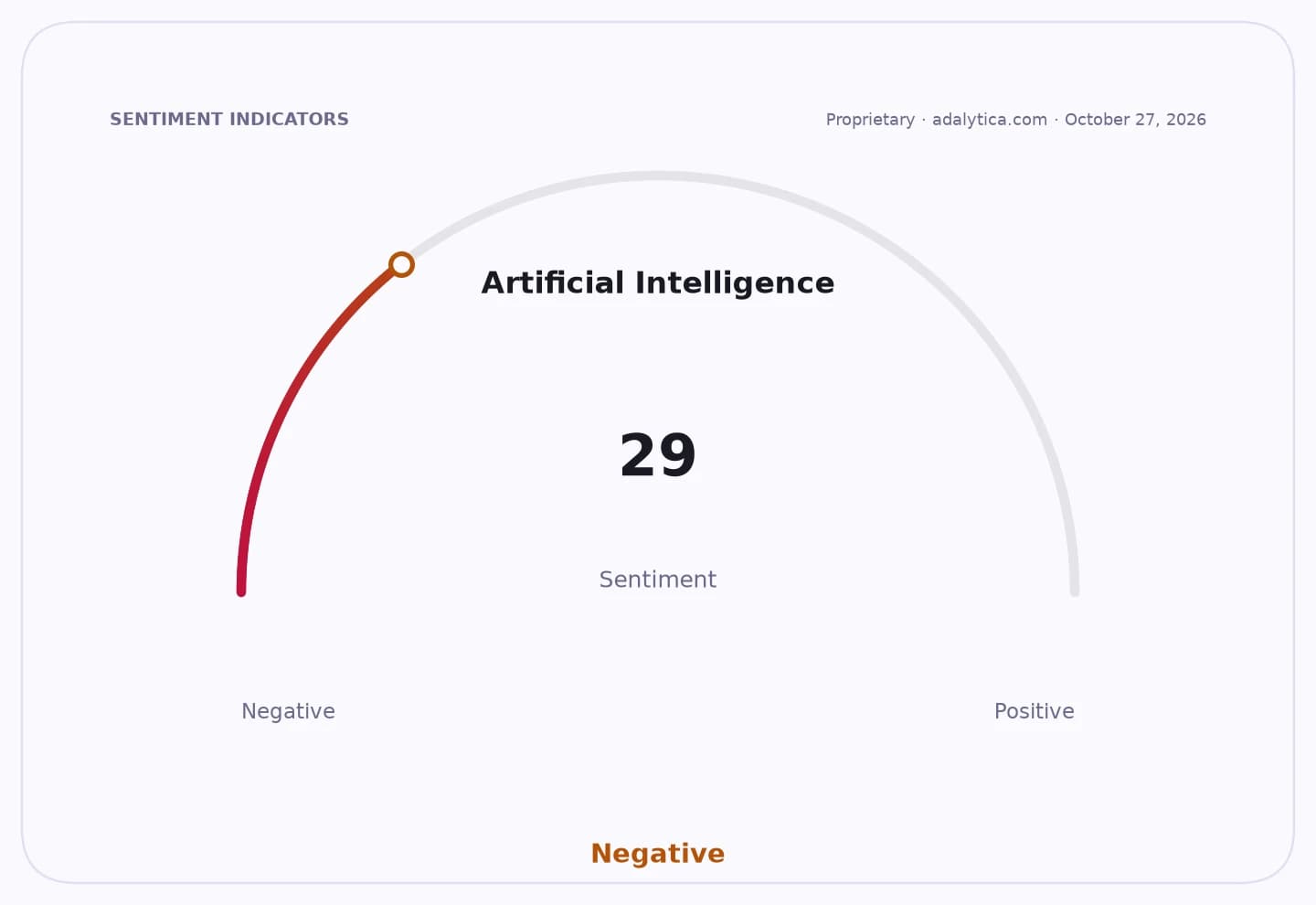
Sentiment Indicators
Artificial Intelligence
The complaints were filed in the Northern District of California, and lawyers say more than 1,000 writers have already entrusted them with claims. The plaintiffs, including novelists and journalists, are seeking as much as $150,000 per work, a figure that underscores the per-book exposure that has made copyright litigation such a serious balance-sheet issue for AI developers. Meta did not immediately respond.
For investors, this is bigger than one lawsuit. Meta’s latest 10-Q said statutory damages in U.S. copyright cases can be calculated per work and become substantial given the huge volumes of data needed to train AI models. In other words, the legal risk scales with the ambition of the AI strategy. That is why these cases have become a line item for the entire sector, from Meta and Microsoft to Alphabet and OpenAI’s backers and partners.
Meta is not facing this alone. Anthropic recently agreed to a $1.5 billion settlement in a separate copyright case, a deal that showed how quickly theoretical legal risk can become real cash cost. Courts have also been inconsistent, with some rulings favoring AI developers and others suggesting that unauthorized use of protected works can create meaningful financial harm. That uncertainty is precisely what keeps the overhang alive for years, not quarters.
The broader story is one of industrialization meeting intellectual property. AI needs vast amounts of text, and the cheapest data has often been the riskiest. As companies push to make their models smarter and more useful, they are also pushing harder against the legal boundaries of the publishing business. That tension is now moving from abstract policy debate into hard litigation.
For long-term investors, the key takeaway is simple: AI remains a powerful secular theme, but the profit pool may be shared more than many expected. Companies that secure clean licensing, diversify training data and build durable legal defenses may deserve the premium. Those that treat copyrighted content as a free input could find the eventual bill is larger than the market first assumed.
| Entity | Gains | Losses |
|---|---|---|
| Authors and publishers | ▲Licensing leverage | ▼Unpaid use of works |
| Meta Platforms | ▲Faster model training | ▼Legal and damages risk |
| AI developers broadly | ▲Access to more data | ▼Higher compliance costs |
| Rights holders as a class | ▲Potential compensation | ▼Less leverage if courts favor fair use |