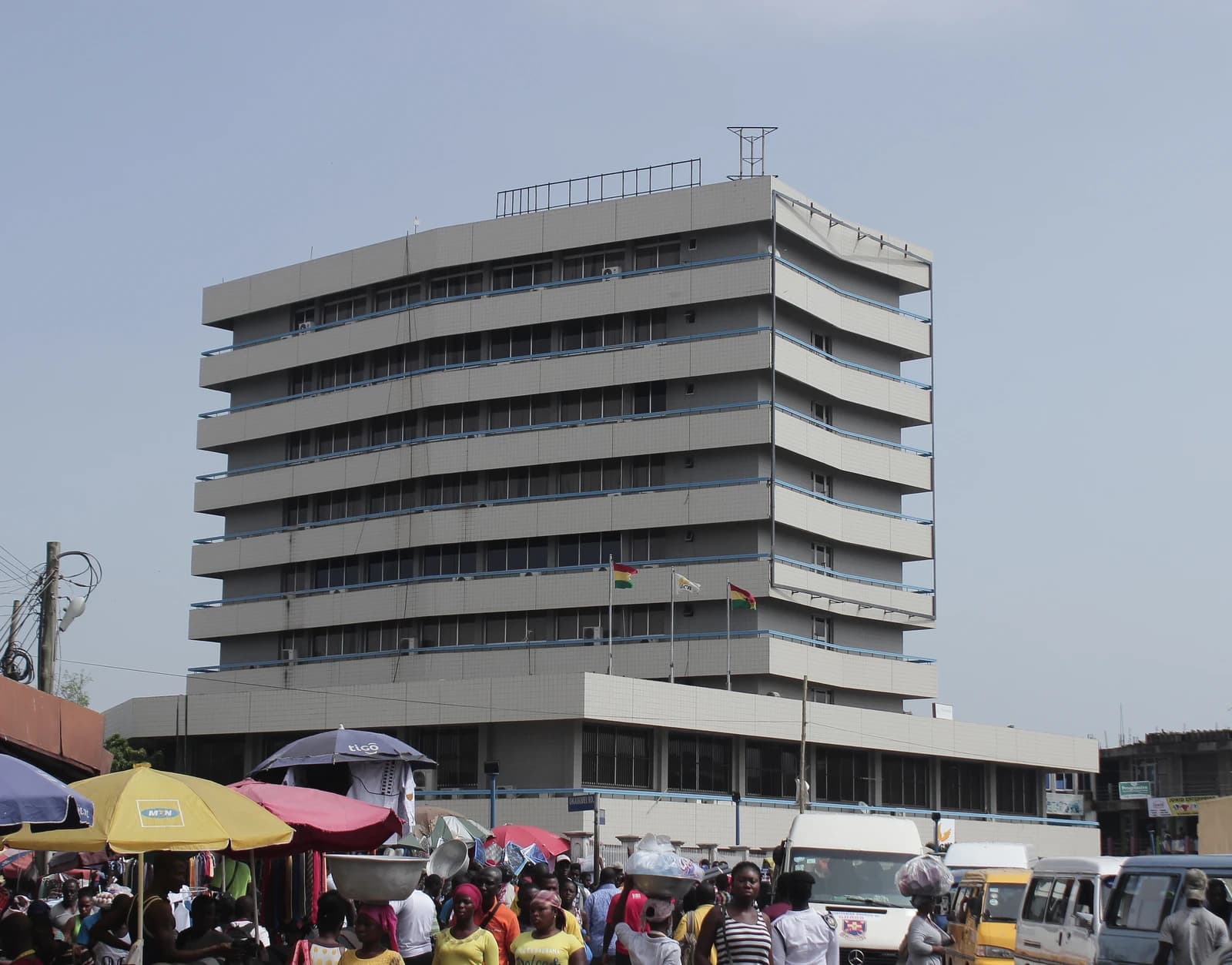
Ghana’s Ministry of Health is under renewed political pressure after a parliamentary committee accused it of failing to recover about GH¢10 million in unpaid car loans issued to officials, a case that raises broader questions about public-sector debt discipline, asset controls and fiscal governance.
Ghana Health Ministry Faces GH¢10 Million Car Loan Probe
The criticism matters because the unpaid loans are not just an administrative lapse: they represent money owed to the state at a time when governments across Africa are under pressure to tighten spending, enforce collections and limit leakage from public finances. When parliament signals that loan repayment rules can be bypassed for insiders, it weakens incentives for compliance and increases the risk that similar schemes become a recurring source of quasi-fiscal losses.
Samuel Atta Mills, the ranking member on parliament’s Public Accounts Committee, said the arrangement amounted to “organised crime” and argued that some officials who did not qualify for vehicles based on salary levels were nonetheless given cars with flexible repayment terms. His remarks point to a governance failure rather than a one-off arrears problem: if the ministry cannot trace vehicles, enforce deductions or recover assets from retirees and estates, the cost falls on taxpayers.
The issue also has a direct budgetary implication. Recovering GH¢10 million would not solve Ghana’s fiscal challenges, but failure to do so sends the opposite signal — that state institutions can extend credit without strong controls and then struggle to collect. That can encourage a culture of soft repayment across the public sector, where loans are treated more like allowances than enforceable obligations.
Atta Mills also challenged the ministry’s reliance on the Driver and Vehicle Licensing Authority, saying recovery should sit with the health ministry itself. He called for a dedicated recovery unit to track beneficiaries who have left office, died or failed to fully repay. That demand underscores the operational weakness behind the scandal: public lending is only as credible as the system that enforces it.
For investors, the story is another reminder that Ghana’s fiscal credibility depends not only on headline borrowing and IMF targets, but on mundane collection discipline inside ministries and agencies. Recurrent governance lapses can complicate the wider debt-adjustment narrative by keeping pressure on the sovereign’s balance sheet and reinforcing concerns about state capacity.
The Ministry of Health now faces a choice between containing the controversy and proving it can recover the vehicles and cash, or allowing the issue to become another example of public debt without enforcement. How it responds will matter for confidence in Ghana’s broader effort to restore fiscal order.
| Entity | Gains | Losses |
|---|---|---|
| Ministry of Health | ▲Delayed political fallout if it acts fast | ▼Reputation, fiscal credibility |
| State treasury | ▲Potential GH¢10 million recovery | ▼Cash leakage if loans remain unpaid |
| Parliament/PAC | ▲Oversight leverage | ▼Public trust if probe yields little |
| Loan beneficiaries | ▲Continued access to vehicles if enforcement weak | ▼Cars, legal standing, scrutiny |