Inflation is proving sticky enough to keep investors defensive, with U.S. consumer prices set to rise again in August and the 10-year Treasury yield already climbing toward 4.63%, a combination that keeps pressure on long-duration bonds and lifts the case for inflation hedges.
GLD, TLT and Treasury Yields Before August CPI

The economic significance is straightforward: when inflation refuses to fade, real returns get squeezed, rate cuts get pushed back and the market has to pay a higher risk premium for owning long-dated government debt. The latest figures point to consumer prices rising 0.35% in August after a 0.07% increase in July, while core prices are projected to add 0.21% after a 0.22% gain. That may not sound dramatic, but it is enough to reinforce the idea that the disinflation story has stalled rather than broken.
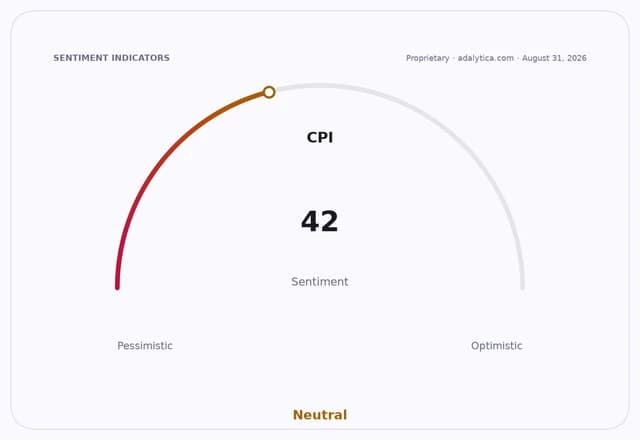
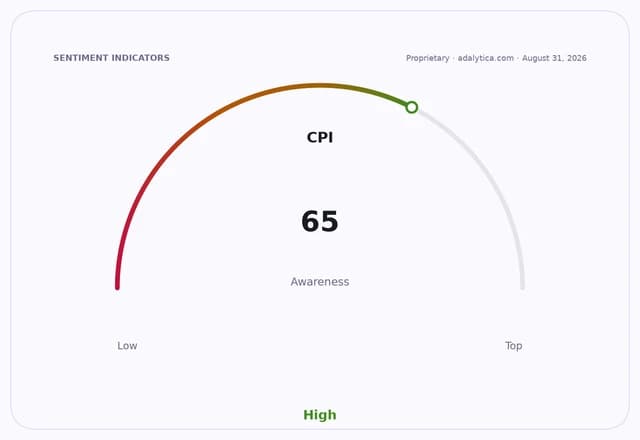
Sentiment IndicatorsⓘProprietary · adalytica.com · August 31, 2026
This is a snapshot — live sentiment, awareness and momentum for 130+ markets update continuously in the dashboard.Open AlphaPulse
The bond market is already reacting. The 10-year Treasury yield has risen to 4.67%, up sharply from the deeply suppressed levels that defined the post-pandemic era, and TLT, the iShares 20+ Year Treasury Bond ETF, has slipped to 82.88, below both its 50-day and 200-day moving averages. That matters because it shows the market is not waiting for confirmation from the next CPI print; it is pricing in persistent inflation risk now.
This is exactly where investors should pay attention. Higher inflation tends to punish the same assets that thrived in the easy-money regime: long-duration Treasuries, rate-sensitive growth stocks and any business model valued primarily on cash flows far in the future. At the same time, it strengthens the case for energy, commodities, gold and firms with real pricing power. GLD surged to 408.89, still well above its 200-day average despite a recent pullback, underscoring that the market is keeping inflation insurance in the portfolio even as risk appetite returns in equities.
The broader narrative is that inflation is no longer just a macro statistic; it is the throttle on capital allocation. Europe is dealing with a fresh re-acceleration too, with July inflation in the euro zone and the U.K. both at 2.9%, driven by energy costs. That matters because it keeps global central banks cautious and makes it harder for long-term yields to fall sustainably, even if growth slows. For investors, that means the old 60/40 playbook remains vulnerable whenever inflation data surprises to the upside.
Our view is that the market is underestimating how quickly inflation fears can reprice duration risk again. Until price growth decisively cools, the trade is not to chase long bonds blindly, but to own the beneficiaries of persistent inflation and tighter-for-longer policy. That puts gold, energy, inflation-linked income vehicles and select commodity-sensitive equities in the strongest position heading into the next CPI release.
| Entity | Gains | Losses |
|---|---|---|
| Gold / GLD | ▲Inflation hedge demand | ▼Pullback risk if CPI cools |
| Long Treasury bonds / TLT | ▲None | ▼Yield pressure, price weakness |
| U.S. 10-year yield | ▲Higher term premium | ▼Bond holders, duration investors |
| Energy stocks | ▲Pricing power, inflation tailwind | ▼Deflation-sensitive sectors |