Japan’s plan to put as much as $21 billion into two chip plants in New York is the latest sign that semiconductors have become a strategic industrial asset, not just a cyclical tech trade.
GlobalFoundries gets Japan-backed New York chip investment
That matters because the money is aimed at expanding U.S.-based capacity at a moment when Washington is pressing allies to harden supply chains, China remains a geopolitical risk, and AI demand is pushing chipmakers to add wafer output, packaging, and equipment faster than the market expected. The investment, disclosed by GlobalFoundries, gives the U.S. another boost in the domestic manufacturing race while deepening Japan’s role in one of the world’s most capital-intensive industries.
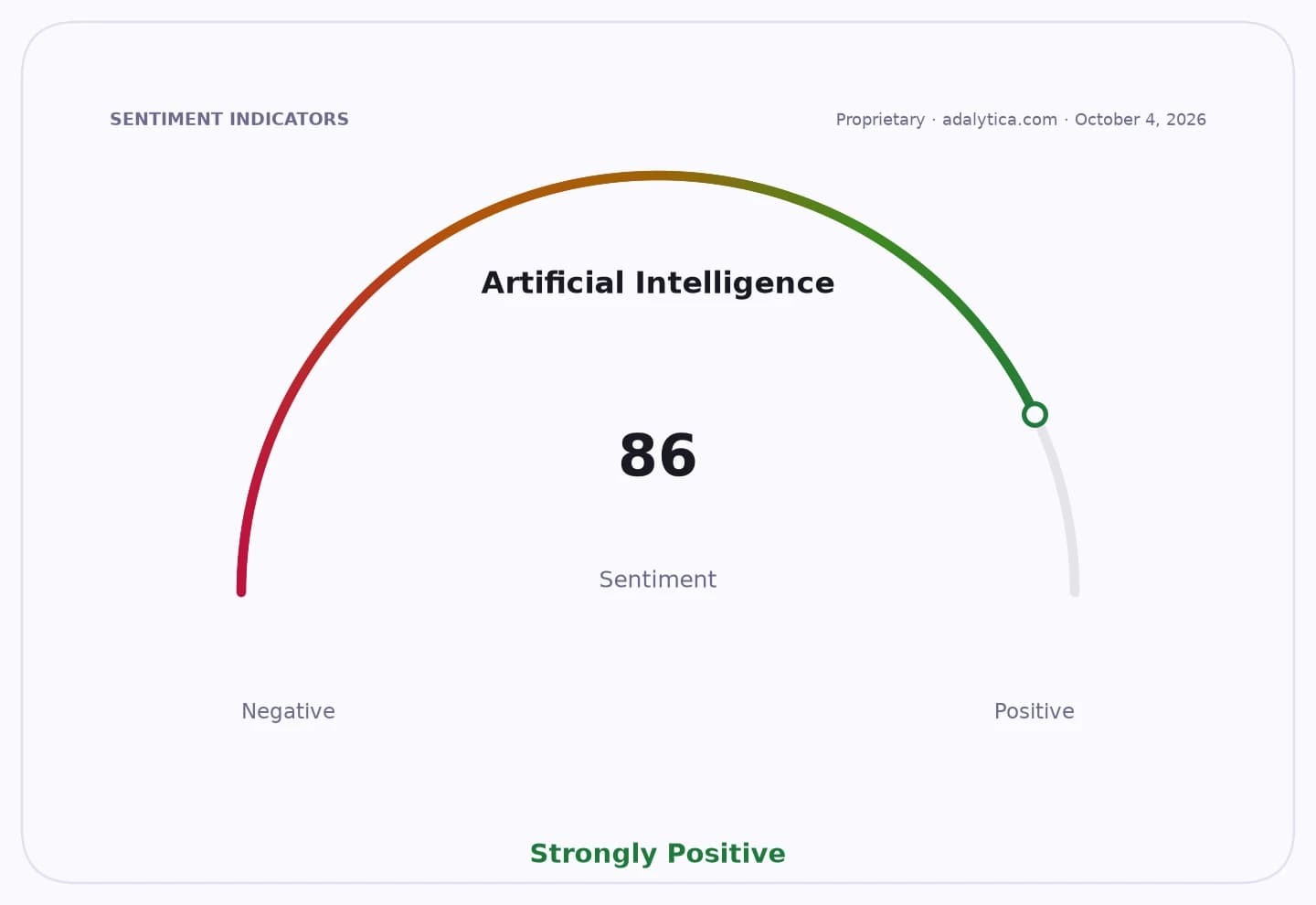
Sentiment IndicatorsⓘProprietary · adalytica.com · October 15, 2026
This is a snapshot — live sentiment, awareness and momentum for 130+ markets update continuously in the dashboard.Open AlphaPulse
For investors, the message is simple: the semiconductor bull case is widening beyond the obvious AI names. The market has already rewarded Nvidia-adjacent growth, but this deal reinforces a broader capex cycle that should keep benefiting foundry operators, chip equipment makers, materials suppliers and industrial builders tied to U.S. reshoring. It also strengthens the case that “picks and shovels” exposure may outlast the current pricing of the AI theme.
The timing is important. TSMC just reported record quarterly profit on AI-fueled demand, while ASML raised its outlook, underscoring that the buildout is still early. At the same time, sector funds such as SMH and SOXX have been volatile, and technical readings on both ETFs show recent weakness after sharp rallies, suggesting investors are still digesting who the real long-term beneficiaries are. GlobalFoundries’ New York expansion shows that capacity growth is not limited to the most glamorous AI processors; the ecosystem still needs more domestic manufacturing at every layer.
There is also a macro overlay. Elevated U.S. rates and sticky inflation expectations, reflected in market and Adalytica gauges, make long-dated industrial investment more expensive, which tends to favor companies with government backing, strategic customers and visible order books. That is exactly why public-private semiconductor projects keep attracting capital: they are less about near-term margin expansion than about securing supply in a fragmented world.
I believe this is where the next asymmetry lies. The market continues to underestimate the duration of the semiconductor infrastructure cycle, and that means the best opportunities may sit in the less crowded names enabling the buildout rather than the chips themselves. GlobalFoundries, Intel, and the equipment suppliers remain directly exposed, while the biggest loser is the old assumption that chip capacity would stay permanently concentrated in Asia.
If this Japan-backed investment is the template, expect more allied capital to flow into U.S. fabs, tools and materials. That is bullish for the semiconductor industrial complex, and it argues for staying positioned in the infrastructure layer of the AI boom before consensus fully catches up.
| Entity | Gains | Losses |
|---|---|---|
| GlobalFoundries | ▲New U.S. fab funding | ▼Capital intensity risk |
| Japan | ▲Supply-chain leverage | ▼Overseas capital outlay |
| U.S. chip suppliers | ▲More domestic demand | ▼Higher competition for subsidies |
| Asian-only fabs | ▲None | ▼Share of strategic investment |