A new form of gold adulteration is raising the risk that buyers pay 22-carat prices for metal that is actually closer to 20 carats, after researchers in India found rhenium powder being mixed into gold to inflate weight and evade some purity checks.
Gold adulteration in India raises purity fraud risk

The issue matters because the fraud targets the trust mechanisms that underpin the gold trade. If standard acid tests, touchstone checks and some machines can be fooled, the result is not just consumer losses but weaker confidence in hallmarking, assays and the broader retail bullion and jewellery market.
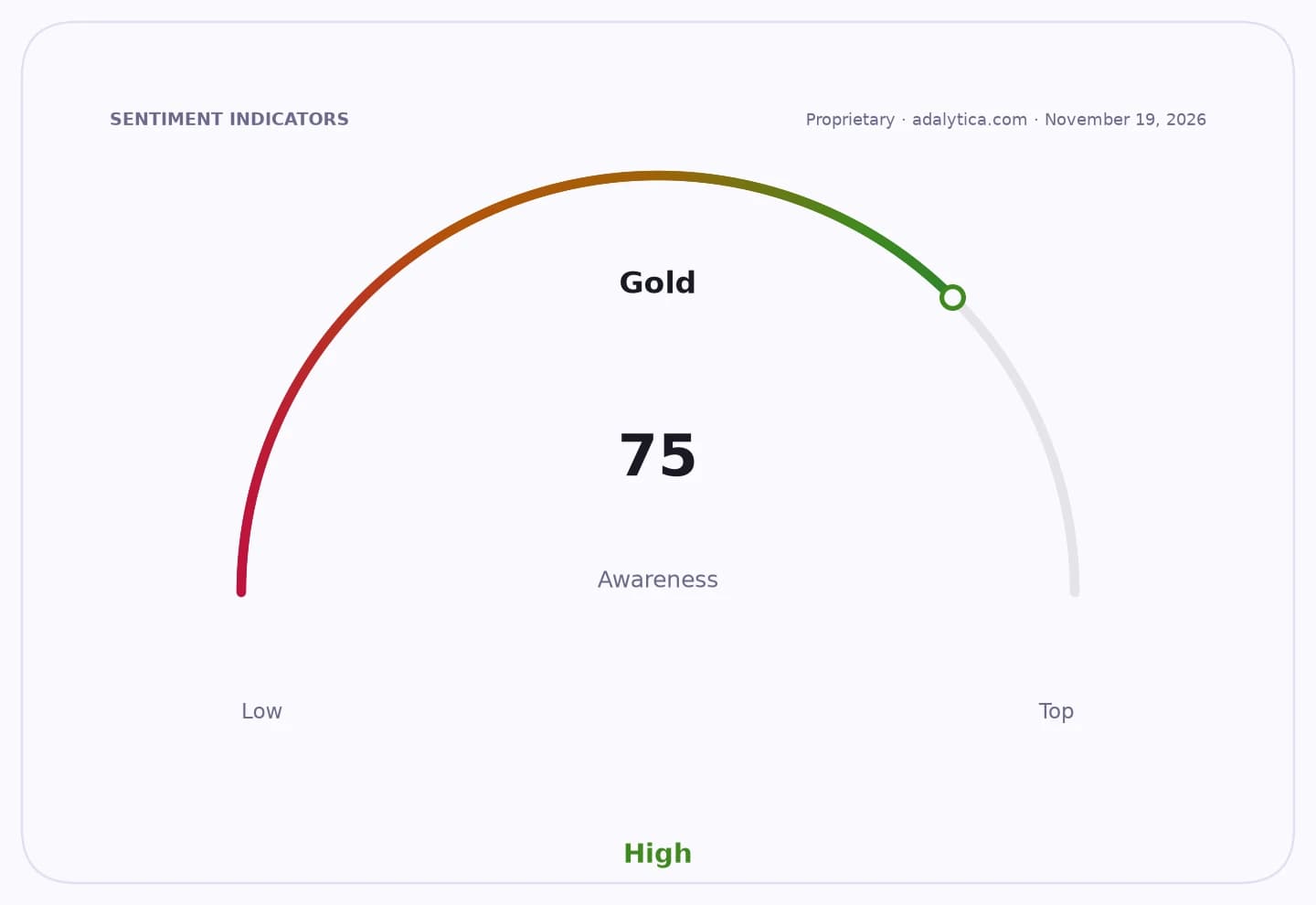
Sentiment Indicators
Gold
Researchers said the mix was detected in Rajasthan, where 1 gram of rhenium powder was added to 7.83 grams of pure gold to make an ornament that was then identified by some testing centres as 22-carat gold and even received a hallmark. The same sample was later found to be only about 20 carats in actual purity.
The concern is that the powder may be entering the Indian market from Shenzhen, China, adding a cross-border supply-chain angle to what is already a high-value, high-fraud sector. At a time when gold prices have been volatile and investor demand for bullion remains sensitive to trust and pricing integrity, any new adulteration method can widen scrutiny of dealers, assayers and regulators.
For investors, the immediate impact is more indirect but still material. Weaker confidence in retail gold can distort pricing, lift compliance costs and support demand for large, trusted names in the precious-metals chain, while pressuring smaller sellers that rely on low-cost testing and informal channels.
The backdrop is a jump in the need for tighter verification just as gold has been trading in a broad, uneasy range. Gold futures remain well above last year’s levels, while gold-backed funds and mining shares have seen sharp swings, reflecting both the metal’s appeal as a store of value and the market’s sensitivity to any sign of stress in the physical trade.
The next focus will be whether Indian authorities and hallmarking labs tighten assay standards, and whether customs or trade investigators can identify the source of the rhenium supply. If the practice spreads, it could force a wider rethink of how gold purity is tested and certified across the market.
| Entity | Gains | Losses |
|---|---|---|
| Large hallmarking labs | ▲Higher demand for advanced testing | ▼Credibility risk from missed fraud |
| Gold buyers | ▲More scrutiny of purchases | ▼Overpaying for lower-purity gold |
| Small jewellery sellers | ▲— | ▼Higher compliance burden |
| Fraudsters / adulterators | ▲Short-term margin gain | ▼Enforcement and seizure risk |