Gold fell to a 14-month low as traders priced in more US interest-rate increases, driving the dollar higher and pushing Treasury yields up, a combination that has sharply weakened demand for the metal.
Gold Falls Below $3,700 on Fed Rate Bets
Gold
Spot gold briefly dropped below $3,700 an ounce on Thursday before recovering to around $3,736, after closing at $3,724 on Wednesday, down $118 or 3%. The decline has taken bullion more than 30% below its peak earlier this year and put the market in what analysts called a technical correction.
Sentiment Indicators
The move matters because gold’s appeal as a non-yielding asset fades when borrowing costs rise and cash and bonds become more attractive. Market pricing now implies a 95.7% probability of another quarter-point Fed move, while the dollar has hovered near a 19-month high on firmer US retail sales and import-price data. Higher yields also raise the opportunity cost of holding bullion, which typically performs best when real rates are falling and investors are seeking protection from inflation or geopolitical stress.
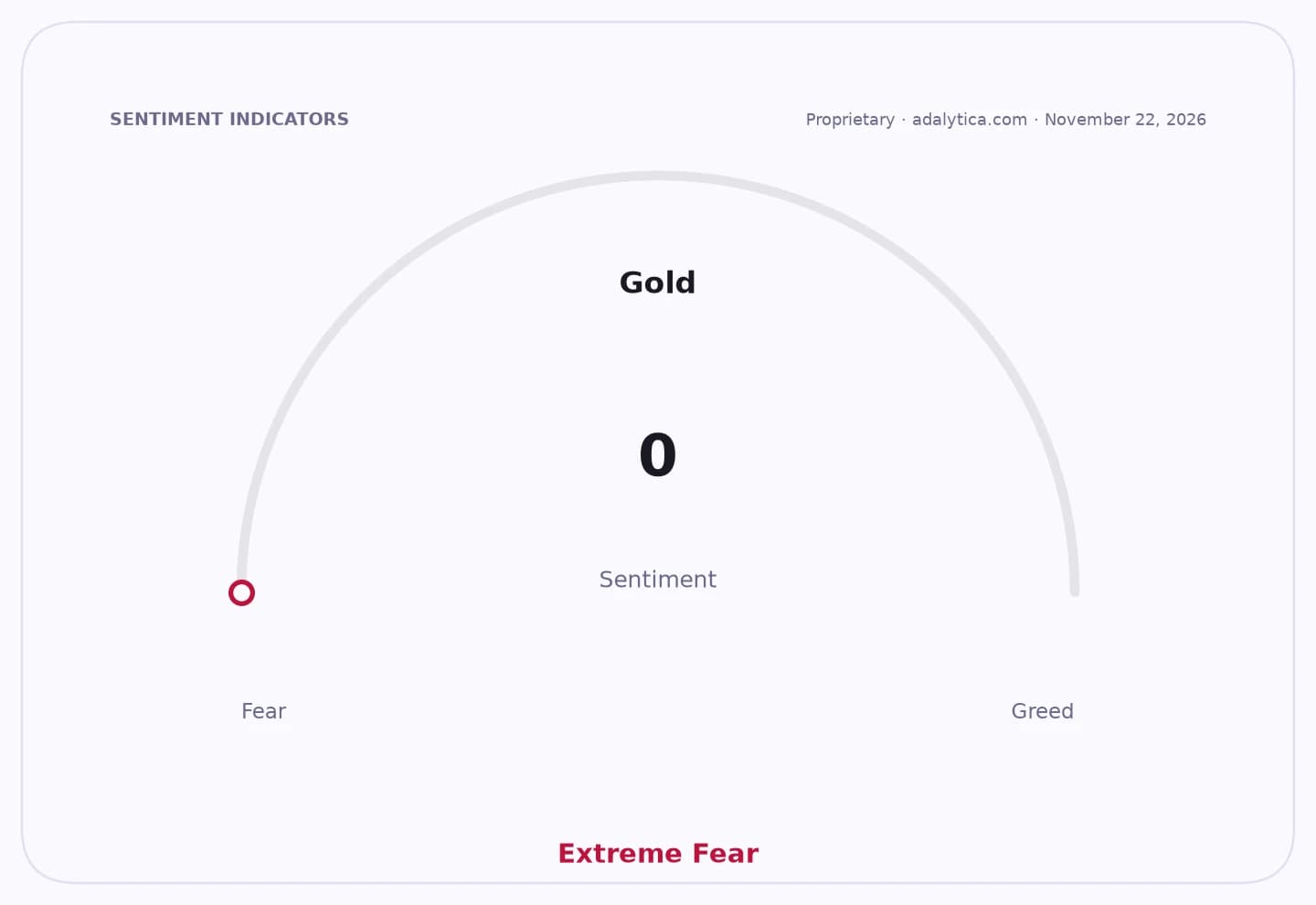
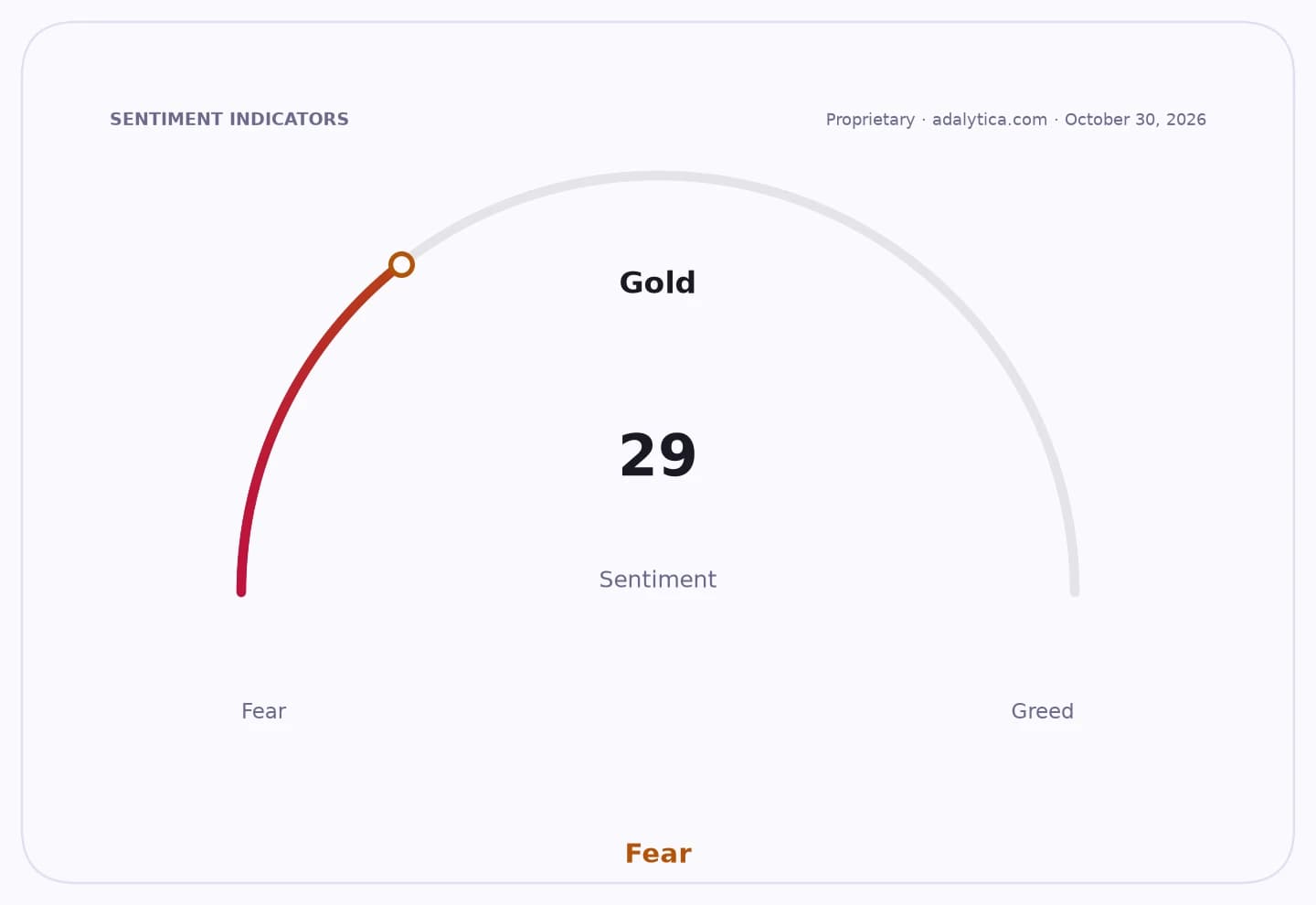
The latest drop also reflects a marked shift in positioning. A source in the market context said speculative long futures positions have been declining, suggesting some of this year’s rally has been unwound rather than simply paused. Adalytica’s Gold Fear & Greed Index showed extreme fear at 0, with awareness at 88, while the US dollar signal remained in extreme fear for bullion at 15, underscoring how rapidly sentiment has turned against the trade.
Still, the selloff is not only about rates. Some traders are watching whether geopolitical tensions, including the Israel-Iran conflict, can revive safe-haven demand. Analysts in the context said a broader escalation could help gold rebound, while any easing in conflict might reinforce the near-term pressure from Fed tightening. That leaves the market caught between two competing forces: macro policy headwinds that are immediate and quantifiable, and geopolitical risk that is harder to time but potentially powerful if it intensifies.
For investors, the question is whether this is a deeper trend change or a correction within a still-supportive long-term bull case. The bearish view is that the Fed may remain restrictive longer than expected, keeping the dollar firm and yields elevated. The bullish case is that any sign of softer US growth, cooling inflation or a renewed flare-up in global risk could quickly bring buyers back. For now, the path of least resistance remains lower unless rate expectations ease.
| Entity | Gains | Losses |
|---|---|---|
| US dollar | ▲Stronger relative demand | ▼Gold bulls |
| US Treasury yields | ▲Higher income appeal | ▼Non-yielding bullion |
| Fed hawks | ▲More policy leverage | ▼Dovish rate-cut bets |
| Gold buyers | ▲Lower entry prices | ▼Recent long positions |