Gold extended its slide for a fourth straight session as a jump in oil prices revived inflation worries and lifted expectations that US interest rates may stay elevated for longer, undermining one of the metal’s main attractions.
Gold Falls as Oil Rebound Lifts Rate Fears
Spot gold slipped to about $4,114 an ounce, down roughly 0.24% on the day, while US December gold futures also weakened as investors positioned ahead of the Federal Reserve’s Oct. 27-28 meeting. The move left bullion at its lowest level in more than two months and put it on pace for a weekly drop of about 4%, even as global geopolitical tensions intensified.
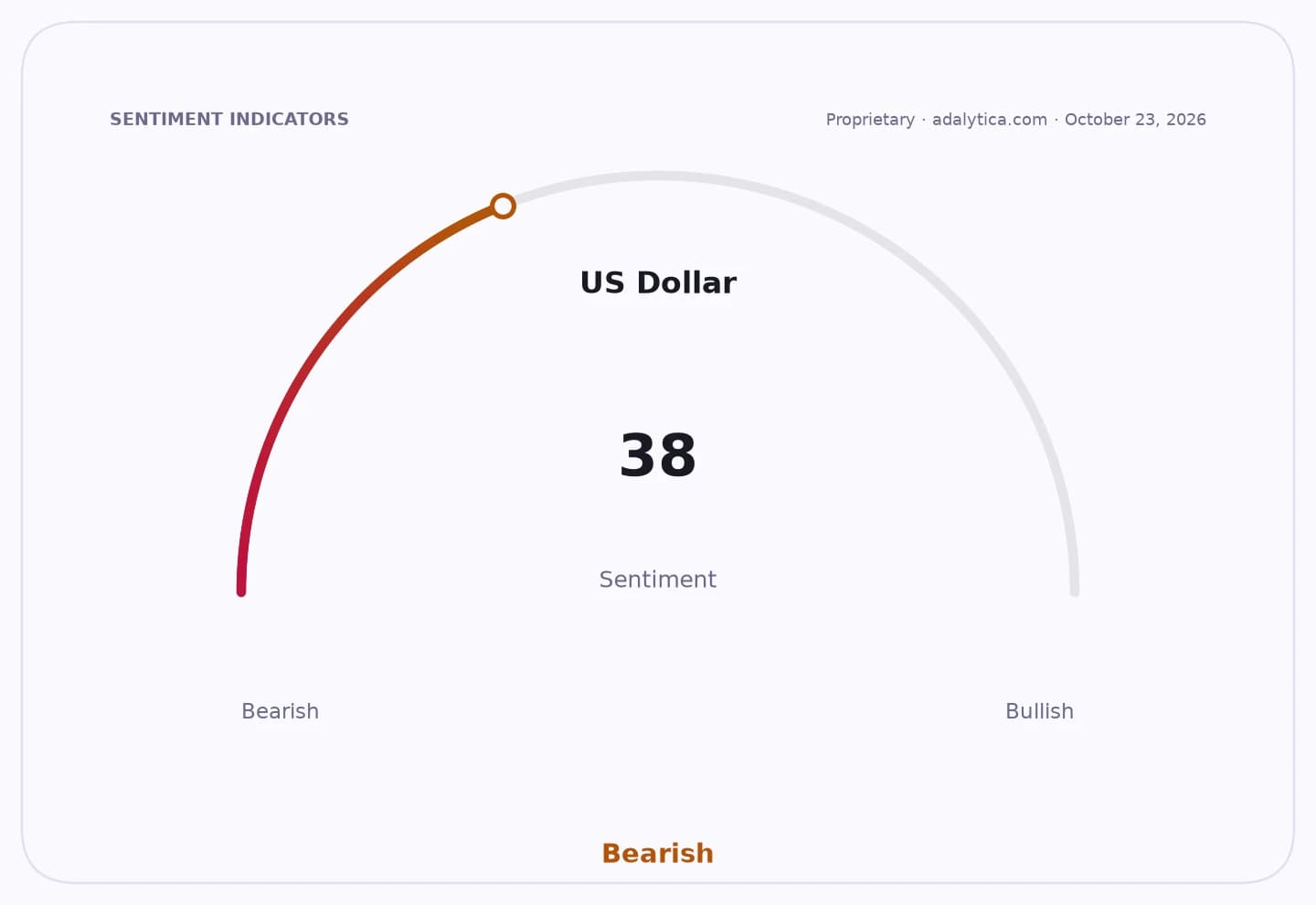
Sentiment IndicatorsⓘProprietary · adalytica.com · October 24, 2026
This is a snapshot — live sentiment, awareness and momentum for 130+ markets update continuously in the dashboard.Open AlphaPulse
The immediate macro driver is the sharp rebound in crude, with Brent nearing a five-month high after reports of attacks on energy facilities and other sites in Saudi Arabia. Higher energy costs feed directly into headline inflation and can spill into broader price pressures, making it harder for central banks to justify easing. That matters for gold because the metal pays no yield, so a higher-for-longer rate backdrop raises the opportunity cost of holding it.
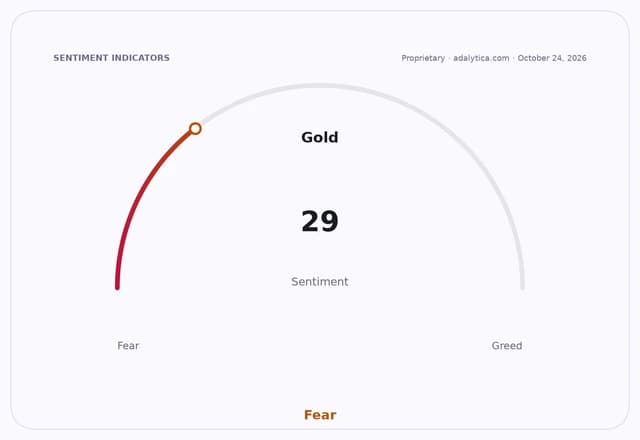
The pressure is showing up not just in bullion, but in market positioning. Adalytica’s Gold Fear & Greed Index fell to 29, deep in “Fear,” from 43 a day earlier and 72 points lower than a week ago on its trend measure, suggesting investors have been cutting exposure as inflation expectations reprice. The selloff also came after gold had rallied sharply earlier this year, leaving it vulnerable to profit-taking once the inflation hedge narrative met a firmer rates outlook.
DCOILWTICO vs CPIAUCSL — macro contextadalytica.com
Explore this data interactively — full history, time series and cross-market comparisons.Open AlphaPulse

The contrast with oil is important for investors. Energy producers and related markets benefit from the price spike, while gold miners are caught between a softer metal price and still-elevated operating costs. Newmont’s latest filing pointed to higher energy, labor and materials costs, underscoring that even when inflation supports the gold thesis in theory, it can simultaneously squeeze miners’ margins in practice.
For traders, the next catalyst is the Fed. A signal that policymakers remain focused on inflation would likely keep pressure on gold and support the dollar, while any hint that the central bank is more comfortable with slowing growth could help bullion stabilize. Until then, the market appears to be treating gold less as an inflation hedge and more as a duration-sensitive asset in a world where energy shocks are again complicating the path for rates.
| Entity | Gains | Losses |
|---|---|---|
| Oil producers | ▲Higher realized prices | ▼— |
| Gold investors | ▲— | ▼Lower bullion prices |
| Gold miners | ▲— | ▼Margin pressure from costs |
| Federal Reserve hawks | ▲Stronger case for tight policy | ▼— |