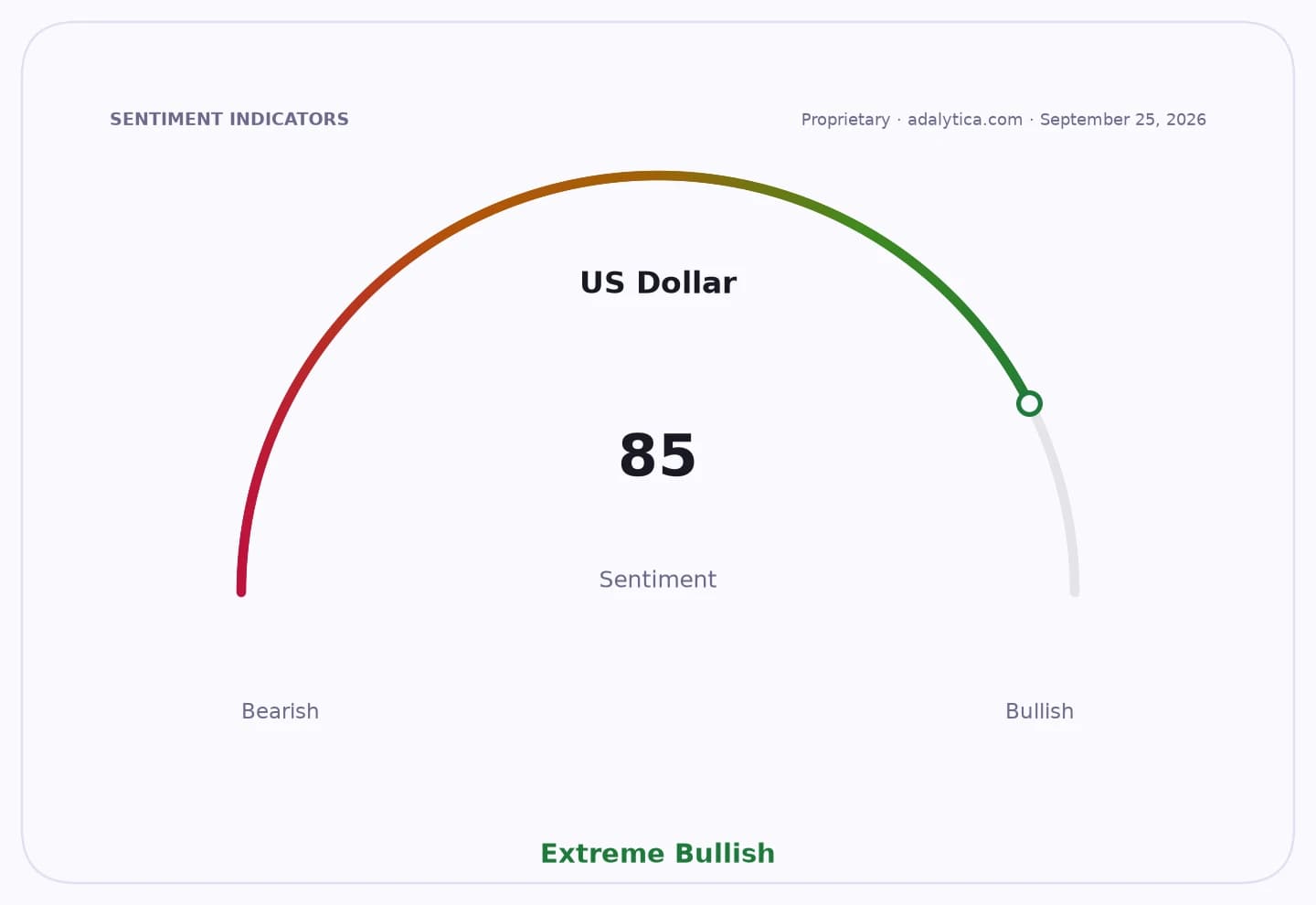
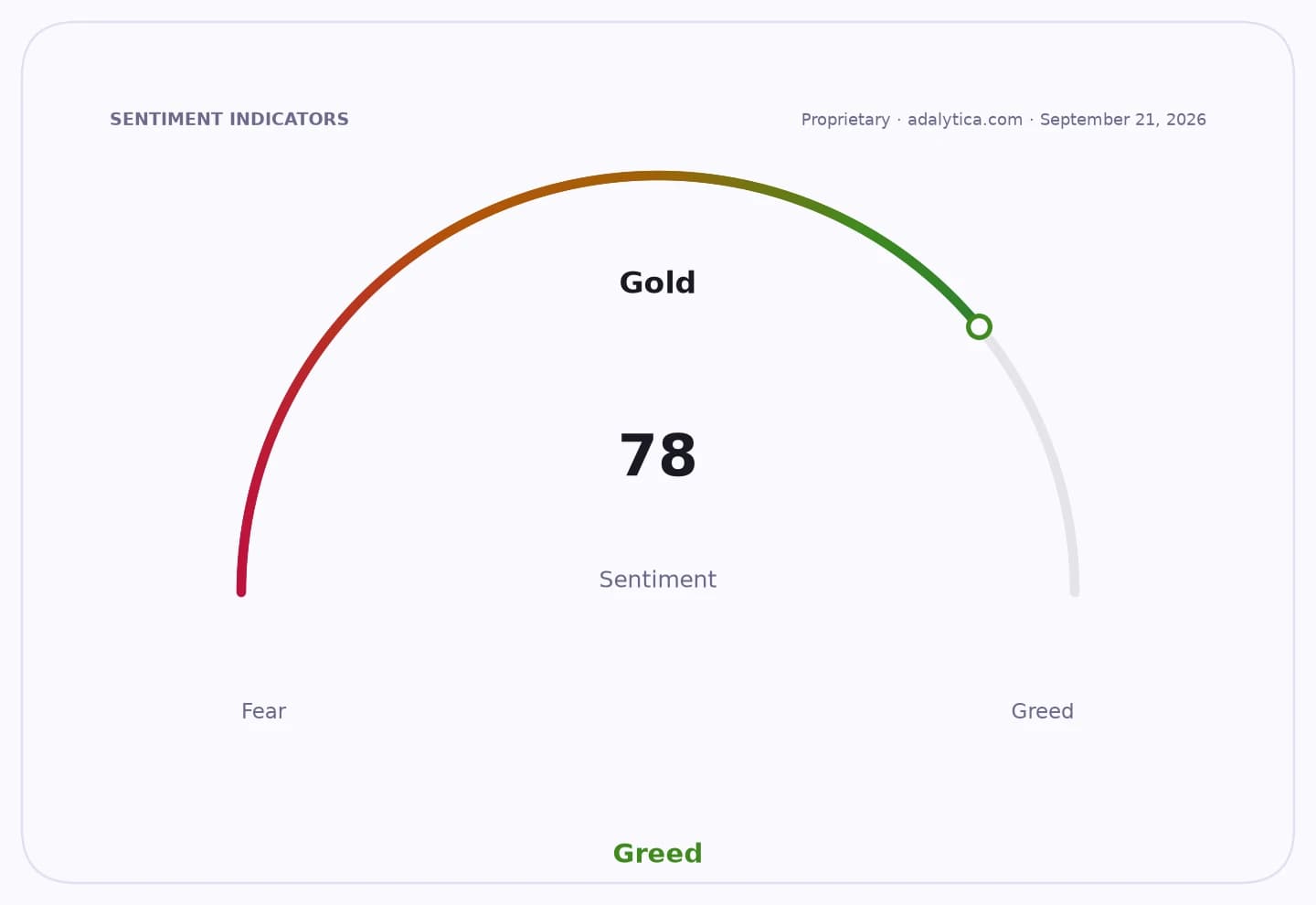
Gold has quietly rebuilt its bull case even as U.S. Treasury yields remain elevated, and that combination is exactly why long-term investors should keep watching the metal.
Gold Holds Near Range Highs as Yields Stay Elevated

Spot gold, tracked by the GLD exchange-traded fund and the December futures contract, has held near the upper end of its 2026 range while the 10-year Treasury yield sits around 4.79%. That matters because gold does not pay interest, so higher yields usually make the metal harder to own. Yet gold has stayed resilient, with GLD closing at $406.77 on Sept. 4 and futures at $4,395.3 on Sept. 8 after a volatile summer swing.
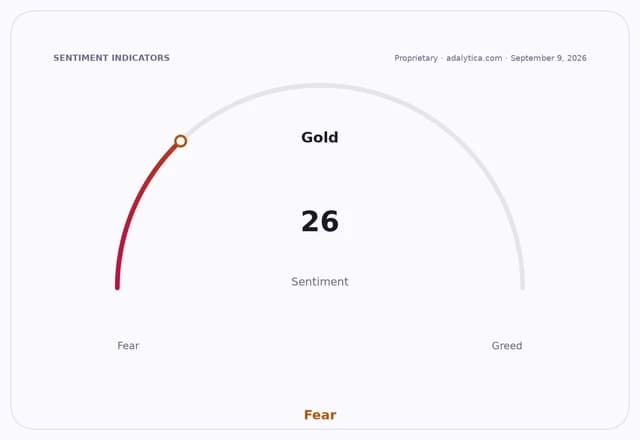
Sentiment IndicatorsⓘProprietary · adalytica.com · September 9, 2026
This is a snapshot — live sentiment, awareness and momentum for 130+ markets update continuously in the dashboard.Open AlphaPulse

The bigger story is not just price action. It is the market’s willingness to pay up for protection while inflation remains sticky and investors continue to question the durability of growth, fiscal discipline and the dollar’s long-term purchasing power. The U.S. consumer price index is still running far above pre-pandemic norms, with the latest reading at 332.813 in July and a forecast edging higher to 333.9723 in August. In plain English: the inflation backdrop is still not benign enough to dismiss gold’s role as a store of value.
That is why the recent pullback in gold has looked more like a reset than a collapse. GLD’s 50-day moving average sits near 388.88, well below the latest close, while its 200-day moving average is around 415.44, showing the ETF is still trading close to longer-term trend support even after the sharp moves earlier this year. The conventional RSI reading near 50 suggests the market is no longer overheated, which often leaves room for a steadier advance if macro conditions stay supportive.
The investor takeaway is straightforward: gold is not trying to be a growth asset. It is a portfolio diversifier, a hedge against policy mistakes and a beneficiary when confidence in paper assets wobbles. When real rates stop rising fast enough to overpower those concerns, gold can compound quietly for years, not weeks.
There are risks, of course. A stronger dollar, a clean disinflation trend or a faster climb in real yields could cap upside. But as long as governments keep borrowing heavily, inflation stays sticky and geopolitical stress does not fully fade, gold should remain a credible long-term allocation rather than a short-term trade. For patient investors, the recent volatility is worth treating as a watchlist moment, not a reason to walk away.
| Entity | Gains | Losses |
|---|---|---|
| Gold investors | ▲Hedge value, diversification | ▼Short-term volatility |
| Treasury bondholders | ▲Higher carry | ▼Gold competition for safe assets |
| U.S. dollar bulls | ▲Stronger currency backdrop | ▼Gold’s resurgence |
| Long-term diversified portfolios | ▲Risk ballast | ▼None material |