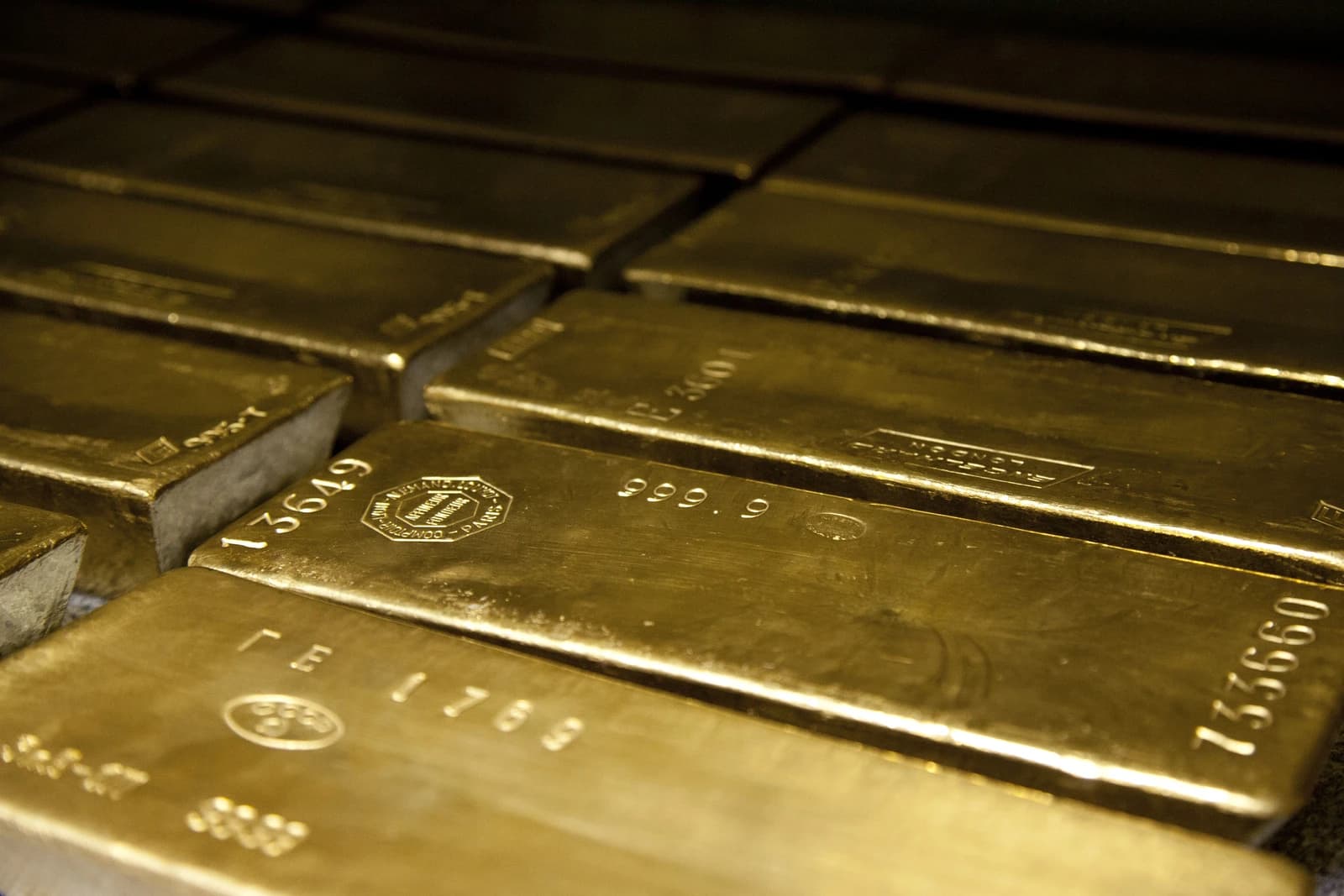
Gold is back on the bid after the Federal Reserve’s latest rate hike, and the bigger story is that Wall Street is treating the pullback as a buying opportunity rather than the start of a bear market.
Gold Rises After Fed Hike, Targets $5,000

That matters because gold is no longer trading only as a short-term rate-sensitive asset. The metal is being repriced as a hedge against a stubbornly expensive dollar, sticky inflation risk and growing policy uncertainty — the kind of backdrop that can keep real yields from doing all the work investors once expected. Even after the Fed raised rates, the market’s message was clear: the tightening cycle may slow momentum, but it is not enough to break the longer-term gold thesis.
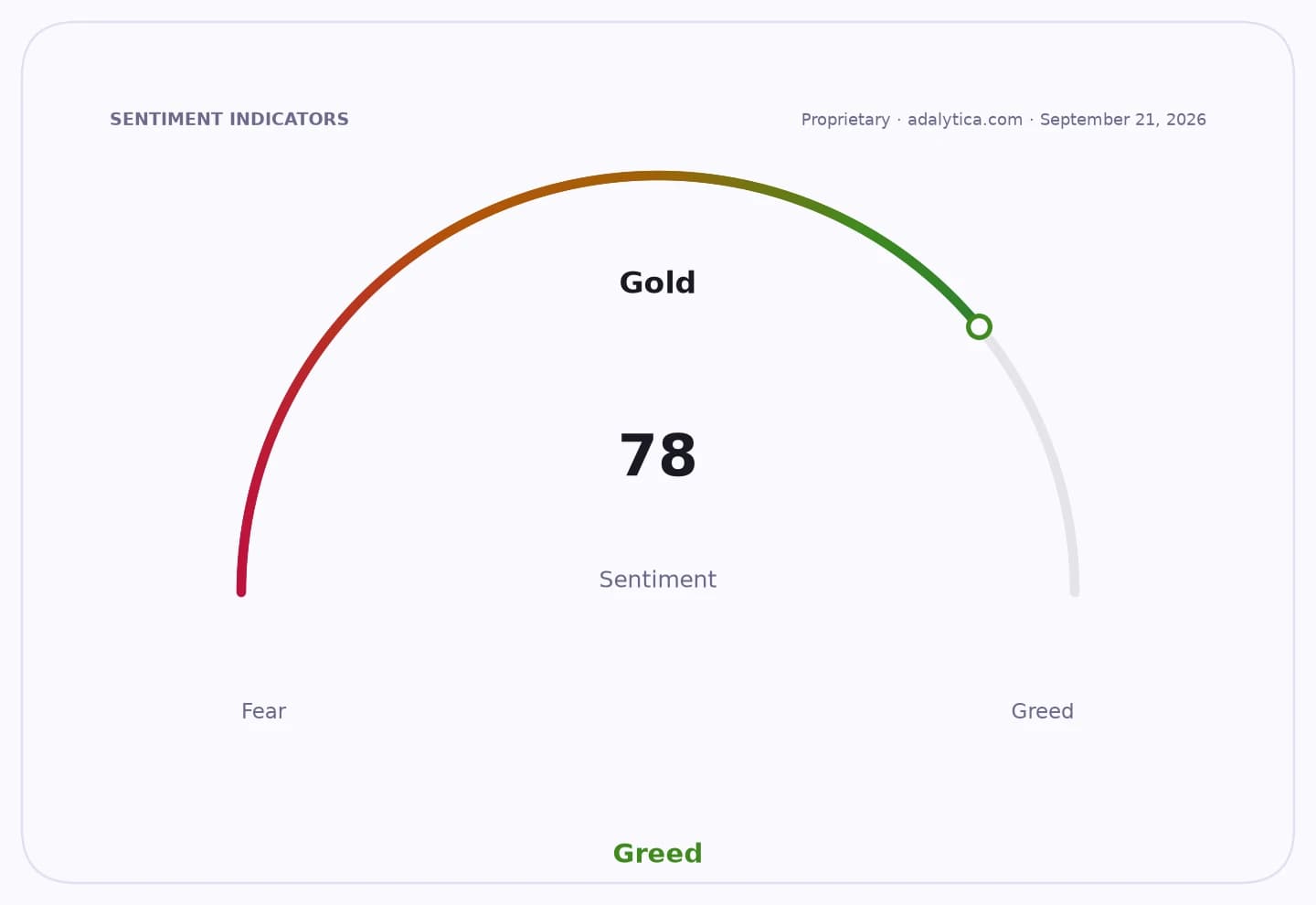
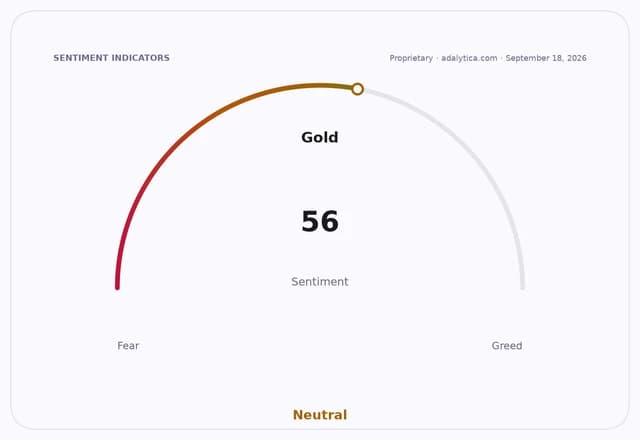
Sentiment IndicatorsⓘProprietary · adalytica.com · September 18, 2026
This is a snapshot — live sentiment, awareness and momentum for 130+ markets update continuously in the dashboard.Open AlphaPulse
Spot gold has already shown how quickly sentiment can turn. In futures trading, gold closed at $4,406.40 on Sept. 18 after tumbling as low as the $4,000 area in July, yet it remains above its 50-day moving average of $4,324.88 and well below its 200-day line of $4,553.26, a technical setup that still leaves room for a renewed trend if buyers defend the recent rebound. The metal’s march has also been violent enough to keep traders on edge: on Sept. 16, the contract traded near $4,387.50, then edged higher the next day as dip buyers returned. That kind of chop often marks a market that is still discovering a higher equilibrium, not one that has exhausted its upside.
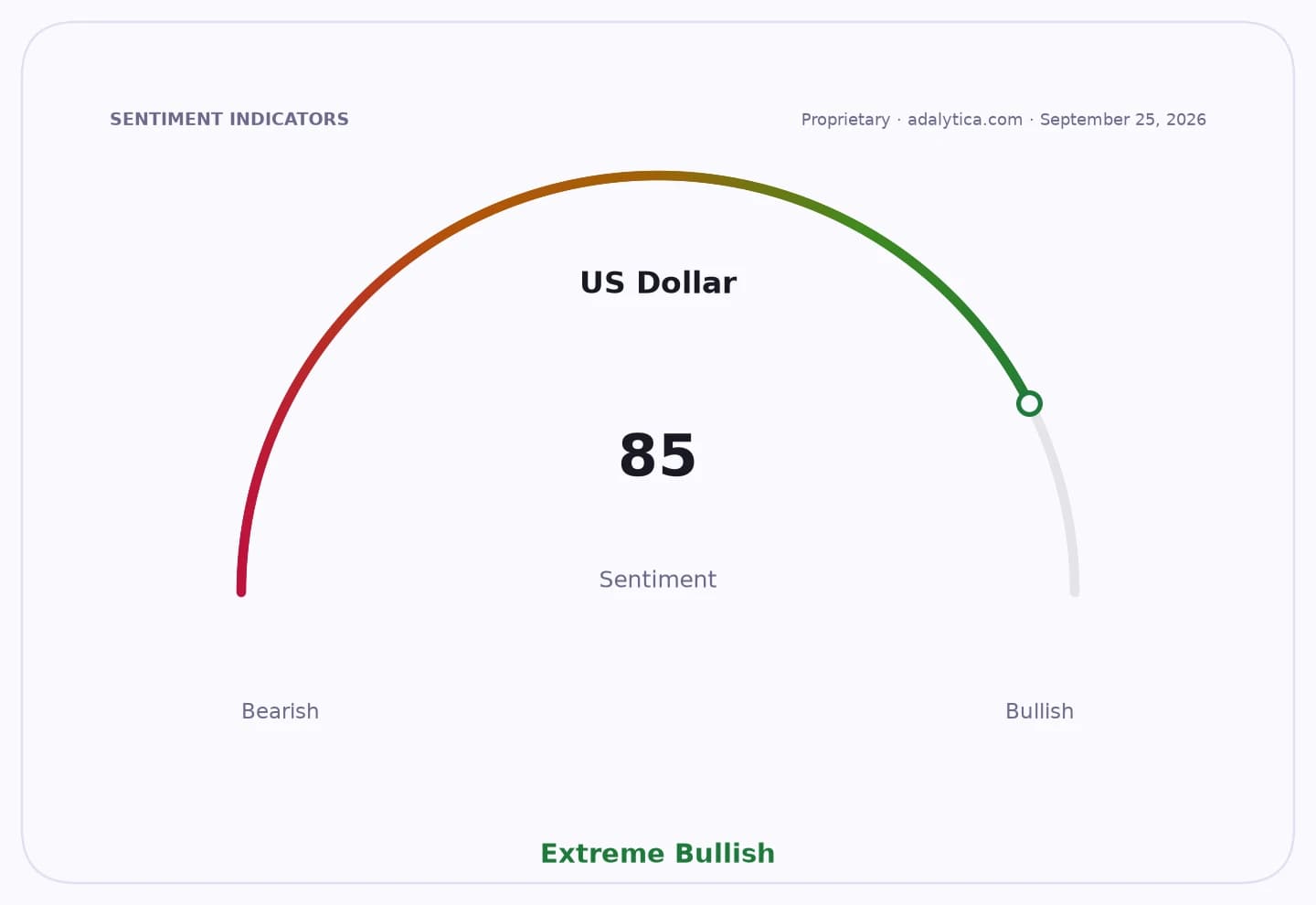
The macro backdrop is doing the heavy lifting. The fed funds rate is now around 3.63%, but the 10-year Treasury yield has climbed to roughly 5.01%, telling investors that long-duration capital remains under pressure even as policy moves higher. At the same time, the dollar is flashing extreme greed in Adalytica’s trade signals, a sign that positioning in the greenback has become crowded. For gold bulls, that is not a warning sign — it is fuel. A stronger dollar can suppress bullion in the short run, but when it becomes overowned, any crack in the narrative can trigger a powerful reversal into hard assets.
That is why the $5,000 calls from major banks matter. They are not just headline-grabbing targets; they reflect a structural view that central bank demand, geopolitical hedging and persistent fiscal strain are changing the valuation range for gold. In practical terms, the market is beginning to price gold less like a commodity and more like monetary insurance. When that shift takes hold, upside tends to arrive in steps, not straight lines.
Investors should also pay attention to the second-order effects. Gold-backed assets such as SPDR Gold Shares were already climbing into the current rebound, while miners such as Newmont are likely to see leverage to higher realized prices after periods of margin compression. Newmont’s shares ended at $124.39 on Sept. 17, with the stock still trading above both its 50-day and 200-day moving averages, while Gold Fields’ U.S.-listed shares have also surged in recent months. That is the tell: capital is not just chasing bullion, it is rotating toward the equity vehicles that amplify the move.
The near-term trade may stay volatile, especially if the Fed signals more restraint or the dollar makes another run higher. But the bigger setup is still intact. If the market continues to view rate hikes as a reason to own gold rather than sell it, the next leg could be driven by a combination of central bank buying, ETF inflows and a re-rating of miners’ cash flow power. For investors looking for asymmetric exposure to a late-cycle, geopolitically charged world, gold remains one of the cleanest ways to express that thesis.
| Entity | Gains | Losses |
|---|---|---|
| Gold bulls | ▲Higher price targets | ▼Short-term volatility |
| Bullion ETFs | ▲Inflows and momentum | ▼If rates spike again |
| Gold miners | ▲Wider cash flow leverage | ▼Cost inflation risk |
| Dollar longs | ▲Crowded positioning risk | ▼Gold upside if USD fades |